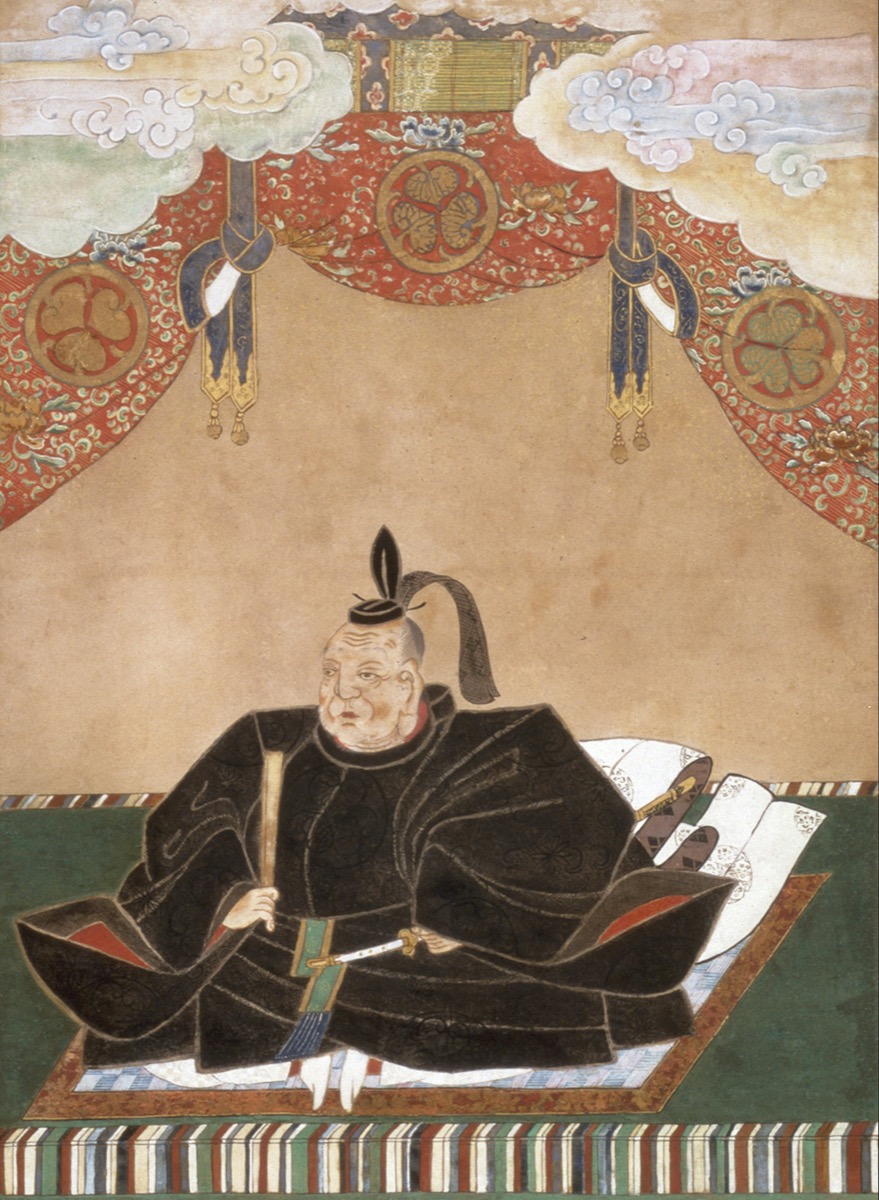
 伝狩野探幽「東照大権現像」
Founder of the Tokugawa Shogunate
Tokugawa Ieyasu
徳川家康
1543 – 1616
Beginning as a hostage of the Imagawa clan, he became independent after the Battle of Okehazama, unified Mikawa, and expanded into Tōtōmi and Suruga. He allied with Oda Nobunaga and fought the Takeda clan; after Nobunaga's death he submitted to Toyotomi Hideyoshi, was transferred to the Kantō region, and made Edo his base. After Hideyoshi's death he held real power as the senior of the Five Great Elders, and after his victory at the Battle of Sekigahara in 1600 he reorganized the domains of the daimyo. In 1603 he was appointed shogun and founded the Tokugawa shogunate; after handing the position to his son Hidetada in 1605 he continued to direct politics and diplomacy as Ōgosho from Sunpu. In the Siege of Osaka of 1614–15 he destroyed the Toyotomi clan, and died at Sunpu in 1616; he was buried at Kunōzan and later enshrined as Tōshō Daigongen.
Sources 国立公文書館「徳川家康 関係年表」/静岡市「慶長期駿府城 関連年表」/国立公文書館「歴史と物語 年表」/静岡市「久能山東照宮」
Explore the 1555 map
Change the year to watch territories shift
Life of Tokugawa Ieyasu
From hostage to independence
Map of 1560Tokugawa Ieyasu was born on December 26, 1542, at Okazaki Castle in Mikawa. His childhood name was Takechiyo. His father, Matsudaira Hirotada, followed the Imagawa clan, so young Takechiyo was sent away as a hostage, but on the way he was taken over by the Oda side, and later, through an exchange of hostages, he returned to the Imagawa and was raised at Sunpu. On May 19, 1560, when Imagawa Yoshimoto was killed by Oda Nobunaga at Okehazama, the Imagawa forces left Okazaki Castle, and on May 23 Ieyasu entered the castle and gained a foothold for independence. He later changed his name to Ieyasu, and in 1566 he changed his surname to Tokugawa.
Suffers a crushing defeat to Takeda Shingen at Mikatagahara
Map of 1572Ieyasu allied with Nobunaga, and in June 1570 defeated the Azai and Asakura armies at Anegawa in Ōmi. On December 22, 1572, when Takeda Shingen's army took Futamata Castle and closed in on Hamamatsu Castle, Ieyasu left his castle and fought at Mikatagahara in Tōtōmi. The Tokugawa army collapsed, lost many of its retainers, and withdrew to Hamamatsu Castle. It is spoken of as the greatest defeat of his life. It is also told that the pursuing Takeda army was attacked by night at Saigaigake, but there is no solid historical evidence for this.
Defeats Takeda Katsuyori at Nagashino
Map of 1575On May 21, 1575, at Shitaragahara in Mikawa, the combined Oda and Tokugawa army fought the army of Takeda Katsuyori. The allies built three rows of horse-blocking palisades and a moat along the Rengo River, and the palisade is said to have stretched about 2 kilometers. At dawn Sakai Tadatsugu is said to have launched a surprise attack on the Takeda outpost at Tobigasu-yama, opening the battle. The Takeda army suffered heavy losses at the palisade and was defeated. The Takeda house fell seven years later, in 1582, and the eastern threat to Ieyasu was removed.
Submits to Hideyoshi
Map of 1584On June 2, 1582, when Nobunaga was killed in the Honnōji Incident, Ieyasu was in Sakai and immediately set out for home. He then came into conflict with the rising Hashiba Hideyoshi, and on April 9, 1584, at Komaki and Nagakute, he defeated Hideyoshi's forces led by Ikeda Tsuneoki and Mori Nagayoshi. But a peace was agreed, and in November 1585 his senior retainer Ishikawa Kazumasa defected to Hideyoshi. On October 27, 1586, Ieyasu met Hideyoshi at Osaka Castle and submitted to him. In December of that year he moved his seat from Hamamatsu to Sunpu.
Moves to the Kantō
Map of 1590In 1590, Hideyoshi attacked the Hōjō of Odawara, and Ieyasu followed him in that campaign. When the Hōjō fell, in July Hideyoshi ordered Ieyasu to move to the Kantō. Ieyasu left the domains he had held since Mikawa, and was given the Kantō, said to be about 2.5 million koku. In August he entered Edo Castle. The town of Edo was built up from this starting point. In this land Ieyasu spent the eight years or so until Hideyoshi's death as a daimyo within the Toyotomi regime.
Wins at Sekigahara
Map of 1600On August 18, 1598, when Hideyoshi died at Fushimi Castle, the Council of Five Elders and the Council of Five Magistrates were set up to support the young Hideyori. The balance collapsed after the death of Maeda Toshiie and others, and Ieyasu came to stand at the center of government. Ishida Mitsunari disliked this, and raised an army with Mōri Terumoto as its commander. On September 15, 1600, at Sekigahara in Mino, about 70,000 Ieyasu troops and about 80,000 Mitsunari troops fought, and after the betrayal of Kobayakawa Hideaki, the Mitsunari side collapsed. On September 27 Ieyasu met Hideyori at Osaka Castle and entered the Nishinomaru.
Becomes shogun and opens the shogunate in Edo
Map of 1603On February 12, 1603, Ieyasu received an imperial envoy at Fushimi Castle and was appointed Seii Taishōgun. Having become shogun, the head of the warrior houses, he opened the shogunate in Edo. In July of the same year his granddaughter Senhime married Toyotomi Hideyori at Osaka Castle. On April 16, 1605, he resigned the post of shogun and handed it to his son Hidetada, showing that the shogunate was hereditary in the Tokugawa house. He was afterward called Ōgosho, and in 1607, while living at Sunpu, he kept an eye on the shogunate's government, including scholarship and diplomacy.
Destroys the Toyotomi and dies at Sunpu
Map of 1615In April 1614, the shogunate and the Toyotomi side clashed over the bell of Hōkō-ji temple, which Hideyori had rebuilt, and the Winter Campaign of Osaka began in November. A truce was agreed in December, but on May 6, 1615, the Summer Campaign broke out, and on May 8 Osaka Castle fell, and Hideyori and Yodo-dono took their own lives. In July the Buke Shohatto (Laws for the Military Houses) was enacted. In January 1616, the following year, Ieyasu fell ill after falconry at Tanaka in Suruga, and on April 17 he died at Sunpu Castle. By his will he was buried at Kunō-zan, and in 1617 his remains were moved to Nikkō and enshrined as Tōshō Daigongen.
Sources 国立公文書館「国立公文書館の家康」(年表・家康の誕生・関ヶ原の戦い・家康の病)/コトバンク「徳川家康」/浜松市「三方原の戦い」/新城市「長篠・設楽原の戦い」/日光東照宮「由緒」/文化遺産オンライン「久能山」/松本城管理事務所「松本城の歴史」
Territory map of Tokugawa Ieyasu
From 1 province in 1560 to 9 provinces in 1606.
The territory of the Tokugawa clan, limited to the years when he led the house. Lighter colour: provinces held only in part (some districts).Castles Tokugawa Ieyasu used as his seat
In the order he moved his base. Years show when he entered and left.- Okazaki Castle1560–1570
- Hamamatsu Castle1570–1586
- Sunpu Castle1582–1590
- Edo Castle1590–1607
- Sunpu Castle1607–
Family tree
Matsudaira Hirotada
Parent
Tokugawa Ieyasu
This person
Tsukiyama-dono
Spouse
Asahihime
Spouse
Tokuhime
Child
松平信康
Child
Yūki Hideyasu
Child
Tokugawa Hidetada
Child
Matsudaira Tadayoshi
Child
Matsudaira Tadateru
Child
Tokugawa Yoshinao
Child
Tokugawa Yorinobu
Child
Tokugawa Yorifusa
Child
Advertisement
Related events
65
1560
Month 5
Motoyasu delivers provisions to Odaka Castle
Ran provisions into Odaka CastleMatsudaira Motoyasu of the Imagawa side carried provisions into Odaka Castle, which was surrounded by the Oda-side forts of Marune and Washizu and running short of supplies. It is regarded as a preliminary to the Battle of Okehazama.
5/23
Return of Motoyasu to Okazaki
Returned to Okazaki and broke free of the ImagawaMatsudaira Motoyasu (later Tokugawa Ieyasu) returns to Mikawa’s Okazaki, advancing independence from Imagawa.
Ujizane's Succession and Domain Instability
Related figureFollowing Imagawa Yoshimoto's death in battle, Ujizane succeeded to the leadership of the Imagawa clan. However, beginning with Matsudaira Motoyasu's defection, the domain began to show progressive instability.
1562
Kiyosu Alliance Is Formed
Related figureMatsudaira Motoyasu and Oda Nobunaga met at Kiyosu Castle and formed an alliance, allowing Motoyasu to focus on Mikawa and Nobunaga on Mino.
1563
10/1
Mikawa Ikkō-ikki
Lord of Mikawa; brought the uprising under controlFrom autumn 1563 into the following spring, in Mikawa Province (present-day Okazaki and Anjō, Aichi Prefecture), Ieyasu fought the Honganji-affiliated Three Mikawa Temples and their followers, together with retainers who had joined them. After a truce, Ieyasu tore down the temples and drove the abbots and others out of the country.
1566
12/29
Matsudaira Ieyasu Takes the Tokugawa Name
Principal partyMatsudaira Ieyasu was permitted to take the Tokugawa name and was appointed Mikawa no kami with the Junior Fifth Rank, Lower Grade. In the Western calendar this falls in February 1567.
1570
Month 7
Consolidation of Tokugawa Ieyasu’s Power
Tightened control of Mikawa and TotomiCapitalizing on victory at Anegawa, Ieyasu strengthens control in Mikawa and Tōtōmi, subduing rivals and building new castles.
7/30
Battle of Anegawa
Tokugawa armyIn Ōmi, Oda–Tokugawa allied forces defeat the Azai–Asakura alliance, expanding their influence by securing northern Ōmi castles.
1572
10/3
Takeda Shingen begins his western campaign
Totomi and Mikawa side that came under invasionTakeda Shingen launched a full-scale advance toward Totomi and Mikawa, putting strong pressure on Tokugawa Ieyasu's territory and drawing attention as the coalition's most formidable military action.
Month 12
Battle for Futamata Castle
Tokugawa sideFrom the eleventh month the Takeda army attacked Futamata Castle in Tōtōmi and took it, breaking the Tokugawa defensive line. Ieyasu was pushed into a position of holding out from Hamamatsu Castle and waiting for a chance to counterattack.
1573
1/25
Battle of Mikatagahara
Tokugawa commander in chiefTakeda forces clashed with the Tokugawa-Oda allied army at Mikatagahara in Totomi, and Ieyasu suffered a devastating defeat. Takeda Shingen's military prestige was displayed to the whole country and gave the anti-Nobunaga side a major psychological boost.
1575
6/29
Battle of Nagashino and Shitaragahara
Took part / involvedThe allied forces of Oda Nobunaga and Tokugawa Ieyasu, marching to relieve Nagashino Castle, defeated Takeda Katsuyori at Shitaragahara, where the Takeda lost many senior commanders.
1579
Ishikawa Kazumasa Appointed Deputy of Okazaki Castle
Related figureAfter Nobukatsu's suicide, Ishikawa Kazumasa became deputy of Okazaki Castle as one of Tokugawa's senior retainers. He served in this position from 1579 until his defection in November 1585.
1581
Month 4
Tokugawa Ieyasu’s Pressure on Kai and Shinano
Applied military pressure on the Takeda borderIeyasu intensifies operations on Takeda borders, swaying local lords and tightening the encirclement of Takeda Katsuyori.
1582
Month 3
Tokugawa Ieyasu Receives Suruga Province
Head of the Tokugawa houseAfter the fall of the Takeda, Oda Nobunaga granted Suruga Province to Tokugawa Ieyasu, making him lord of Suruga as well as Mikawa and Tōtōmi.
6/21
Tokugawa Ieyasu Learns of the Honnōji Incident at Sakai
Head of the Tokugawa houseWhile touring the Kinai after visiting Azuchi, Tokugawa Ieyasu learned at Sakai of the deaths of Nobunaga and Nobutada and hurried to return to his domains with a small retinue.
6/23
Tokugawa Ieyasu Returns to Okazaki by Crossing Iga
Head of the Tokugawa houseAssisted by people in Kōka and Iga and by the merchant Chaya Shirōjirō, Tokugawa Ieyasu escaped through Iga and reached Okazaki Castle on June 4.
Month 7
Tokugawa Ieyasu Advances into Kai
Tokugawa commander in chiefAs the former Takeda territories fell into disorder after the Honnōji Incident, Tokugawa Ieyasu entered Kai, confronted the Later Hōjō near Shinpu, and recruited former Takeda retainers.
7/1
Tenshō Jingo War
Supreme commander of the Tokugawa forcesIn 1582 (Tenshō 10), after the Honnoji Incident left the former Takeda domains of Kai and Shinano without a master, Tokugawa Ieyasu and Hōjō Ujinao contended for them. The two armies faced each other in northern Kai, and in October they made peace, and Kai and Shinano became Tokugawa territory.
Month 9
Tokugawa Ieyasu and Hōjō Ujinao face off at Wakamiko
Principal partyIeyasu set up his headquarters at Shinpu Castle and faced Hōjō Ujinao, who had camped at Wakamiko in northern Kai. The standoff lasted until peace was concluded.
Month 10
Tokugawa Ieyasu and the Later Hōjō Make Peace
Tokugawa sideThe Tokugawa and Later Hōjō ended their confrontation over the former Takeda lands after mediation encouraged by Oda Nobukatsu and Nobutaka. Ieyasu secured Kai and southern Shinano, becoming lord of five provinces together with Mikawa, Tōtōmi, and Suruga.
Month 10
Sanada Masayuki switches to the Tokugawa side
Related figureWon over by Yoda Nobushige, Sanada Masayuki is said to have switched from the Hōjō side to the Tokugawa side. Sources differ on when the switch happened.
Tenshō-Jingo War
Tokugawa sideAfter the Honnōji Incident created a power vacuum in the former Takeda territories, forces led by the Tokugawa and Later Hōjō fought across Kai, Shinano, and Kōzuke.
1584
Month 3
Komaki-Nagakute Campaign Begins
Took part / involvedHashiba Hideyoshi's army and the allied forces of Tokugawa Ieyasu and Oda Nobukatsu confronted one another mainly in Owari Province, beginning a campaign that lasted about eight months.
4/9
Battle of Nagakute
Took part / involvedTokugawa Ieyasu's army defeated a detached Hashiba force at Nagakute, where Ikeda Tsuneoki and Mori Nagayoshi were killed.
Month 11
Peace between Oda Nobukatsu and Hashiba Hideyoshi
Allied with Nobukatsu and fought onOda Nobukatsu and Hashiba Hideyoshi made a separate peace while confronting one another near Nagashima. Tokugawa Ieyasu then withdrew, ending the Komaki-Nagakute campaign.
1586
10/27
Tokugawa Ieyasu Meets Hideyoshi at Osaka Castle
Declared submission to HideyoshiTokugawa Ieyasu entered Osaka Castle and met Toyotomi Hideyoshi, entering the daimyō order under the Toyotomi government.
1590
3/29
Battle of Yamanaka Castle
Joined the fight leading the Toyotomi Tokaido forceThe Toyotomi army attacked Yamanaka Castle, a Later Hōjō stronghold guarding the route to Odawara, and captured it within half a day.
4/3
Siege of Odawara Begins
Commanded the Toyotomi forces on the TokaidoToyotomi Hideyoshi arrived at Odawara and his assembled armies began the siege of the Later Hōjō stronghold.
Autumn
Honda Tadakatsu Lords Over 100,000 koku at Ōtaki
Related figureIn connection with relocation to Kantō, Tadakatsu was given command of Ōtaki in Kazusa Province with 100,000 koku and became its lord, remaining in residence for approximately eleven years until 1601.
8/1
Tokugawa Ieyasu Enters Edo
Transferred to the Kanto and entered Edo CastleAfter being transferred to the Kantō region, Tokugawa Ieyasu entered Edo Castle and made Edo the center of his domain.
1598
Month 9
Death of Toyotomi Hideyoshi
Daimyo who led the Five Elders and upheld the regimeToyotomi Hideyoshi died at Fushimi Castle. A new system of governance was established with the five regents (Go-Tairō) and five commissioners (Go-Bugyō) supporting the young Hideyori. The withdrawal of forces from Korea commenced.
1599
Month 4
Death of Maeda Toshiie
Rose within the regime after Toshiie's deathMaeda Toshiie, a senior regent who had counterbalanced Tokugawa Ieyasu, died in Osaka, weakening the balance within the Toyotomi government.
Maeda Toshinaga Builds Kanazawa's Inner Defensive Enclosure
Related figureAmid growing tension with Tokugawa Ieyasu, Maeda Toshinaga ordered construction of the inner defensive enclosure around Kanazawa Castle and its town.
Tokugawa Ieyasu Enters Fushimi Castle
Entered Fushimi Castle and took charge of governmentAfter Toyotomi Hideyoshi's death, senior regent Tokugawa Ieyasu entered Fushimi Castle and used it as a base for governing within the Toyotomi administration.
1600
8/26
Siege of Fushimi Castle Begins
Entrusted the defense of Fushimi Castle to Torii MototadaAfter Tokugawa Ieyasu marched toward Aizu, the Western Army surrounded Fushimi Castle, defended by Torii Mototada and his garrison.
9/2
Council at Oyama
Called the councilTokugawa Ieyasu, on the march against Uesugi Kagekatsu at Aizu, received a messenger from Fushimi while encamped at Oyama and learned that Ishida Mitsunari had risen. At the council he called, the Aizu campaign was called off and the assembled lords are said to have turned west toward Sekigahara.
10/21
Battle of Sekigahara
Commander of the Eastern armyThe decisive battle in Mino: Tokugawa Ieyasu’s Eastern Army defeats the Western Army.
1601
Uesugi Kagekatsu Is Reduced to Yonezawa
Shogun who decided the reduction of holdingsAfter Sekigahara, Uesugi Kagekatsu was reduced from 1.2 million koku in Aizu to 300,000 koku at Yonezawa and shifted the center of his domain there.
Ieyasu Orders Construction of Nijō Castle
Ordered the nationwide construction levyTokugawa Ieyasu ordered western daimyō to build Nijō Castle as a guard for the Kyoto Imperial Palace and a residence for shogunal visits.
Honda Tadakatsu Transferred to Kuwana, Ise
Related figureTransferred from Ōtaki to Kuwana in Ise Province with 100,000 koku, Tadakatsu became the first daimyo of Kuwana. He oversaw development of the castle town through Keichō-era urban planning and established Kuwana's foundation.
1602
Month 5
Construction of Nijō Castle Begins
Led the castle constructionFull construction of Nijō Castle began under commissioner Murakoshi Mosuke, with its main buildings prepared ahead of the following year's shogunal appointment.
Month 6
Fushimi Castle Is Rebuilt
Led the rebuildingFushimi Castle, burned during the Sekigahara campaign, was rebuilt as Tokugawa Ieyasu's residence and a center for governing the Kinai region.
7/27
Ieyasu grants Akita and Senboku to Yoshinobu
Issuer of the domain-grant documentIeyasu gave Yoshinobu Akita and Senboku in Dewa by a domain-grant document (chigyō hanmotsu). The document did not state the koku, and the assessed yield of the domain was not shown.
1603
2/12
Tokugawa Ieyasu Becomes Shogun
Became shogun and founded the Edo shogunateTokugawa Ieyasu received appointment as seii taishōgun at Fushimi Castle, marking the establishment of the Edo shogunate.
Month 3
Nijō Castle Is Completed and Ieyasu Enters
Led the construction and entered the castleThe principal buildings of Nijō Castle were completed, and Tokugawa Ieyasu entered the castle during his visit to Kyoto for his appointment as shogun.
1604
Nihonbashi Becomes the Starting Point of the Five Highways
Shogunal ruleThe shogunate designated Nihonbashi as the starting point for national distances and developed a transport system centered on the five highways.
1605
4/16
Tokugawa Hidetada Becomes Shogun
Passed the shogunate to HidetadaAt Fushimi Castle, Tokugawa Ieyasu transferred the shogunate to Hidetada, demonstrating that the office would be inherited within the Tokugawa family.
1606
Great Construction of Edo Castle Intensifies
Led the castle constructionThe large-scale expansion of Edo Castle proceeded with western daimyo assigned construction duties, and the Honmaru was developed.
Tōdō Takatora Designs Edo Castle Donjon
Related figureIn the renovation of Edo Castle, Takatori was involved in designing the donjon and expanding the second and third enclosures. For this service, he received a 20,000-koku increase.
1607
5/23
Great Construction of Sunpu Castle Begins
Ordered the construction levy; residence of the retired shogunA major reconstruction of Sunpu Castle began with daimyo mobilized from across Japan to create the base of Tokugawa Ieyasu's retired-shogun government.
Korean Envoys Visit Japan as Relations Are Restored
Led the diplomacyA Korean Response and Prisoner-Repatriation Embassy (chief envoy Yeo U-gil), sent to restore relations severed by the invasions of Korea under the Toyotomi regime, visited Japan and exchanged state letters with the Tokugawa government in Edo.
1608
Month 10
Tōdō Takatora Transferred to Ise and Iga
Related figureBy order of Tokugawa Ieyasu, Takatori was transferred from Iyo Imabari to Ise and Iga provinces, commanding a combined total of over 220,000 koku. He entered Iga Ueno Castle in September and Tsu in October.
Sunpu Castle Keep Is Topped Out
Lord of Sunpu CastleDuring the reconstruction of Sunpu Castle after the previous year's fire, the Honmaru palace was rebuilt and the castle keep was topped out.
1609
Dutch Trading Post Is Established at Hirado
Granted trading rightsThe Dutch East India Company established a trading post at Hirado with shogunate permission, creating a base for Dutch-Japanese trade.
1610
Construction of Nagoya Castle Begins
Ordered the castle builtTokugawa Ieyasu mobilized twenty western and northern daimyo to begin building Nagoya Castle as a defense against Osaka and the seat of the Owari Tokugawa house.
1611
3/28
Tokugawa Ieyasu and Toyotomi Hideyori Meet at Nijō Castle
Met with Toyotomi HideyoriTokugawa Ieyasu summoned nineteen-year-old Toyotomi Hideyori to Nijō Castle. Hideyori paid respects to Ieyasu, displaying the political relationship between the Tokugawa government and the Toyotomi house.
1612
Nagoya Castle Keeps Are Completed
Led the castle constructionThe main and smaller keeps of Nagoya Castle were completed through public construction, and golden shachi were placed atop the main keep as symbols of the Owari Tokugawa house.
Christianity Is Banned in Shogunate Lands
Led the anti-Christian policy as retired shogunThe shogunate banned Christianity in territories under its direct control, advancing a religious policy that led to nationwide prohibition.
1614
1/17
Takayama Ukon Exiled from Japan
Related figureDue to Tokugawa Ieyasu's anti-Christian policy, Takayama Ukon was exiled from Japan and left Kanazawa. He subsequently died in Manila.
Month 11
Winter Siege of Osaka Begins
Tokugawa commander in chiefA large Tokugawa army surrounded Osaka Castle, while the Toyotomi side conducted a defensive siege centered on positions including Sanada Nobushige's Sanada-maru.
12/19
Truce Ends the Winter Siege of Osaka
Tokugawa sideA truce was agreed between the Tokugawa and Toyotomi sides, followed by an exchange of pledges, but the conflict remained unresolved and resumed the following year.
1615
Month 5
Osaka Summer Campaign
Commander-in-chief of the Tokugawa forcesFrom April to May 1615 (Keichō 20), the Toyotomi forces left Osaka Castle (present-day Osaka City), which had lost its moats, and fought the Tokugawa forces in Kawachi. On May 6, Gotō Mototsugu and Kimura Shigenari were killed in battle. On May 8, Osaka Castle fell, Hideyori and Yodo-dono took their own lives, and the main line of the Toyotomi clan was destroyed.
5/8
Osaka Castle Falls and the Toyotomi House Ends
Tokugawa commander in chief who destroyed the Osaka sideOsaka Castle fell, and Toyotomi Hideyori and Yodo-dono died by suicide, bringing the main Toyotomi house to an end.
7/7
Laws for the Military Houses Are Promulgated
Led the framing of institutions as retired shogunTokugawa Hidetada assembled the daimyo at Fushimi Castle and promulgated the Laws for the Military Houses, setting principles for shogunate control over the daimyo.
Advertisement