INTERACTIVE BATTLE
Komaki and Nagakute Campaign
March to November 1584 · Komaki and Nagakute, Owari Province
The Battle of Komaki and Nagakute was fought from March to November 1584 around Komakiyama and Nagakute in Owari Province (present-day Komaki and Nagakute, Aichi Prefecture), where Hashiba Hideyoshi contended with Oda Nobukatsu and Tokugawa Ieyasu. Ieyasu won at Nagakute on 9 April, but in November Hideyoshi made a separate peace with Nobukatsu, and Ieyasu too withdrew his troops.
羽柴氏: Toyotomi Hideyoshi, Takigawa Kazumasu, Kuki Yoshitaka, Maeda Toshiie / 池田氏: Ikeda Tsuneoki / 森氏: Mori Nagayoshi / 織田氏: Oda Nobukatsu / 徳川氏: Tokugawa Ieyasu, 酒井忠次, 榊原康政, Ii Naomasa / 佐々氏: Sassa Narimasa
Explore the 1584 map
Change the year to watch territories shift
Background
When Hideyoshi, who had defeated Shibata Katsuie at the Battle of Shizugatake, gained the upper hand within the Oda house, Oda Nobukatsu, the second son of Nobunaga who held Owari, grew wary of his power. On the grounds that they had collaborated with Hideyoshi, Nobukatsu killed three senior retainers, and this became a declaration of war against Hideyoshi. Nobukatsu asked Tokugawa Ieyasu, who had been his father's ally, for help, and Ieyasu entered Owari in the name of aiding Nobukatsu.
Outcome
At Nagakute, Ikeda Tsuneoki and Mori Nagayoshi were killed, and Hideyoshi's side was defeated. However, in November 1584, Hideyoshi made a separate peace with Nobukatsu. Ieyasu lost his pretext and also withdrew his army, and the roughly eight months of fighting came to an end.
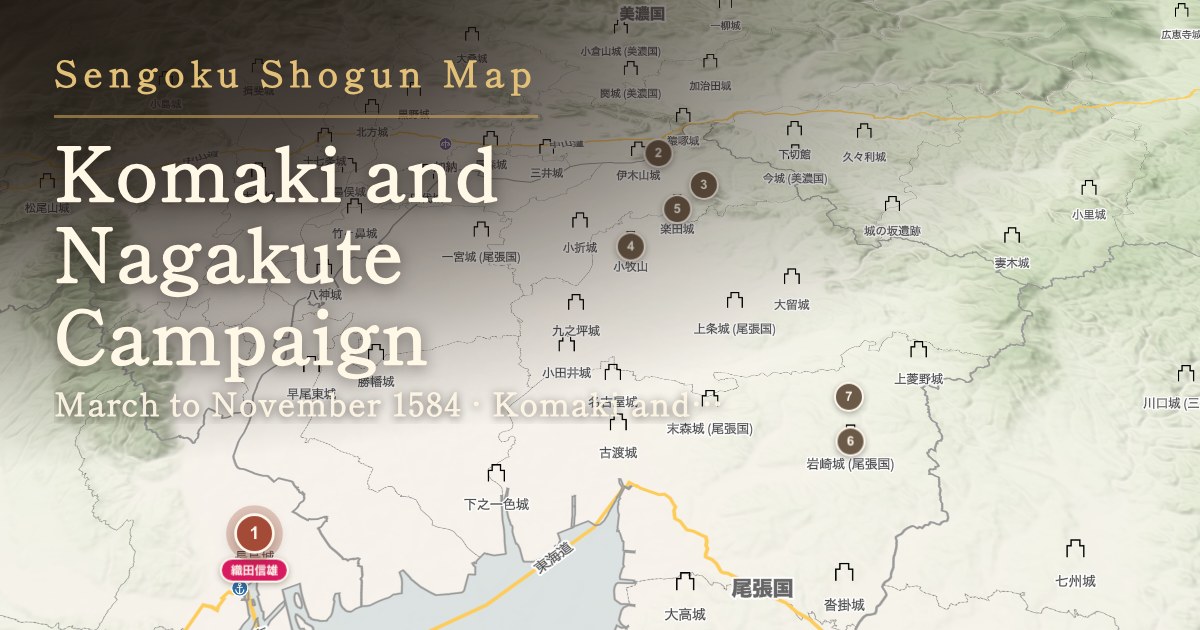
Course of the battle
1 6 March 1584
Oda Nobukatsu executes three senior retainers
At Nagashima castle Nobukatsu put three senior retainers to death for dealing with Hideyoshi. The break with Hideyoshi had gone past mending, and Nobukatsu turned to Tokugawa Ieyasu for help.
Executes three senior retainers at Nagashima castle
Sources
Sources12345·Certainty: High
2 March 1584
Ikeda Tsuneoki seizes Inuyama castle
Tsuneoki, siding with the Hashiba, struck Inuyama castle and took it. A key position on the Kiso river passed into Hashiba hands.
Seizes Inuyama castle
Sources
Sources1235·Certainty: Medium
3 28 March 1584
Mori Nagayoshi is beaten at Haguro
Sakai Tadatsugu and others waited at Haguro for Mori Nagayoshi’s force coming south from Inuyama castle and broke it. After losing the opening clash the Hashiba side held back from a frontal attack on Komakiyama, and the campaign settled into the standoff at Gakuden.
Sources
Sources12367·Certainty: Medium
4 March 1584
Ieyasu occupies Komakiyama
Ieyasu came into Owari in support of Nobukatsu and set his headquarters on Komakiyama, once Nobunaga’s own castle. He raised earthworks and settled in.
Sets his headquarters on Komakiyama
Sources
Sources1235·Certainty: Medium
5 March 1584
Hideyoshi encamps at Gakuden and the standoff sets in
Hideyoshi placed his headquarters at Gakuden castle, and the two armies faced each other behind ditches and earthworks. Even with the numbers, the Hashiba had no way to break through from the front.
Sets his headquarters at Gakuden
Sources
Sources1235·Certainty: Medium
6 April 1584
A Hashiba column swings towards Mikawa
To break the deadlock, Ikeda Tsuneoki, Mori Nagayoshi and Hashiba Hidetsugu set out to strike Ieyasu’s home province of Mikawa. Time spent attacking Iwasaki castle on the way had the effect of announcing the move to Ieyasu.
Sets out on the march into Mikawa
Sources differ – details
Points of debate
Who proposed the flanking march, and how far Hideyoshi knew of it, are read in different ways.
Sources1235·Certainty: Disputed
7 April 1584
The Hashiba column is destroyed at Nagakute
Alerted, Ieyasu left Komakiyama and fell on the column from behind. Ikeda Tsuneoki and Mori Nagayoshi were killed on the field at Nagakute and the column was broken.
Falls on the flanking column from behind
Killed at Nagakute
Killed at Nagakute
Takes part in the battle of Nagakute
Takes part in the battle of Nagakute
Sources
Sources12389·Certainty: High
8 June 1584
Kanie castle is taken and retaken
Takigawa Kazumasu came in from the sea with the Kuki fleet and took Kanie castle by winning over the retainer left in charge. Nobukatsu and Ieyasu counterattacked and retook it after a siege of two weeks, and the attempt to hold the sea lanes of Ise Bay collapsed.
Sources
Sources101112·Certainty: High
9 September 1584
In Hokuriku, Sassa Narimasa attacks Suemori castle
The fighting was not confined to Owari and Ise. Sassa Narimasa, who opposed Maeda Toshiie of the Hashiba side, attacked Suemori Castle in Noto, and Toshiie repulsed him. This victory is said to have led to the later Kaga Hyakumangoku (the hundred-thousand-koku domain of Kaga).
Sources
Sources51314·Certainty: High
10 November 1584
Hideyoshi makes peace with Nobukatsu
Historical significance
Ieyasu won at Nagakute, but in the political settlement Hideyoshi came out ahead: in the peace terms, both Nobukatsu and Ieyasu sent hostages. Ieyasu later chose the path of submitting to Hideyoshi.
Advertisement
Key figures
羽柴氏
4

Commander-in-chief of the Hashiba
Held his headquarters at Gakuden through the standoff and ended the campaign by making a separate peace with Nobukatsu.
Sources
Sources123·Certainty: Medium

Commander on the Hashiba side
Entered Kanie castle from the sea with the Kuki fleet and held it for a time.
Sources
Sources1011·Certainty: High

Naval commander on the Hashiba side
Led the fleet to Kanie and carried Takigawa Kazumasu into the castle.
Sources
Sources1011·Certainty: High

Commander on the Hashiba side in Hokuriku
Relieved Suemori castle in Noto and drove off Sassa Narimasa.
Sources
Sources1314·Certainty: High
池田氏
1

Hashiba commander
Took Inuyama castle, joined the march into Mikawa, and was killed at Nagakute.
Sources
Sources123·Certainty: Medium
森氏
1

Hashiba commander
Defeated at Hagure and killed at Nagakute. Son-in-law of Ikeda Tsuneoki.
Sources
Sources123·Certainty: Medium
織田氏
1

Oda lord siding with the Tokugawa
Brought the quarrel into the open by executing his senior retainers, and in the end made a separate peace with Hideyoshi.
Sources
Sources123·Certainty: Medium
徳川氏
4

Commander-in-chief of the Tokugawa
Set his headquarters on Komakiyama and destroyed the Hashiba flanking column at Nagakute.
Sources
Sources123·Certainty: Medium

Tokugawa commander
Said to have beaten Mori Nagayoshi's force at Haguro.
Sources
Sources123·Certainty: Medium
Tokugawa commander
Took part in the battle of Nagakute.
Sources
Sources123·Certainty: Medium

佐々氏
1

Lord of Etchū opposed to the Hashiba
Attacked Suemori castle in Noto from Etchū but was driven off by Maeda Toshiie.
Sources
Sources1314·Certainty: High
Other events of 1584
Notes on the data
Dates are given in the Western calendar. The year 1584 falls after the Gregorian reform, but the sources use the lunar calendar and only one conversion could be fixed: the 6th day of the 3rd month of Tensho 12 equals 17 March 1584. Other phases are given to the month only.
Sources consulted
- 小牧市「小牧・長久手の合戦」
- 長久手市「長久手古戦場物語」
- 長久手市「小牧・長久手の戦い 石作神社」
- 国立公文書館「小牧・長久手の戦い(徳川家康——将軍家蔵書からみるその生涯)」
- 城郭マスタ(shiro.geojson)
- 犬山市「犬山市文化財保存活用地域計画 第2章 文化財の概要」
- 愛知県「あいち歴史観光 羽黒城」
- 長久手市「史跡案内について」「古戦場公園再整備事業」
- 愛知県「あいち歴史観光 小牧・長久手の戦い」(国指定史跡 長久手古戦場)
- 蟹江町「蟹江城址」
- 蟹江町「蟹江合戦とは?(蟹江町歴史民俗資料館 おうちミュージアム)」
- 国土地理院 住所検索
- 石川県「赤蔵山・末森城跡」
- 金沢大学「石川デジタルミュージアムネットワーク:末森城跡」
The numbers in the text refer to the list above. Certainty indicates how far a statement is supported by the cited sources; it does not refer to the precision of the coordinates or the dating.
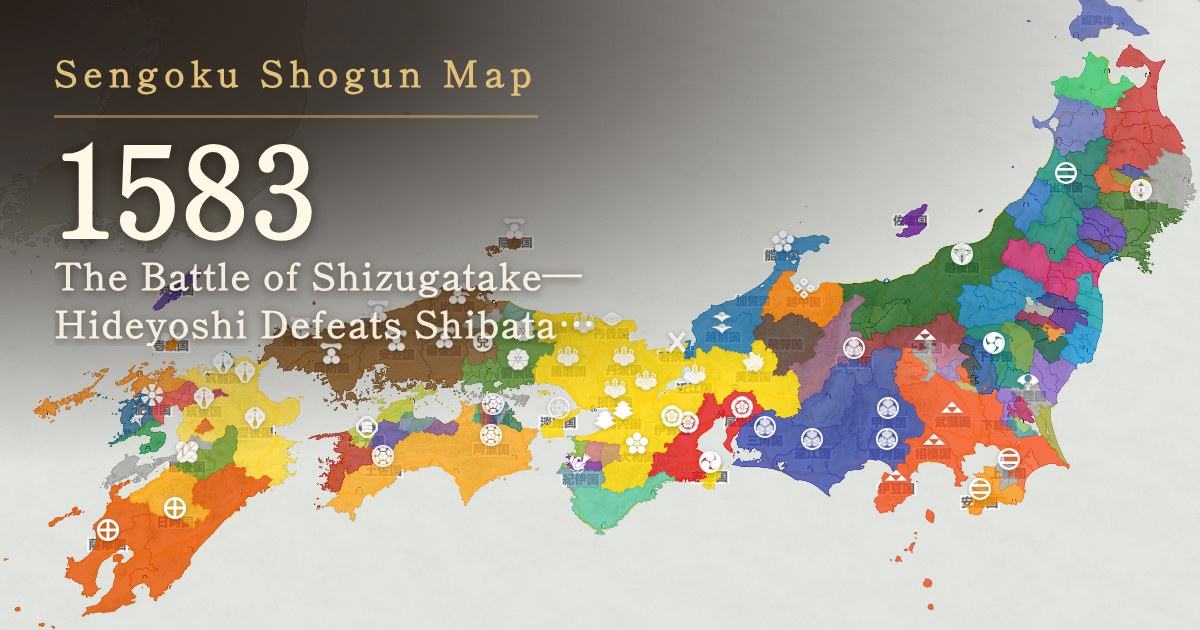
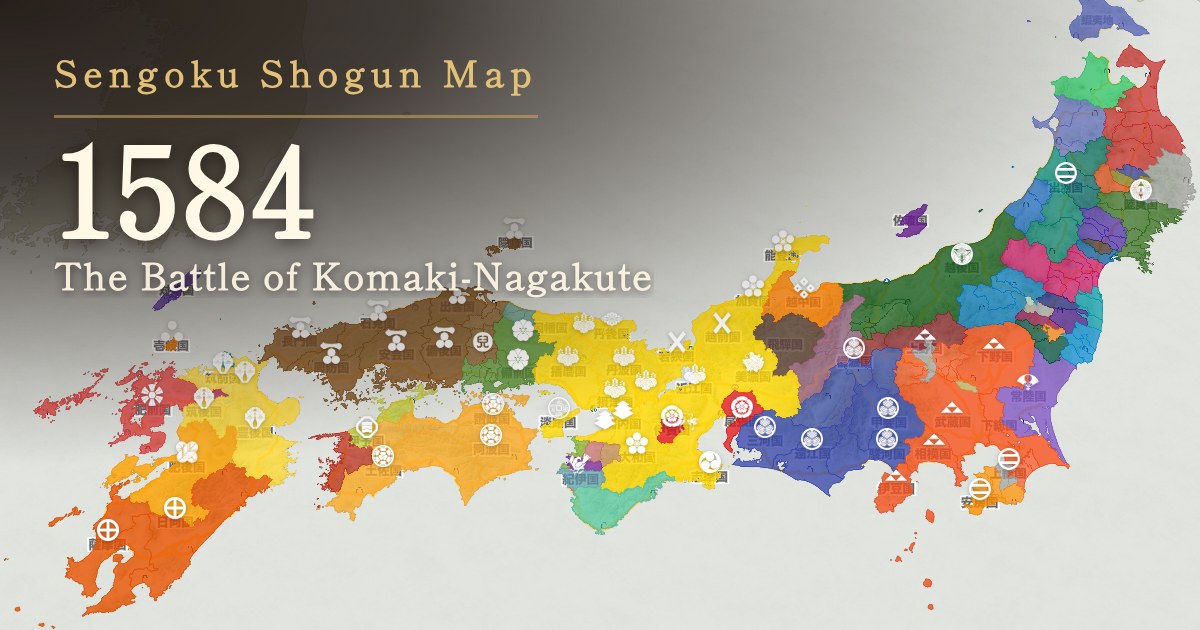
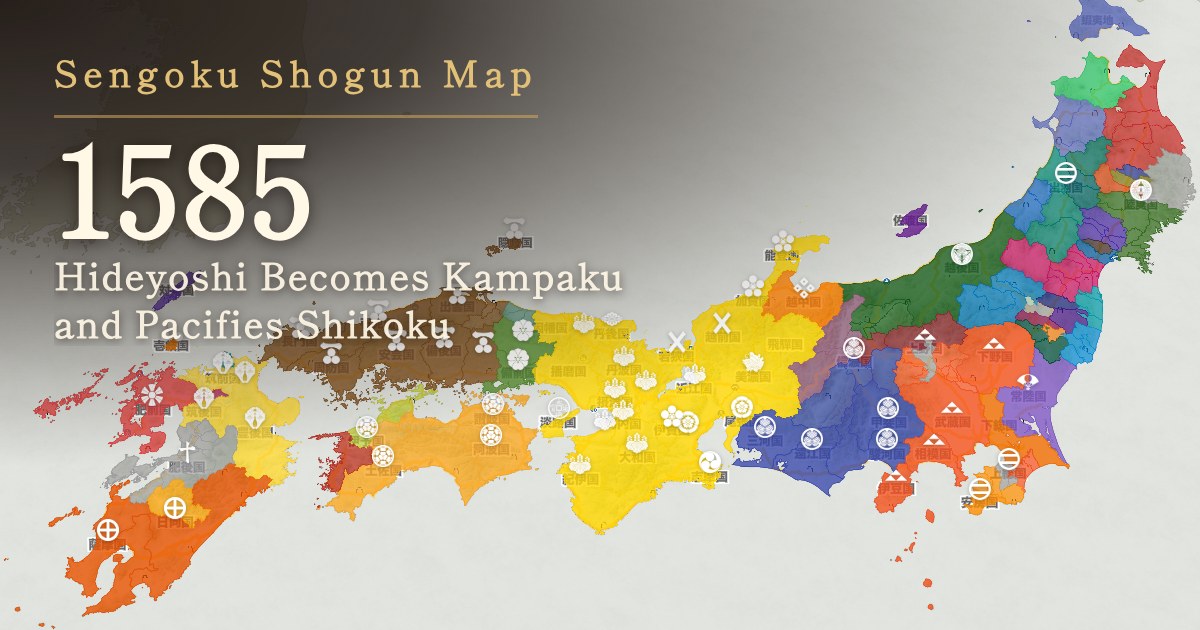
Territories before and after the battle
The year before, the year of the battle, and the year after, side by side. Tap a map to open that year.
Advertisement