INTERACTIVE BATTLE
Battle of Shizugatake
11 June 1583 · Shizugatake and Lake Yogo, Omi Province
The Battle of Shizugatake was fought on 11 June 1583 (21st day of the 4th month by the old calendar) at Shizugatake in northern Omi Province (present-day Nagahama, Shiga Prefecture), where Hashiba Hideyoshi defeated Shibata Katsuie in a struggle over Nobunaga's succession. The defeated Katsuie killed himself at Kitanoshō Castle in Echizen.
羽柴氏: Toyotomi Hideyoshi, Toyotomi Hidenaga, Niwa Nagahide, Nakagawa Kiyohide, Katō Kiyomasa, Oda Nobukatsu / 柴田氏: Shibata Katsuie, Sakuma Morimasa / 前田氏: Maeda Toshiie / 佐々氏: Sassa Narimasa / 織田氏: Oda Nobutaka
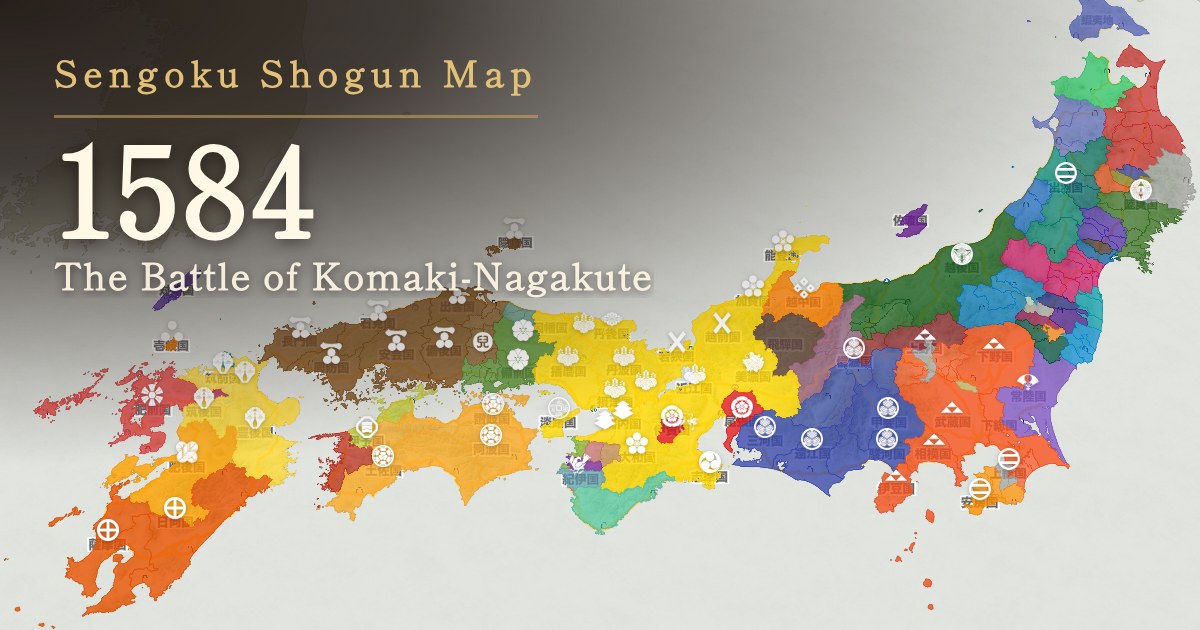
Explore the 1583 map
Change the year to watch territories shift
Background
After the Honnōji Incident of 1582 led to Nobunaga's death, senior retainers Hashiba Hideyoshi and Shibata Katsuie clashed over the Oda succession and the division of former domains. Tension did not ease even after the Kiyosu Conference. Katsuie is said to have allied with Oda Nobutaka and Takigawa Kazumasu to oppose Hideyoshi. In 1583, after the winter snows, Katsuie marched from Echizen into northern Ōmi and faced Hideyoshi across the fortifications around Lake Yogo.
Outcome
At Shizugatake, Shibata's army collapsed. Katsuie retreated to Kitanoshō Castle in Echizen and took his own life, and Oichi died with him. Oda Nobutaka and Takigawa Kazumasu also submitted, and Hideyoshi secured his position as Nobunaga's successor.
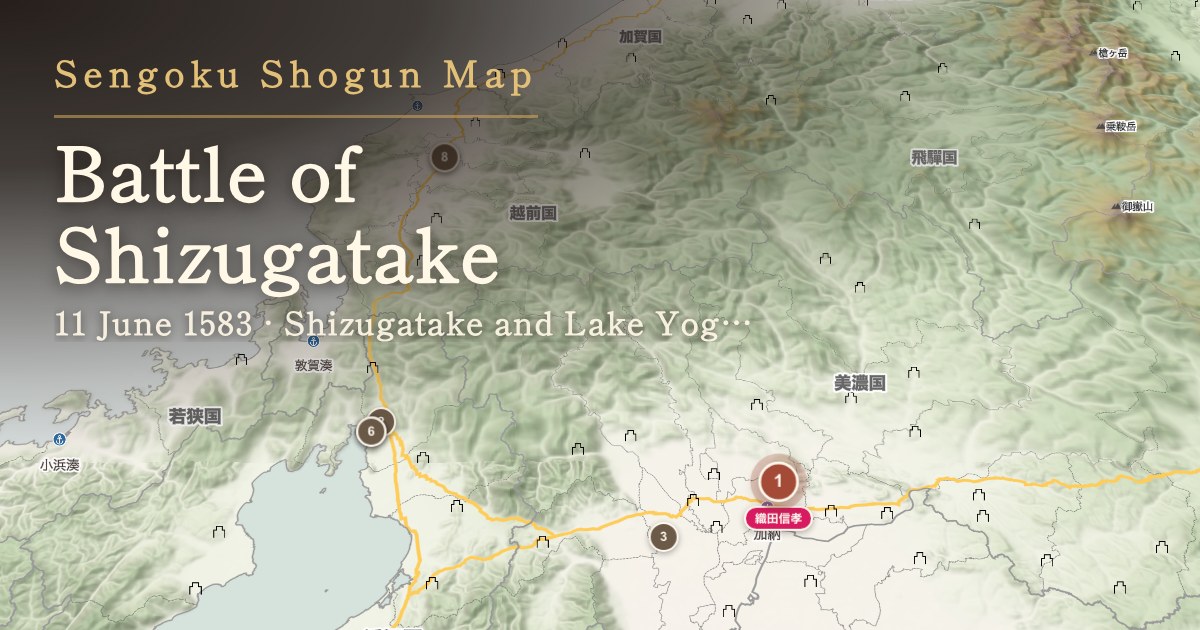
Course of the battle
1 6 June
Oda Nobutaka raises troops at Gifu
Nobutaka, siding with Katsuie, moved out from Gifu castle. Takigawa Kazumasu stirred in Ise as well, leaving Hideyoshi with two fronts: Yogo to the north and Mino to the east.
Raises troops at Gifu castle
Sources
Sources1234·Certainty: Medium
2 9 June
Sakuma Morimasa takes Oiwayama fort
3 10 June
Hideyoshi turns back from Ogaki to Kinomoto
Hideyoshi, then in Mino, turned about the moment word reached him and was back on the field the same day. The forced march is remembered as the "great return from Mino", and it left Morimasa no time to pull back.
Turns back from Ogaki to Kinomoto
Sources differ – details
Points of debate
The distance covered and the time taken vary between sources, and some hold that the account contains later exaggeration.
Sources1234·Certainty: Disputed
4 10 June
Niwa Nagahide lands at Kaizu from the lake
Nagahide crossed Lake Biwa by boat and landed at Kaizu, shoring up Hideyoshi’s flank. With the armies locked on land, the lake served as a road for men and supplies.
Crosses Lake Biwa and lands at Kaizu
Sources
Sources1236·Certainty: Medium
5 night of 10–11 June
Maeda Toshiie leaves the line
The army of Maeda Toshiie, which was stationed at Shigeyama, withdrew without fighting. An opening appeared in one section of Katsuie's formation, and the retreat route of Sakuma Morimasa became precarious.
Sources differ – details
Points of debate
Views differ on whether the withdrawal followed a prior understanding or was a judgement made on the day.
Sources1236·Certainty: Disputed
6 11 June
Katsuie’s army breaks at Shizugatake
Hideyoshi’s men pressed the attack around Shizugatake and Katsuie’s army collapsed. The work of young commanders such as Kato Kiyomasa would later be told as the feat of the Seven Spears.
Breaks Katsuie's army at Shizugatake
Distinguishes himself as one of the Seven Spears
His army collapses
Sources differ – details
Points of debate
The grouping of "seven spears" was tidied up by later writers, and the number and names of those who distinguished themselves are disputed.
Sources1236·Certainty: Disputed
7 13 June
Katsuie is surrounded at Kitanosho castle
Katsuie fell back into Echizen and entered Kitanosho castle, where Hideyoshi’s pursuing army ringed him in.
Falls back to Kitanosho castle and is surrounded
Sources
Sources1237·Certainty: Medium
8 14 June
Shibata Katsuie takes his own life
Katsuie set fire to the castle and died with Oichi. The power that had governed the north country as Nobunaga’s senior retainer ended here.
Takes his own life with Oichi
Sources
Sources1237·Certainty: High
Historical significance
The contest over Nobunaga's legacy was settled. Hideyoshi took control of the Oda house and took a decisive step toward becoming ruler of the realm. After the victory he began building Osaka Castle and established his own base of power. The martial fame of the Seven Spears of Shizugatake, including Katō Kiyomasa, also came to be told from this battle onward.
Advertisement
Key figures
羽柴氏
6
Commander-in-chief of the Hideyoshi side
Turned back from Ogaki to Kinomoto and restored a line that was close to breaking.
Sources
Sources123·Certainty: Medium
Commander on the Hideyoshi side
Held the camp in northern Omi while his brother was away. Later known as Toyotomi Hidenaga.
Sources
Sources123·Certainty: Medium

Commander on the Hideyoshi side
Crossed Lake Biwa by boat, landed at Kaizu and shored up the Hideyoshi side.
Sources
Sources123·Certainty: Medium

Defender of Oiwayama fort
Fought off Sakuma Morimasa's surprise attack and was killed.
Sources
Sources123·Certainty: Medium

Young warrior on the Hideyoshi side
Counted among the Seven Spears for his part at Shizugatake.
Sources
Sources123·Certainty: Disputed

Oda lord siding with Hideyoshi
Opposed Nobutaka and acted with Hideyoshi.
Sources
Sources123·Certainty: Medium
柴田氏
2

Commander-in-chief of the Katsuie side
Held his headquarters at Genbao castle through the standoff, and took his own life at Kitanosho after the defeat.
Sources
Sources123·Certainty: Medium
Vanguard of the Katsuie side
Swung around Lake Yogo and took Oiwayama fort, but lost his chance to withdraw.
Sources
Sources123·Certainty: Medium
前田氏
1

Left the Katsuie line
Stationed at Shigeyama, but withdrew from the front without fighting. Views differ on the effect this withdrawal had on the course of the battle.
Sources
Sources123·Certainty: Disputed
佐々氏
1

Commander on the Katsuie side
Sided with Katsuie from Etchu but could not join the decisive engagement.
Sources
Sources123·Certainty: Medium
織田氏
1
Rose in support of Katsuie
Raised troops at Gifu castle and forced Hideyoshi to hold two fronts.
Sources
Sources123·Certainty: Medium
Other events of 1583
Notes on the data
Dates are given in the Western (Julian) calendar. The sources use the lunar calendar; 11 June here corresponds to the 21st day of the 4th month of Tensho 11. Points on the map are approximate positions of historic sites and traditional locations.
Sources consulted
- 滋賀県「北近江の戦国史」
- 滋賀県「賤ヶ岳の戦いから小牧・長久手の戦いへ」
- 長浜市「賤ヶ岳城砦群と古戦場」
- 城郭マスタ(shiro.geojson)
- ニッポン城めぐり「大岩山砦」
- 滋賀県「余呉湖(自然湖のダム的運用)」
- 福井市「北の庄城址・柴田公園のご案内」
The numbers in the text refer to the list above. Certainty indicates how far a statement is supported by the cited sources; it does not refer to the precision of the coordinates or the dating.
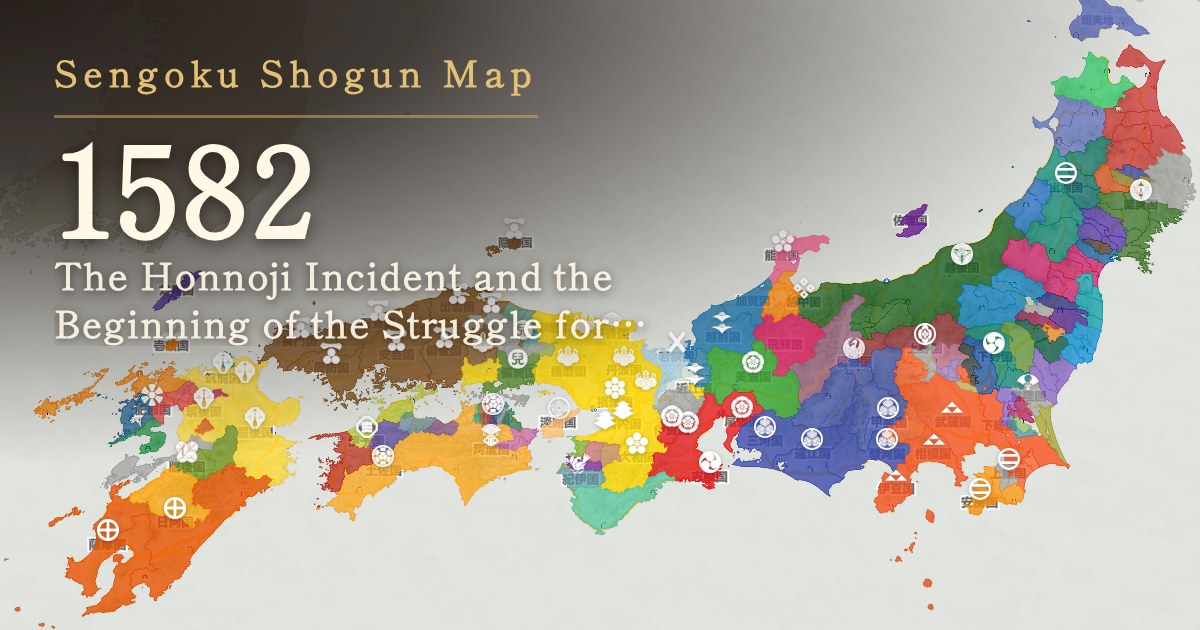
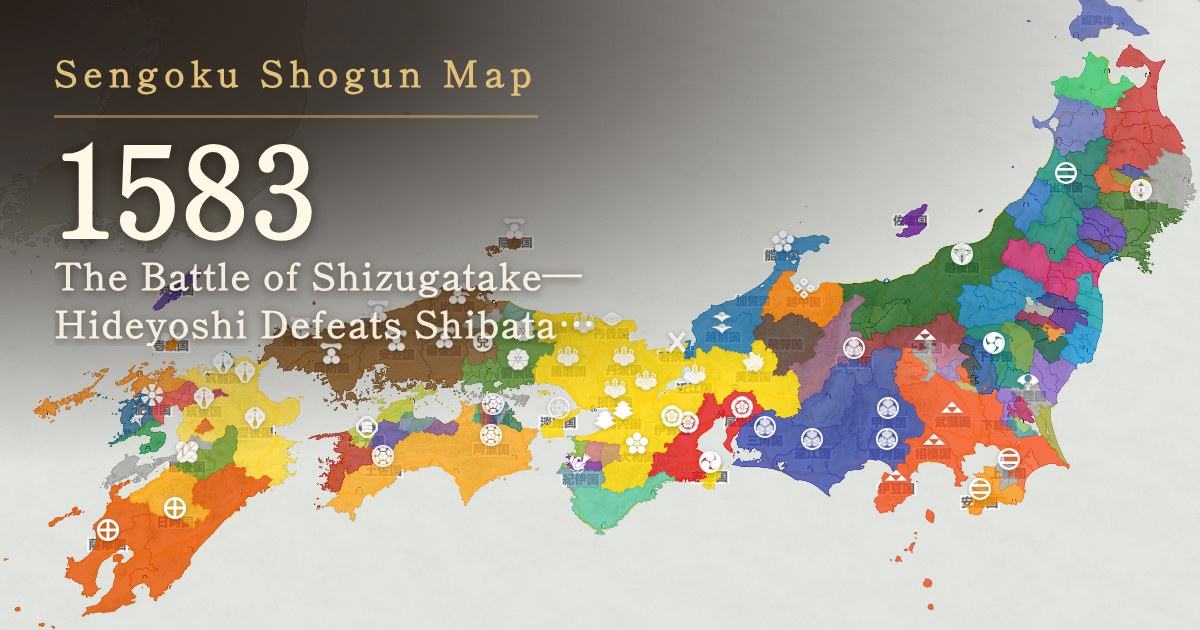
Territories before and after the battle
The year before, the year of the battle, and the year after, side by side. Tap a map to open that year.
Advertisement