INTERACTIVE BATTLE
Battle of Okitanawate
4 May 1584 (24th day of the 3rd month, Tenshō 12) · Okitanawate, Shimabara Peninsula (present-day Shimabara, Nagasaki Prefecture)
On the 24th day of the 3rd month of Tenshō 12 (4 May 1584), at Okitanawate on the Shimabara Peninsula (present-day Shimabara, Nagasaki Prefecture), the large army of Ryūzōji Takanobu was met by the forces of Arima Harunobu and Shimazu Iehisa, and Takanobu was killed.
龍造寺氏: Ryūzōji Takanobu, Nabeshima Naoshige / 有馬氏: Arima Harunobu / 島津氏: Shimazu Iehisa
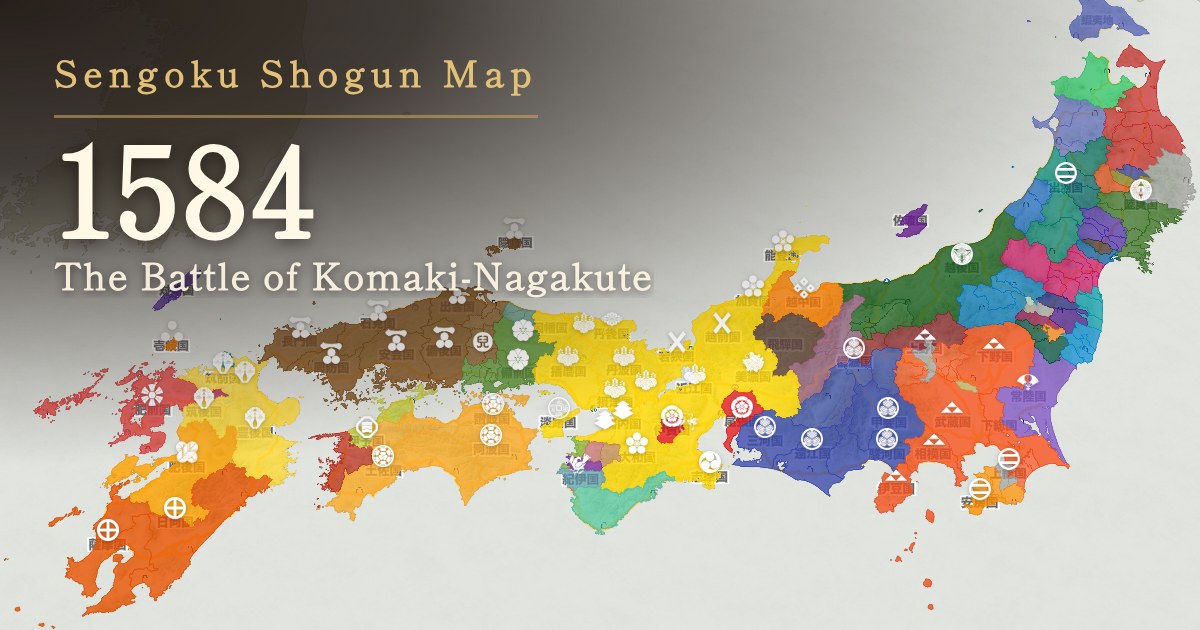
Explore the 1584 map
Change the year to watch territories shift
Background
Ryūzōji Takanobu of Hizen began moving troops onto the Shimabara Peninsula around 1582 to expand his domains, and he pressed Arima Harunobu, the lord of Shimabara. Harunobu asked Shimazu Yoshihisa of Satsuma for reinforcements, and Yoshihisa entrusted command of the troops to his younger brother Iehisa. In numbers the Ryūzōji side was overwhelming, but the battlefield was land where only a single narrow path ran through the marshes.
Outcome
The Ryūzōji army was defeated at Okitanawate, and Takanobu was killed on the same day. Kawakami Sakyōsuke of the Shimazu side is said to have killed him, but there are other theories about who took his head. The large army is said to have been unable to move along the narrow paths through the marsh. The Ryūzōji side is said to have numbered 25,000, or even 50,000, and the Arima and Shimazu side about 8,000.
Course of the battle
1 1582–1584 (Tenshō 10–12)
Arima Harunobu asks the Shimazu for reinforcements
From around 1582, Ryūzōji Takanobu began advancing into Shimabara and tried to expand his territory. Arima Harunobu, lord of Shimabara, asked Shimazu Yoshihisa, daimyo of Satsuma, for reinforcements to oppose him. Harunobu had converted to Christianity in 1579 and also had deep ties with the Jesuits.
Sources
Sources25·Certainty: High
2 Spring 1584 (Tenshō 12)
Shimazu Iehisa leads reinforcements to Shimabara
Yoshihisa entrusted command of the army to his younger brother Iehisa. The Shimazu side joined the Arima side and, using Hinoe Castle, Harunobu's seat, as its base, prepared to meet the Ryūzōji forces advancing against them. At this time the Shimazu were expanding from Satsuma into various parts of Kyushu.
Sources
Sources125·Certainty: High
3 Around May 1584 (Tenshō 12, third month)
The Ryūzōji forces advance into Shimabara
Takanobu is said to have entered the Shimabara Peninsula with a great army and set up his headquarters at Morigatake, the hill where Shimabara Castle now stands. Their strength is said to have been 25,000, but some accounts give 50,000, and it is unclear. The Ryūzōji army was unfamiliar with the terrain, and it is also said to have grown complacent about its great numbers.
Sources differ – details
Points of debate
Estimates of the Ryūzōji strength include 25,000, as well as 50,000 and 60,000 in some records, and it is unclear.
Sources135·Certainty: Medium
4 4 May 1584 (24 March, Tenshō 12), morning
The battle begins at Okitanawate
Okitanawate was land where a single narrow path ran through marshland so deep that it reached the chest. The large Ryūzōji army could not move as it wished, while the Arima and Shimazu forces, some 8,000 strong, knew the terrain intimately. The Arima and Shimazu side is said to have also been equipped with Western weapons that Harunobu had obtained from the Jesuits.
Sources
Sources126·Certainty: High
5 Same day
Ryūzōji Takanobu is killed
The battle began in the morning and was decided that same day. Takanobu is said to have been killed by Kawakami Sakyō-suke of the Shimazu side. With its commander lost, the Ryūzōji army collapsed, and the daimyo who had extended his power over Hizen lost his life on the ground of Shimabara.
Sources differ – details
Points of debate
Regarding the man who took Takanobu's head, one account names Kawakami Tadakata, while another names a different person.
Sources126·Certainty: High
6 After the battle
Arima Harunobu cedes Urakami to the Jesuits
Harunobu is said to have been grateful to the Jesuits, or to the weapons they supplied, for their help in this victory, and to have ceded the Urakami area (the northern part of present-day Nagasaki city) to them. Harunobu had converted in 1579.
Sources
Sources25·Certainty: Medium
7 May 1929 (Shōwa 4)
A memorial tower for the war dead is erected
The 129 small shrines in the area were gathered into one place, and a memorial tower was built to console the war dead. The Ryūzōji dead are said to number about 3,000. The memorial tower still stands in Kitamon-chō, Shimabara city, and there is a sign along National Route 251.
Sources
Sources16·Certainty: High
Historical significance
With its commander lost, the Ryūzōji clan lost momentum, and some in Hizen are said to have submitted to the Shimazu clan. The Shimazu clan moved toward controlling most of Kyushu. After his victory, Arima Harunobu is said to have ceded the Urakami area in gratitude to the Jesuits, who had lent their help. In Kitamon-chō, Shimabara, a memorial stupa for the war dead still stands.
Advertisement
Key figures
龍造寺氏
2

Commander of the Ryūzōji forces
A daimyo of Hizen, he led a large army into the Shimabara Peninsula, but at the marshes of Okitanawate he was met by the Arima and Shimazu forces and is said to have been killed on the day of the battle.
Sources
Sources12·Certainty: High

Senior retainer of the Ryūzōji clan (then named Nobunari)
A senior retainer who served Ryūzōji Takanobu; at that time he was known as Nobunari. He is said to have also joined the Ryūzōji army in this battle. After Takanobu's death, he came to take the position of supporting the Ryūzōji house.
Sources
Sources8·Certainty: Medium
有馬氏
1

Lord of Shimabara and Hinoe Castle
Under pressure from the Ryūzōji clan, he asked Shimazu Yoshihisa for reinforcements, joined forces with the Shimazu side, and fought at Okitanawate. He had converted to Christianity, and is described as having used Western arms obtained through the Jesuits.
Sources
Sources12·Certainty: High
島津氏
1

Commander of the Shimazu reinforcements
The younger brother of Shimazu Yoshihisa and Yoshihiro. Entrusted by Yoshihisa with command of the army, he crossed to the Shimabara Peninsula and, together with the Arima forces, met the Ryūzōji army and defeated its large force. Later he also fought as vanguard at Hetsugigawa in Bungo.
Sources
Sources27·Certainty: High
Other events of 1584
Sources consulted
- 島原市「沖田畷合戦場跡」
- 国土交通省 観光庁 多言語解説文データベース「沖田畷古戦場跡」
- 島原半島ジオパーク リーフレット「人々の暮らしと戦い」
- 鹿児島県歴史・美術センター黎明館「九州略定図」
- 城郭マスタ(shiro.geojson)
- 島原市「沖田畷合戦場跡」(所在は北門町。座標は一帯を示す概略)
- 宮崎市教育委員会 新名一仁「島津家久・豊久父子と日向国」
- 調査ノート参照(公的資料では未確認)
The numbers in the text refer to the list above. Certainty indicates how far a statement is supported by the cited sources; it does not refer to the precision of the coordinates or the dating.
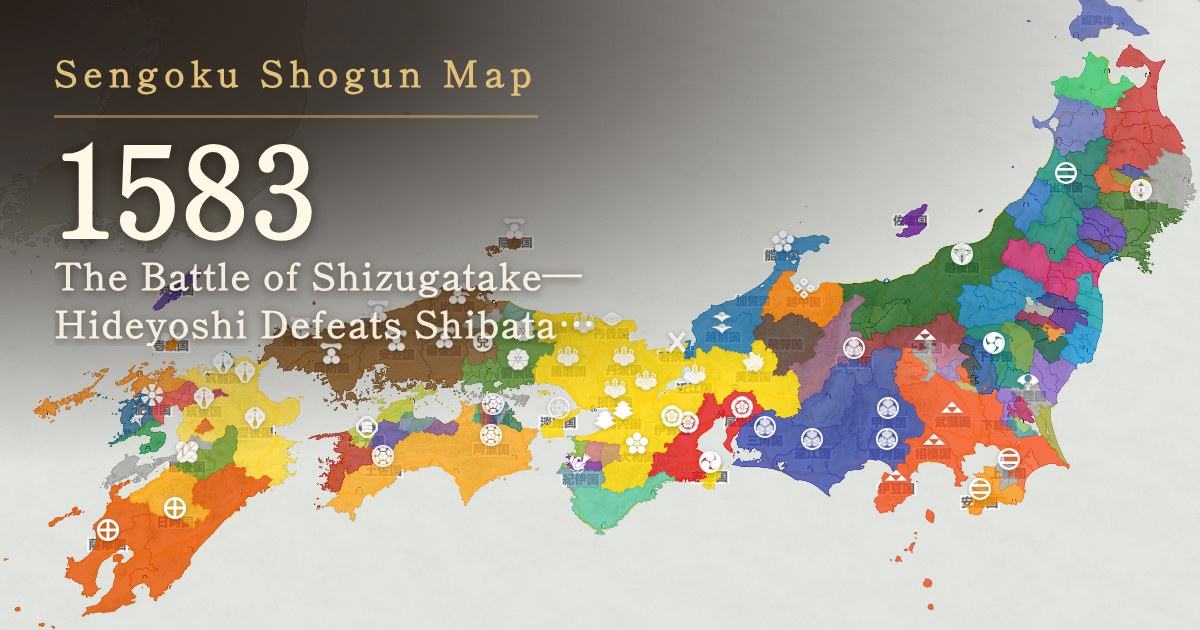
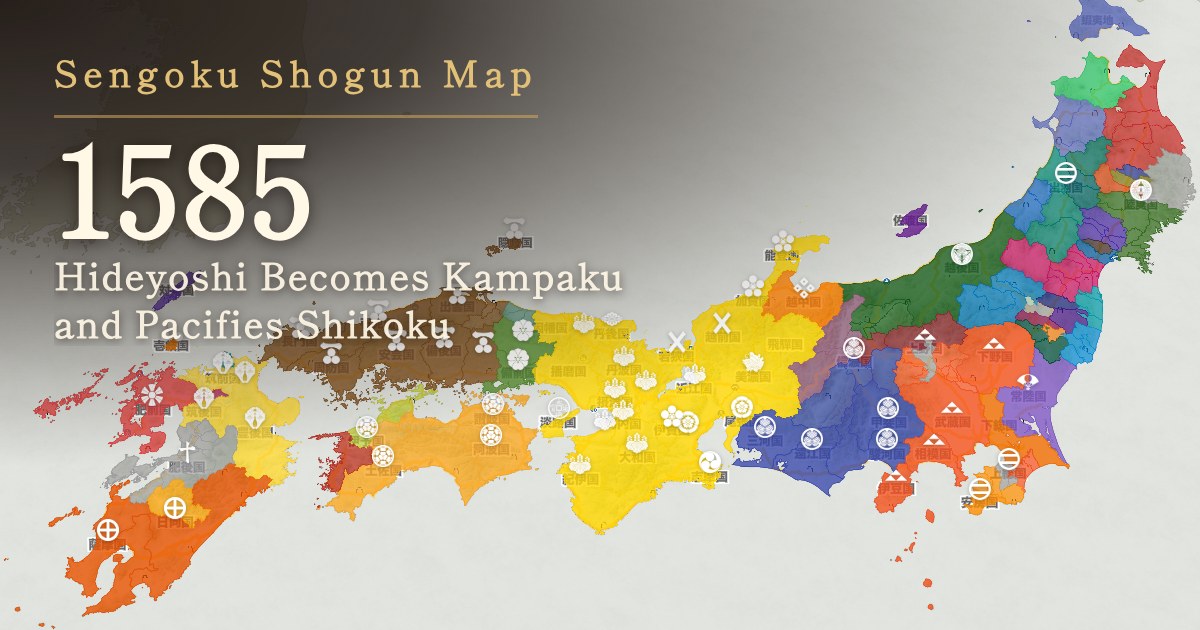
Territories before and after the battle
The year before, the year of the battle, and the year after, side by side. Tap a map to open that year.
Advertisement