INTERACTIVE BATTLE
Battle of Sekigahara
21 October 1600 · Sekigahara
The Battle of Sekigahara was fought on 21 October 1600 (15th day of the 9th month by the old calendar) at Sekigahara in Mino Province (present-day Sekigahara, Gifu Prefecture), where Tokugawa Ieyasu's Eastern Army and the Western Army of Ishida Mitsunari and others fought, and the Eastern Army won a great victory in about half a day. The Eastern Army was led by Ieyasu, Fukushima Masanori, Kuroda Nagamasa, Hosokawa Tadaoki and others, and the Western Army by Mitsunari, Ukita Hideie, Konishi Yukinaga, Ōtani Yoshitsugu and others, with Mōri Terumoto as its nominal commander-in-chief.
徳川方: Tokugawa Ieyasu, Matsudaira Tadayoshi, Ii Naomasa, Fukushima Masanori, Kuroda Nagamasa, Takenaka Shigekado et al. / 石田方: Ishida Mitsunari, 島左近, Ukita Hideie, Konishi Yukinaga, Ōtani Yoshitsugu, 平塚為広 et al.
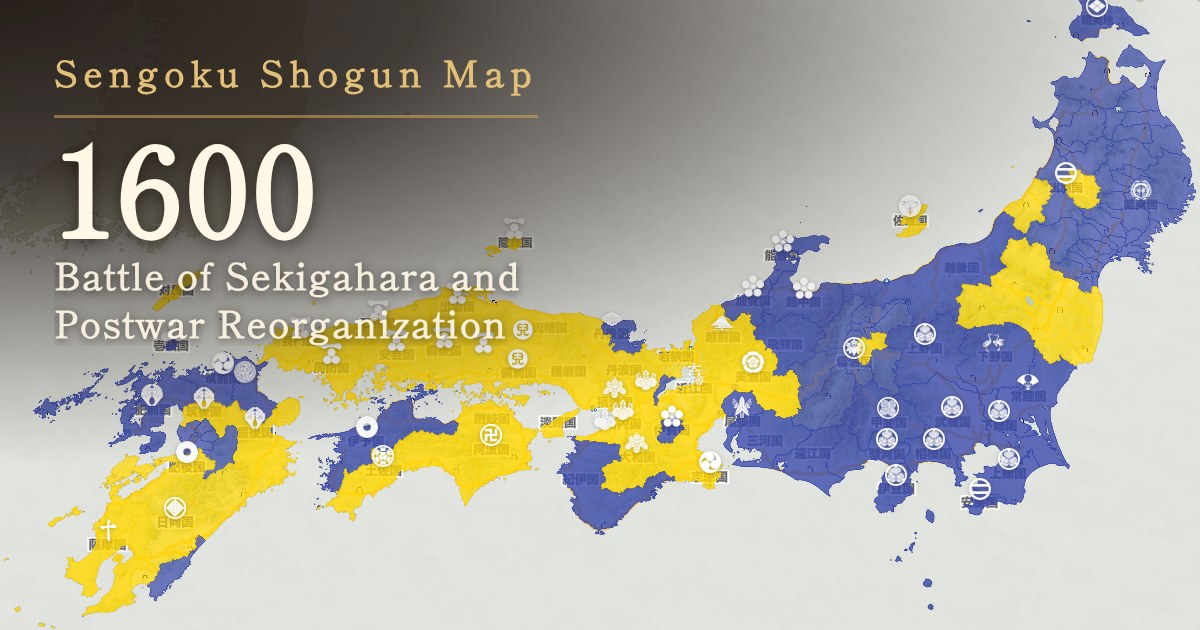
Explore the 1600 map
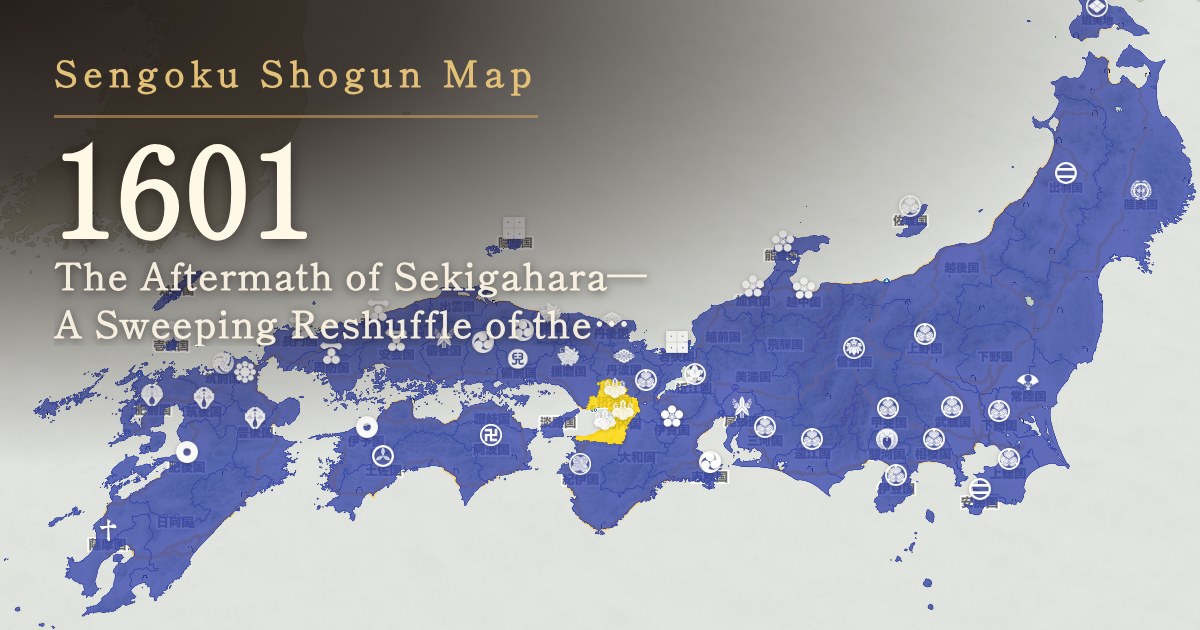
Change the year to watch territories shift
Background
After the death of Toyotomi Hideyoshi, the cooperation of the powerful daimyo and magistrates who were meant to support the young Hideyori broke down. Ieyasu and Mitsunari clashed over leadership of the Toyotomi regime. While Ieyasu moved to campaign against Aizu, Mitsunari and others sent letters to the daimyo to unite them against Ieyasu. The conflict spread across the country. About a month before Sekigahara, Mitsunari entered Ōgaki Castle, a key point in western Mino, and made it the headquarters of the Western Army. Ieyasu arrived at Okayama (Akasaka, Ōgaki) on September 14.
Outcome
When Kobayakawa Hideaki turned against the Western Army, its line collapsed, and Tokugawa Ieyasu's Eastern Army won in about half a day. Ōtani Yoshitsugu took his own life. Ishida Mitsunari fled to Mount Ibuki but was captured on October 27. On November 6, he was executed at Rokujō riverbank in Kyoto, together with Konishi Yukinaga and Ankokuji Ekei.
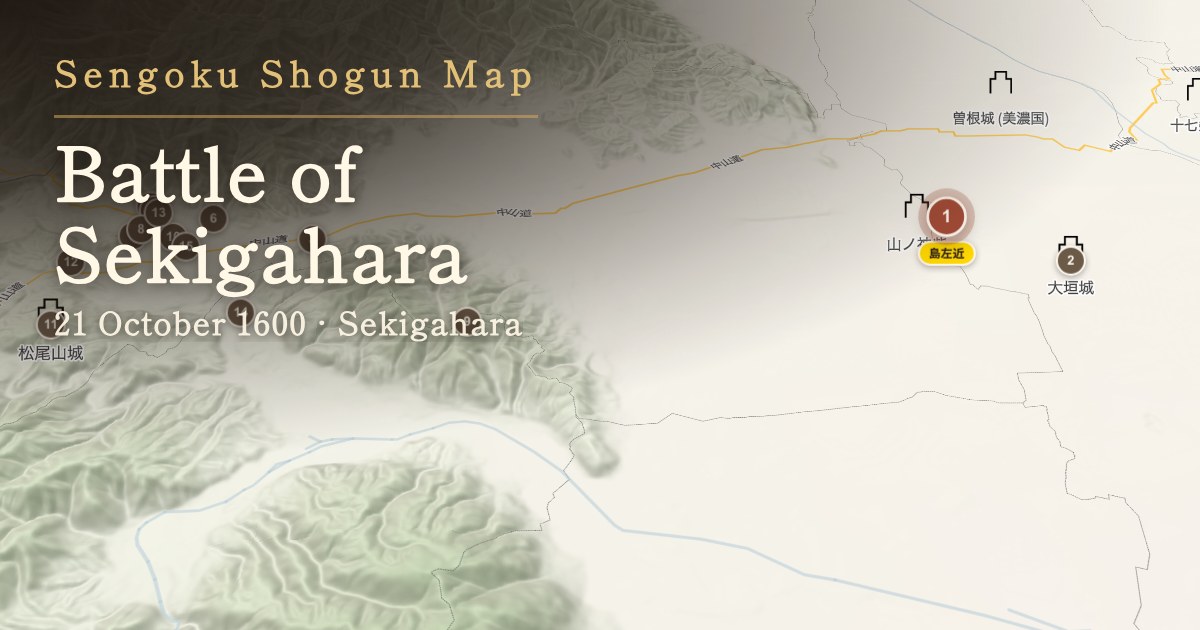
Course of the battle
1 20 October
The Western army wins at the Kuise river
Some 500 men under Shima Sakon and Gamo Bitchu left Ogaki Castle, laid an ambush, crossed the Kuise river and provoked Nakamura Kazuhide's Eastern unit, drawing it into the trap with a feigned retreat and defeating it.
Crossed the Kuise river with 500 men and broke Nakamura's unit.
Sources differ – details
Points of debate
The Kuise River has changed its course since then, and the exact location of the battle is not known.
Sources356·Certainty: High
2 Night of 20 October
The Western army leaves Ogaki for Sekigahara
The Western Army, having won at the Kuise River, left Ōgaki Castle that night and headed for Sekigahara. Ukita Hideie served as the rearguard, and it is said that during the night march he was caught by the Fukushima vanguard of the Eastern Army, and a skirmish broke out.
Had made Ogaki Castle the Western headquarters.
Covered the rear on the march to Sekigahara.
Sources
Sources127·Certainty: Medium
3 About 6 a.m., 21 October
Ieyasu takes position on Momokubariyama
Ieyasu had reached Okayama in Ogaki the previous day, and around 6 a.m. deployed on Momokubariyama overlooking the Tosando road.
Deployed on Momokubariyama around 6 a.m.
Sources
Sources12·Certainty: High
4 Before dawn, 21 October
Both armies deploy across the basin
The Western army formed a crane-wing array with Ishida Mitsunari on Sasaoyama and Kobayakawa Hideaki on Matsuoyama; the Eastern army formed a fish-scale array in the centre of the basin with Fukushima Masanori at its point. Mori Hidemoto and Kikkawa Hiroie held Nangusan, watched by Ikeda Terumasa and Asano Yoshinaga.
Deployed on Sasaoyama.
Deployed at the foot of Sasaoyama.
Deployed on Kita-Tenmanzan.
Deployed on Minami-Tenmanzan with about 17,000 men.
Deployed with his nephew Toyohisa and some 1,500 men.
Deployed in Yamanaka facing Matsuoyama.
Deployed on Matsuoyama, 293 m high.
Deployed on Nangusan as Terumoto's deputy.
Deployed on the eastern side of Nangusan.
Deployed on Nangusan.
Took position on Nangusan.
Deployed on Nangusan.
Held the point of the Eastern array in the centre of the basin.
Deployed near the present Sekigahara station.
Deployed with Matsudaira Tadayoshi.
Deployed on Okayama with Takenaka Shigekado.
Deployed on Okayama with Kuroda Nagamasa.
Deployed west of Okayama.
Deployed behind the Eastern line.
Deployed at Tarui to guard against Nangusan.
Deployed near the Tarui milestone.
Sources differ – details
Points of debate
The marked positions rest on identifications built on the work of Kamiya Michikazu, a Meiji-era local historian; they are not coordinates given by contemporary records.
Sources12·Certainty: Medium
5 Morning of 21 October
The Ii unit breaks ranks and the battle opens
Fukushima Masanori held the Eastern vanguard, but Ii Naomasa—holding that the Tokugawa house should strike first—passed his flank with Matsudaira Tadayoshi and fired on the Ukita contingent, opening the battle.
Broke ranks with Matsudaira Tadayoshi and fired on the Ukita.
Broke ranks with Ii Naomasa.
Attacked the Ukita after being pre-empted.
Received the Eastern attack on Minami-Tenmanzan.
Sources
Sources12489·Certainty: High
6 Morning of 21 October
Signal fires carry word of the opening
Konishi Yukinaga raised a signal fire on Kita-Tenmanzan to tell the Western army the battle had begun, while Kuroda Nagamasa and Takenaka Shigekado raised the Eastern signal to attack from Okayama.
Raised a signal fire on Kita-Tenmanzan.
Raised the signal to attack from Okayama.
Was on Okayama with Kuroda Nagamasa.
Sources
Sources12·Certainty: Medium
7 Morning of 21 October
Shima Sakon is wounded below Sasaoyama
Shima Sakon held off the Eastern assault at the foot of Sasaoyama, but musket fire from the Kuroda unit wounded him and he left the line; the Ishida contingent was steadily pressed back.
Wounded by Kuroda musket fire and withdrew.
Fired on the Ishida contingent from Okayama.
Attacked the Ishida with the Kuroda and Takenaka units.
Sources
Sources12·Certainty: Medium
8 Morning of 21 October
The Shimazu contingent does not move
9 Morning of 21 October
The Mori forces on Nangusan stay put
Mori Hidemoto held Nangusan as Terumoto's deputy, but Kikkawa Hiroie—already in contact with Ieyasu—stood in his path and he could not move. Natsuka Masaie and Chosokabe Morichika likewise never engaged.
Could not move because Kikkawa and others were in contact with Ieyasu.
In contact with Ieyasu, he stayed in front of the Mori force.
Was left a spectator on Nangusan.
Withdrew to Minakuchi in Omi without engaging.
Never moved.
Sources
Sources12·Certainty: High
10 About 11 a.m., 21 October
Ieyasu moves his headquarters to Jinbano
Unable to read the fighting from the rear, Ieyasu moved his headquarters to Jinbano, directly opposite Mitsunari's position on Sasaoyama, and urged his troops on from close behind the line.
Moved his headquarters to Jinbano.
Sources differ – details
Points of debate
The story that he fired on Kobayakawa Hideaki from here to force his hand is passed down as one account among others.
Sources12·Certainty: High
11 About noon, 21 October
Kobayakawa Hideaki changes sides
Looking down on the field from Matsuoyama, Kobayakawa Hideaki resolved to go over to the Eastern side he had been in contact with; four more contingents, Wakisaka Yasuharu's among them, followed.
Sources
Sources12·Certainty: High
12 About noon, 21 October
The Otani contingent is destroyed
Otani Yoshitsugu, positioned directly opposite Matsuoyama, was attacked from three sides by Kobayakawa and Wakisaka. His contingent—which he directed from a palanquin because of illness—was destroyed and he took his own life.
Attacked from three sides; his contingent destroyed, he took his own life.
Had been entrusted with command at the front in Yoshitsugu's stead.
Crossed swords with the Otani contingent.
Fought the Otani contingent with the Todo unit.
Charged down on the Otani from Matsuoyama.
Sources
Sources12·Certainty: High
13 Afternoon of 21 October
The Western army breaks at the Kessenchi
With the betrayal of Kobayakawa Hideaki, the situation changed at once, and the Eastern Army quickly gained the upper hand. This area was filled with Eastern Army units attacking the forces of Ishida and Shimazu, and it became the fiercest fighting of the day.
Overrun by the Eastern units, he fled toward Mount Ibuki.
Broke the Ukita and pushed forward.
Helped break the Ishida contingent.
Was routed and later gave himself up.
Sources
Sources12489·Certainty: High
14 Afternoon of 21 October
The Shimazu break through the Eastern centre
With the Western army broken, Shimazu Yoshihiro's men cut straight through the Eastern centre to find a way out. His nephew Toyohisa fought a covering action at Utozaka, and Yoshihiro reached Satsuma.
Broke through the Eastern centre and returned to Satsuma.
Fought the covering action at Utozaka.
Pursued the Shimazu with the Matsudaira and Honda units.
Pursued the Shimazu.
Sources
Sources12·Certainty: High
15 From 22 October
The head inspection and the head mounds
The day after the battle Ieyasu ordered Takenaka Shigekado to repair the damaged shrines and deal with the dead left on the field. Shigekado buried the bodies and raised two head mounds, east and west. The inspection of heads took place at Jinbano.
Held the inspection of heads at Jinbano.
Buried the dead and raised the eastern and western head mounds.
Ordered to find Mitsunari, he took him in the Ibuki mountains.
Sources
Sources12·Certainty: High
Historical significance
Sekigahara is often described as a battle that changed the realm in a single day, but in fact it was a wide-ranging war with fighting at Fushimi, Gifu, Ōtsu, Tanabe, Dewa, Bungo and other places, and it was the point where that war was decided. Toyotomi Hideyori remained at Osaka Castle, and the final settlement between the Tokugawa and the Toyotomi was carried over to the Osaka campaigns of 1614–15. After the war, forfeitures, grants of land and transfers reorganized the placement of the daimyo, and by 1601 the map stood at 66 provinces under the Tokugawa regime and 3 under the Toyotomi clan.
Advertisement
Key figures
徳川方
13
Commander of the Eastern army
Reached Okayama in Ogaki on the 14th and deployed at Momokubariyama around 6 a.m. on the 15th, then moved his headquarters opposite Mitsunari's position around 11 a.m.
Sources
Sources12·Certainty: High
Vanguard of the Eastern army
Deployed near the present Sekigahara station and, with Ii Naomasa, broke ranks to fire on the Ukita contingent.
Sources
Sources12·Certainty: High
Vanguard and inspector of the Eastern army
Holding that the Tokugawa house should strike first, he broke ranks with Matsudaira Tadayoshi to open the battle, and pursued the Shimazu in the afternoon.
Sources
Sources12·Certainty: High
Leading unit of the Eastern army
Held the point of the Eastern army's fish-scale formation in the centre of the Sekigahara basin, and attacked the Ukita after the Ii and Matsudaira units pre-empted him.
Sources
Sources12·Certainty: High
Eastern army, Okayama position
Deployed on Okayama hill with Takenaka Shigekado and some 5,000 men, raised the signal fire at the outset, and wounded Shima Sakon with musket fire.
Sources
Sources12·Certainty: High
Eastern army, Okayama position
Shared the Okayama position with Kuroda Nagamasa, and the day after the battle was ordered to bury the dead and raise the two head mounds.
Sources
Sources12·Certainty: High
Eastern army
Attacked the Ishida contingent alongside the Kuroda and Takenaka units.
Sources
Sources12·Certainty: High
Inspector of the Eastern army
In the afternoon he joined the Matsudaira and Ii units in pursuing Shimazu Yoshihiro.
Sources
Sources12·Certainty: High
Eastern army
Fought Otani Yoshitsugu's units together with Kyogoku Takatomo, and is said to have been in secret contact with Wakisaka Yasuharu.
Sources
Sources12·Certainty: Medium
Eastern army
Fought the Otani contingent alongside Todo Takatora.
Sources
Sources12·Certainty: Medium
Eastern army
Helped break the Ishida contingent, and afterwards was ordered to search for Mitsunari, capturing him in the Ibuki mountains.
Sources
Sources12·Certainty: High
Eastern army
After the assault on Gifu Castle he deployed at Tarui to guard against the forces on Nangusan.
Sources
Sources12·Certainty: Medium
Eastern army
Having taken Gifu Castle, he deployed near the Tarui milestone to watch the Mori forces on Nangusan.
Sources
Sources12·Certainty: Medium
石田方
16
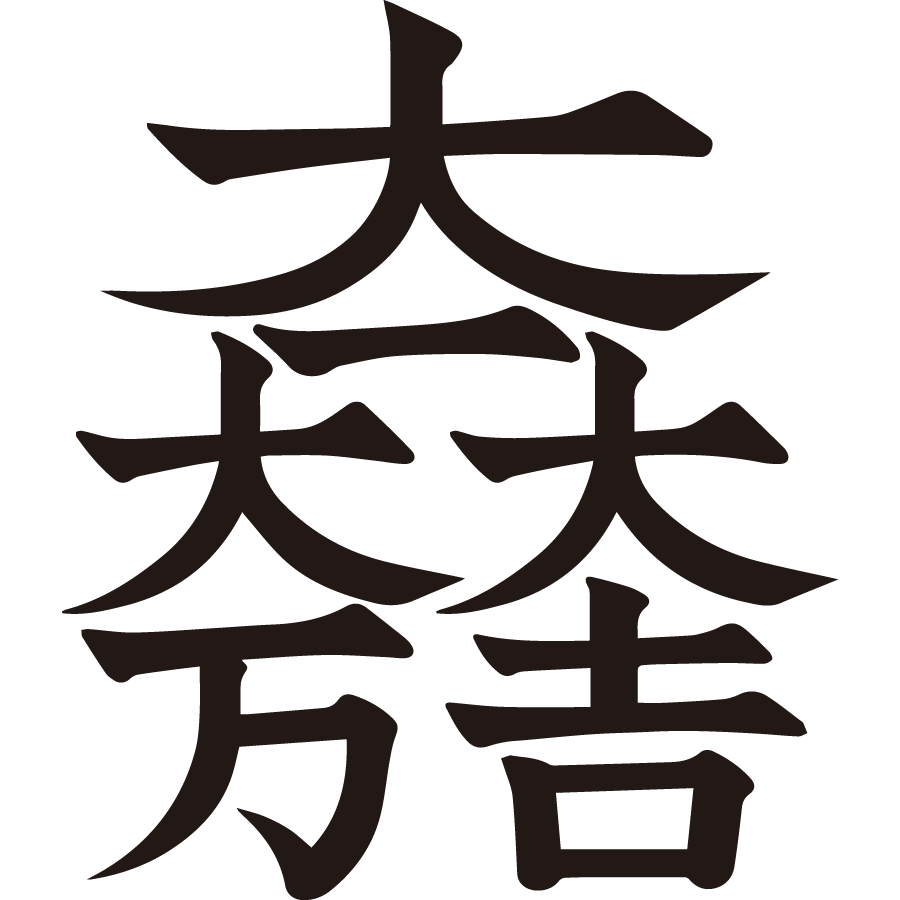
Core of the Western army
Deployed on Sasaoyama, which overlooks the field and commands the Hokkoku road; when the Western army broke he fled toward Mount Ibuki and was later captured by Tanaka Yoshimasa.
Sources
Sources12·Certainty: High

Commander under Ishida
Won the previous day's fight at the Kuise river with 500 men and held the foot of Sasaoyama, but was wounded by Kuroda musket fire and left the line.
Sources
Sources12·Certainty: Medium
Deputy commander of the Western army
Held Minami-Tenmanzan with about 17,000 men, the largest Western contingent, and had covered the rear on the march to Sekigahara.
Sources
Sources12·Certainty: High

Western army
Deployed on Kita-Tenmanzan and raised a signal fire as the battle opened; after the rout he gave himself up and was executed in Kyoto with Mitsunari.
Sources
Sources12·Certainty: High

Western army
Deployed in Yamanaka facing Matsuoyama and directed his men from a palanquin because of illness; attacked from three sides by Kobayakawa and Wakisaka, his contingent was destroyed.
Sources
Sources12·Certainty: High
Commander under Otani
Lord of Tarui Castle; he served under Otani Yoshitsugu and was entrusted with command at the front in his stead.
Sources
Sources12·Certainty: Medium
Western army
Deployed with his nephew Toyohisa and some 1,500 men, stayed on the defensive through the morning and refused Mitsunari's call for support, then broke through the Eastern centre and returned to Satsuma.
Sources
Sources12·Certainty: High
Western army
Yoshihiro's nephew; he covered the retreat and fought the Eastern pursuit at Utozaka.
Sources
Sources12·Certainty: Medium

Turned from the Western to the Eastern army
Deployed on Matsuoyama, 293 m high, and resolved to go over to the Eastern side he had been in contact with; the Western army collapsed from that point.
Sources
Sources12·Certainty: High
Turned from the Western to the Eastern army
Approached beforehand by Todo Takatora, he changed sides with three other contingents once Kobayakawa turned.
Sources
Sources12·Certainty: Medium
Western army, Nangusan
Deployed on Nangusan as Mori Terumoto's deputy, but could not move—and so could not join the battle—because Kikkawa Hiroie and others were in contact with Ieyasu.
Sources
Sources12·Certainty: High
Western army, Nangusan
As the senior figure of the house he opposed Mori participation on the Western side, and deployed on Nangusan after secretly reaching Ieyasu.
Sources
Sources12·Certainty: High

Western army, Nangusan
He had a hand in making Mori Terumoto the Western commander-in-chief; unable to move from Nangusan, he was beheaded after the battle with Mitsunari and Yukinaga.
Sources
Sources12·Certainty: Medium
Western army, Nangusan
He marched from Ise into Mino and took position on Nangusan, but withdrew to his domain at Minakuchi without engaging.
Sources
Sources12·Certainty: Medium

Western army, Nangusan
Deployed on Nangusan as part of the Western main force, but never moved.
Sources
Sources12·Certainty: Medium
Commander-in-chief of the Western army
Raised as commander-in-chief of the Western army, he remained in Osaka Castle and never took the field at Sekigahara.
Sources
Sources12·Certainty: High
Other events of 1600
Notes on the data
The sources date the battle to the 15th day of the 9th month of Keicho 5. The Gregorian date is anchored on the verified 21 October 1600, and other days within the same lunar month are converted by the same offset. The marked camp sites are identifications made from the Meiji period onward.
Sources consulted
- 岐阜関ケ原古戦場記念館「古戦場・史跡巡り」
- 岐阜県観光公式サイト「岐阜の旅ガイド」
- 大垣市「市指定史跡 関ケ原合戦岡山本陣跡」
- 岐阜県「岐阜関ケ原古戦場記念館」
- 岐阜県観光公式サイト「杭瀬川古戦場」
- 大垣・西美濃観光ポータル「関ケ原合戦 決戦前夜 大垣城」
- 城郭マスタ(shiro.geojson)
- 関ケ原観光ガイド「開戦地」
- 関ケ原観光ガイド「決戦地」
- 国土地理院 住所検索
The numbers in the text refer to the list above. Certainty indicates how far a statement is supported by the cited sources; it does not refer to the precision of the coordinates or the dating.
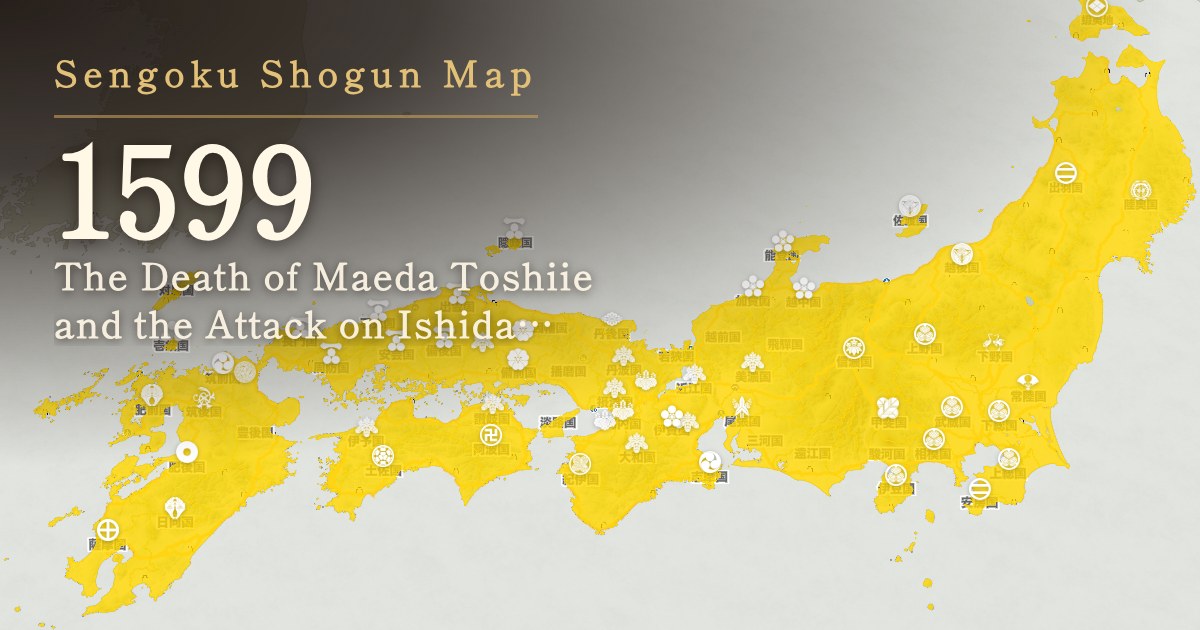
Territories before and after the battle
The year before, the year of the battle, and the year after, side by side. Tap a map to open that year.
Advertisement