INTERACTIVE BATTLE
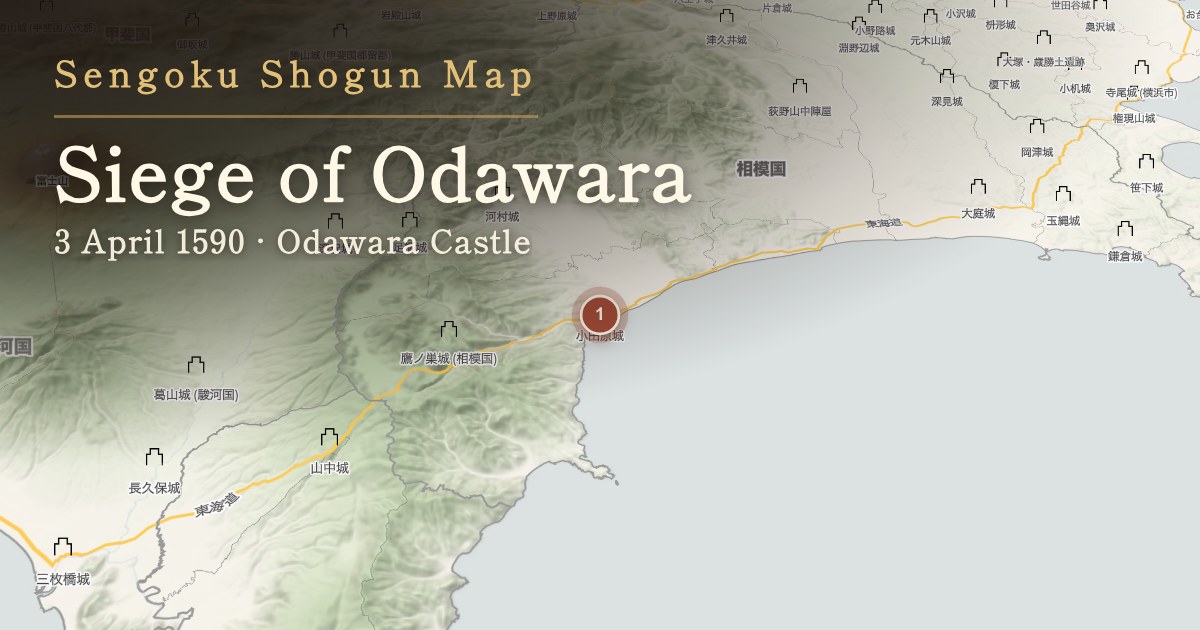
Siege of Odawara
3 April 1590 · Odawara Castle
Toyotomi Hideyoshi arrived at Odawara and his assembled armies began the siege of the Later Hōjō stronghold.
Background
After Hideyoshi's pacification of Kyushu, he issued the ban on private warfare (sōbuji ordinance) to daimyo in Kantō and Mutsu, and summoned the Later Hōjō to the capital. While the Hōjō procrastinated, one of Hideyoshi's retainers seized Nagakute Castle, an important position of the Sanada allied with the Hōjō, giving Hideyoshi the pretext to march.
Outcome
The Later Hōjō holed up in Odawara Castle behind an outer defensive perimeter, but Hideyoshi continued the siege while reducing surrounding fortresses including Yamanaka, Nirayama, Hachigata, and Hachiōji. On July 5, Ujinao surrendered and the castle opened its gates. Ujimasa and Ujiteru took their own lives, while Ujinao was exiled to Mount Kōya.
Course of the battle
1 April 1590
Toyotomi armies encircle Odawara Castle
After attacking Hojo satellite castles including Yamanaka, Toyotomi armies encircled Odawara. The defenders relied on the extensive outer fortifications enclosing the castle town.
Sources1234·Certainty: High
2 June 1590
Hideyoshi establishes his headquarters at Ishigakiyama
Hideyoshi established a fortified headquarters at Ishigakiyama overlooking Odawara. The later name 'one-night castle' does not mean that the fortress was built in a single night.
Points of debate
The fortress was not literally built in one night.
Sources1234·Certainty: High
3 July 1590
The Later Hojo surrender
After the fall of satellite castles and a prolonged encirclement, the Later Hojo surrendered. Ujimasa and Ujiteru were ordered to die, Ujinao was sent to Mount Koya, and Tokugawa Ieyasu was transferred to their former lands.
Sources1234·Certainty: High
Historical significance
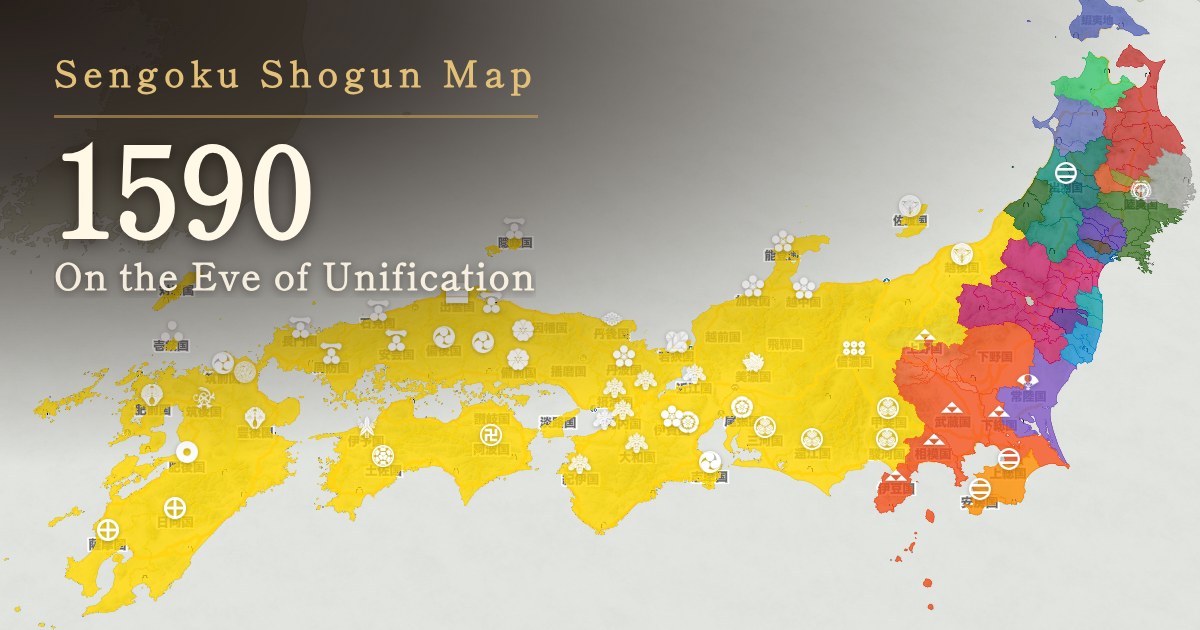
The Later Hōjō's rule as sengoku daimyo ended, and Hideyoshi's unification of the realm drew near to completion. In the aftermath, Tokugawa Ieyasu was assigned control of the Kantō and established his seat at Edo.
Advertisement
Key figures
豊臣氏
4

General-in-Chief
Established his headquarters at Ishigakiyama Castle and led his generals in besieging Odawara Castle.
Sources12·Certainty: High

Served under Toyotomi Hideyoshi
Campaigned under Hideyoshi and was appointed to rule the Kanto region after the campaign, establishing his seat at Edo.
Sources1·Certainty: High

Served under Toyotomi Hideyoshi
Marched from Ōshū to demonstrate allegiance to the Toyotomi regime.
Sources1·Certainty: High
Tōkaidō regional commander
Is said to have participated in the Odawara siege as one of the Toyotomi generals mobilized in the Tōkaidō region.
Sources1·Certainty: Medium
後北条氏
3

Retired ruler retaining actual authority
Held Odawara Castle and was ordered to commit suicide with his brother Ujiteru after its surrender.
Sources12·Certainty: High
Head of the Later Hōjō clan
Held Odawara Castle and surrendered in July 1590, after which he was exiled to Kōya.
Sources12·Certainty: High
Brother of Ujimasa
Held Odawara Castle rather than Hachiōji and committed suicide after its surrender.
Sources12·Certainty: High
Other events of 1590
Sources consulted
- 小田原市「小田原合戦」
- 小田原市「北条氏五代100年の歴史」
- 小田原市「史跡・石垣山」
- 小田原市「石垣山一夜城」
The numbers in the text refer to the list above. Certainty indicates how far a statement is supported by the cited sources; it does not refer to the precision of the coordinates or the dating.
Advertisement