1612: The Okamoto Daihachi Affair and the Christian Prohibition Edict
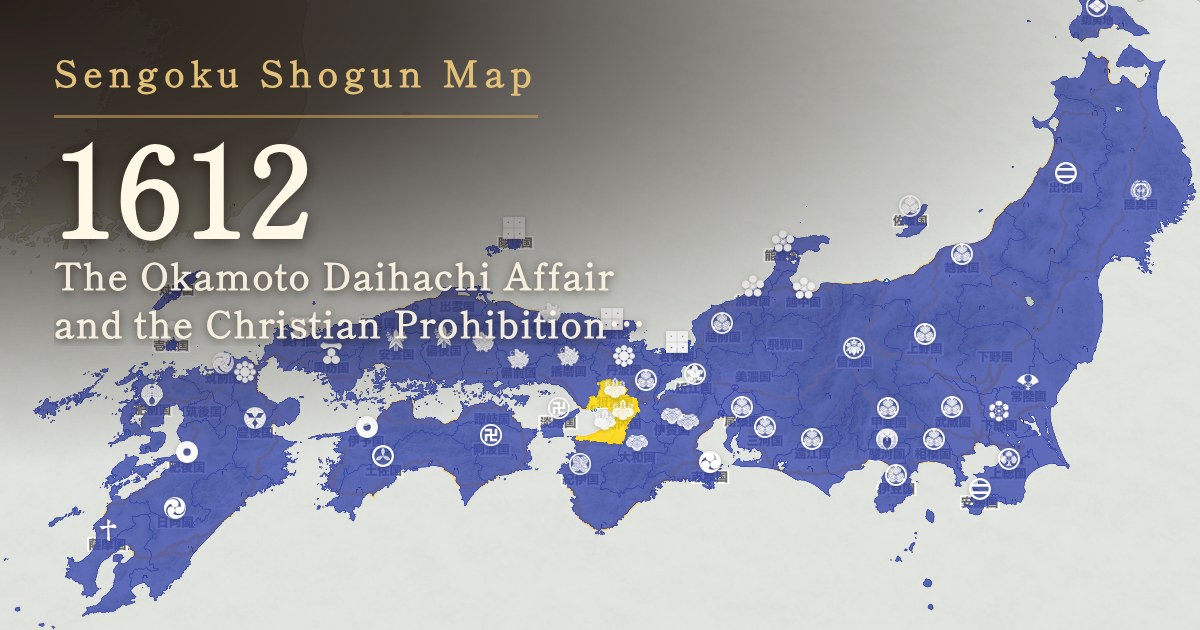
A bribery and forgery scandal involving Okamoto Daihachi, a retainer of Honda Masazumi, came to light, and because those implicated included Christians, the shogunate issued an edict ordering the destruction of churches and the prohibition of missionary activity in its directly controlled territories of Edo, Kyoto, and Sunpu. The ban would soon extend to daimyo domains throughout the country, marking the beginning of the shogunate's systematic suppression of Christianity.
Events this year
3/21
Okamoto Daihachi exploited Arima Harunobu's desire to recover his former lands as a reward for his role in the Portuguese ship incident of Keichō 14. Daihachi falsely promised to mediate the recovery using a forged vermillion seal document, obtaining a large bribe from Harunobu. When the fraud was discovered, Daihachi was executed by fire and Harunobu was stripped of his domain, exiled, and eventually put to death.
Sources 国立国会図書館レファレンス協同データベース「岡本大八に関する文献を探している」
9/1
The shogunate banned Christianity in territories under its direct control, advancing a religious policy that led to nationwide prohibition.
The main and smaller keeps of Nagoya Castle were completed through public construction, and golden shachi were placed atop the main keep as symbols of the Owari Tokugawa house.