INTERACTIVE BATTLE
Tenshō Jingo War
June to November 1582 (6th to 10th month of Tenshō 10) · Wakamiko Castle, Kai Province (Tenshō-Jingo War)
In 1582 (Tenshō 10), after the Honnoji Incident left the former Takeda domains of Kai and Shinano without a master, Tokugawa Ieyasu and Hōjō Ujinao contended for them. The two armies faced each other in northern Kai, and in October they made peace, and Kai and Shinano became Tokugawa territory.
徳川氏: Tokugawa Ieyasu / 後北条氏: Hōjō Ujinao, Hōjō Ujimasa
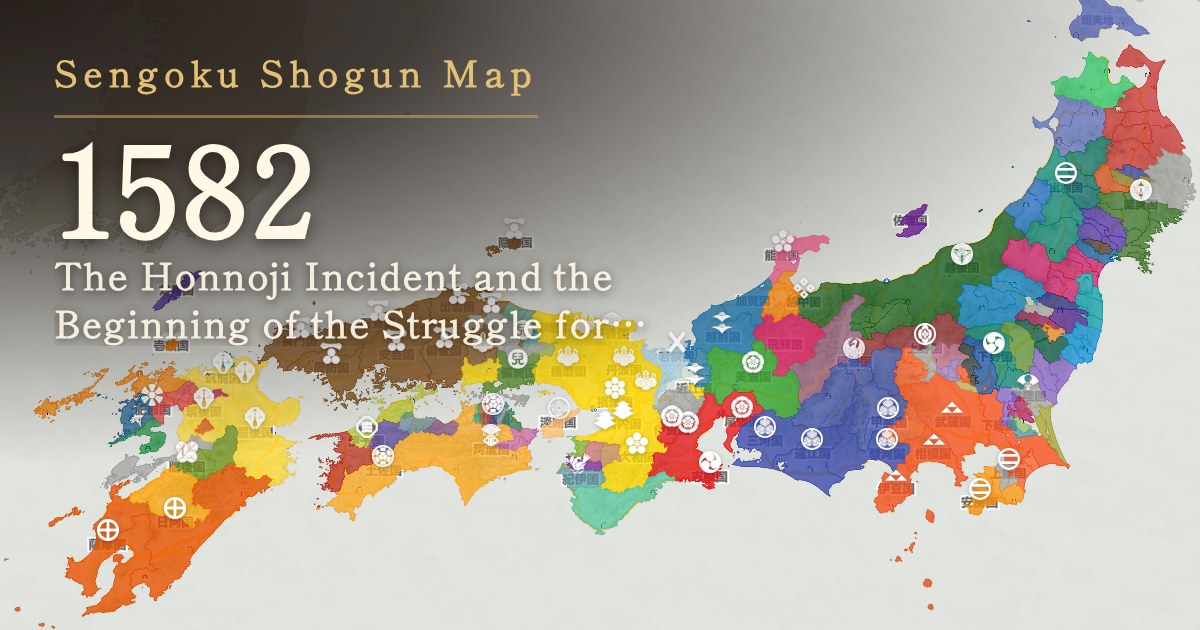
Explore the 1582 map
Change the year to watch territories shift
Background
In March 1582, Oda Nobunaga destroyed the Takeda clan and divided its former domains among his retainers. In June, however, Nobunaga was killed in the Honnoji Incident, the rule of Kawajiri Hidetaka in Kai collapsed, and the former Takeda domains became lands without a lord. Tokugawa Ieyasu, Hōjō Ujinao, and Uesugi Kagekatsu each advanced troops, and the local lords (kokushū) were also forced to choose sides.
Outcome
The Hōjō forces advanced from Kōzuke into Shinano and Kai and faced Ieyasu in northern Kai. Before long, local lords of Shinano began to join Ieyasu one after another, and in October the two sides made peace. It was agreed that Kai and Shinano would be governed by the Tokugawa and Kōzuke by the Hōjō, and Ujinao took Ieyasu’s daughter, Tokuhime, as his wife. There was no major decisive battle; it was a standoff and a contest of persuasion and inducement (winning over allies). Within it, the former Takeda local lords had to choose their side.
Course of the battle
1 June 1582 (6th month of Tenshō 10)
The Honnoji Incident and the vacuum in the former Takeda domains
On the 2nd day of the 6th month, Nobunaga was killed in the Honnoji Incident. The rule of Kawajiri Hidetaka, who held Kai, collapsed within a short time, and about three months after the fall of the Takeda clan, the former Takeda domains of Kai, Shinano, and Kōzuke became lands without a lord.
Sources
Sources25·Certainty: High
2 July 1582 (18th–19th day of the 6th month of Tenshō 10)
Battle of the Kanna River
Learning of the Honnoji Incident, the Hōjō clan advanced into Kōzuke from Odawara and Hachigata Castle. Takigawa Kazumasu met them at Umayabashi Castle, and on the 18th day of the 6th month by the old calendar, the two sides clashed on the banks of the Kanna River, on the border between Kōzuke and Musashi. On the first day Hōjō Ujikuni had the worse of it, but on the 19th the main force under Hōjō Ujinao joined the fight and the tide turned, and Takigawa's army was defeated heavily.
Sources
Sources6789·Certainty: High
3 July to August 1582
Ieyasu advances into Kai and southern Shinano
Ieyasu sent Sakai Tadatsugu and others toward Shinano, and himself entered Kai to set up his headquarters at Shinpu Castle. Yoda Nobushige, a former Takeda retainer, sided with the Tokugawa in Saku and rallied the local lords on the spot to prepare for the movements of the Hōjō forces.
Sources
Sources15·Certainty: Medium
4 September to November 1582 (8th to 10th month of Tenshō 10)
Tokugawa Headquarters at Shinpu Castle and the Standoff with Hōjō Ujinao
Shinpu Castle, built by Takeda Katsuyori and left after he set it on fire, became Ieyasu's headquarters. In the 8th month, Ieyasu faced Hōjō Ujinao here, and the standoff continued until the peace of the 10th month. Once peace was concluded, Shinpu Castle had served its purpose and was abandoned. A castle given up after only 68 days was thus briefly revived as a Tokugawa camp.
Sources
Sources5101112·Certainty: High
5 Mid-November 1582 (10th month of Tenshō 10)
Tokugawa and Hōjō make peace
In the 10th month, Ieyasu and Hōjō Ujinao made peace. It was agreed that Kai and Shinano would be governed by the Tokugawa and Kōzuke by the Hōjō, and Ujinao took Ieyasu’s daughter, Tokuhime, as his wife. In this way, Ieyasu became a daimyo ruling five provinces: Mikawa, Tōtōmi, Suruga, Kai, and Shinano.
Sources differ – details
Points of debate
The peace is said to have been concluded on the 29th day of the 10th month by the old calendar, but sources differ by a few days.
Sources1235·Certainty: High
6 1582–1584
Sanada Masayuki's Numata Domain and His Allegiance
When the Takeda clan fell, Masayuki had handed Numata Castle over to Takigawa Kazumasu of the Oda side. After the Honnoji Incident, Kazumasu returned the castle to Masayuki to guard against the Hōjō. However, in the division between the Tokugawa and the Hōjō, Kōzuke was assigned as Hōjō territory, and the Numata domain remained a source of conflict. Masayuki sought to survive by switching his overlord between the Uesugi and the Tokugawa, and when Ieyasu later ordered him to hand Numata over to the Hōjō, he refused.
Sources
Sources131415·Certainty: High
Historical significance
Ieyasu added Kai and Shinano to Mikawa, Tōtōmi, and Suruga, and grew into a daimyo ruling five provinces. Many former Takeda retainers were brought into his service and became a strength of the Tokugawa army later on. This battle gave Ieyasu a major foothold in the east after Nobunaga’s death. However, the dispute over the Numata domain in Kōzuke remained, and together with Sanada Masayuki’s moves, it led on to the later Odawara campaign.
Advertisement
Key figures
徳川氏
1

Supreme commander of the Tokugawa forces
He entered Kai, set up his headquarters at Shinpu, and faced the Hōjō forces at Wakamiko. In October he made peace, gained Kai and Shinano, took in many former Takeda retainers, and grew into a daimyo holding five provinces.
Sources
Sources13·Certainty: High
後北条氏
2

Supreme commander of the Hōjō forces
After defeating Takigawa Kazumasu at the Kanna River and taking Kōzuke, he advanced into Shinano and Kai and faced Ieyasu at Wakamiko. Through the October peace he took Tokuhime, Ieyasu's daughter, as his wife and was granted control of Kōzuke.
Sources
Sources2·Certainty: High
Former head who kept real power after retiring
He handed the family headship to Ujinao in 1580, but kept real power after retiring. In this conflict too, he is said to have acted from behind, supporting Ujinao, the reigning head.
Sources
Sources2·Certainty: Medium
Other events of 1582
Sources consulted
- 山梨県「遺跡トピックスNo.547」
- 小田原市「新・北条五代記」
- 富士宮市「戦国時代の富士宮」
- 浜松市「家康公の略年表」
- 城郭マスタ(shiro.geojson)
- 上里町「かみさと文化財ニュース002」
- 群馬県立文書館
- 高崎市・藤岡市の史跡案内
- 高崎市「神流川合戦首塚」
- 山梨県「史跡甲府城跡 整備基本計画」
- 韮崎市「新府城跡」
- 山梨県埋蔵文化財センター
- 沼田市「沼田城の歴史」
- 上田市「上田城跡」
- 群馬県「真田昌幸」
The numbers in the text refer to the list above. Certainty indicates how far a statement is supported by the cited sources; it does not refer to the precision of the coordinates or the dating.
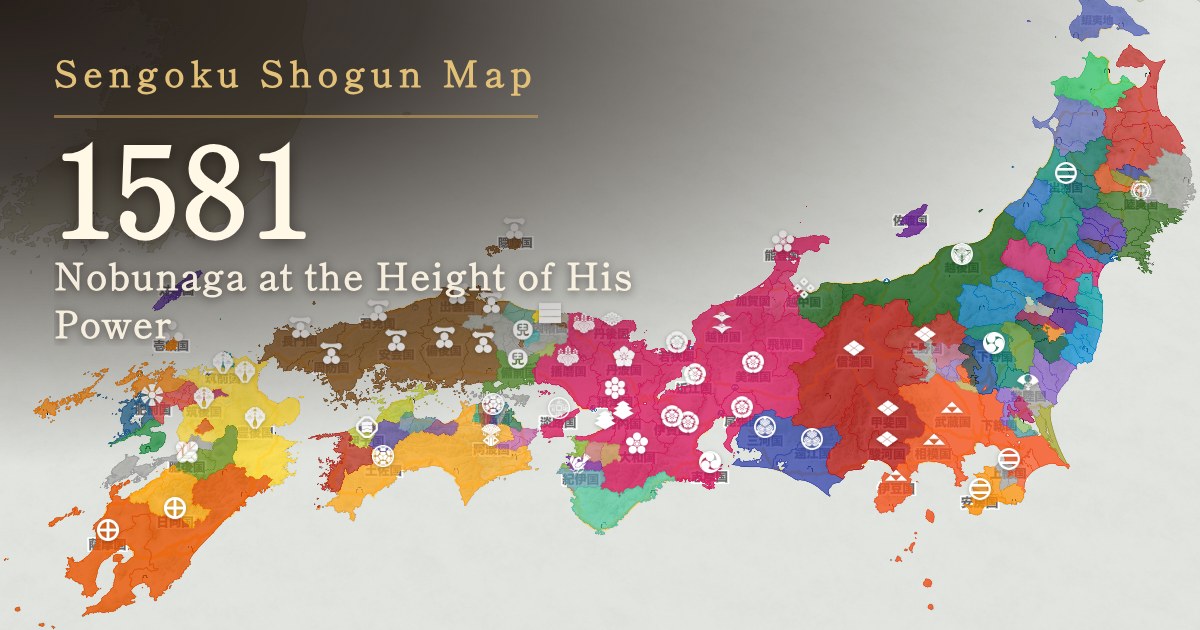
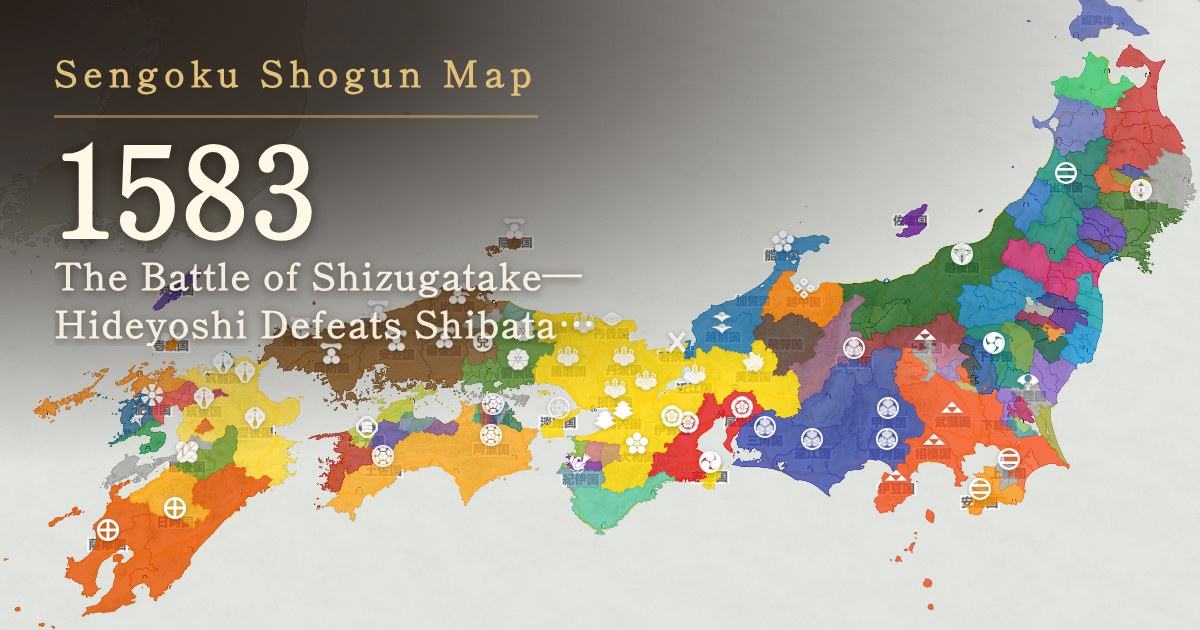
Territories before and after the battle
The year before, the year of the battle, and the year after, side by side. Tap a map to open that year.
Advertisement