POLITICAL EVENT
The Kiyosu Conference
1582 (27th day of the 6th month, Tenshō 10) · Kiyosu Castle, Owari Province
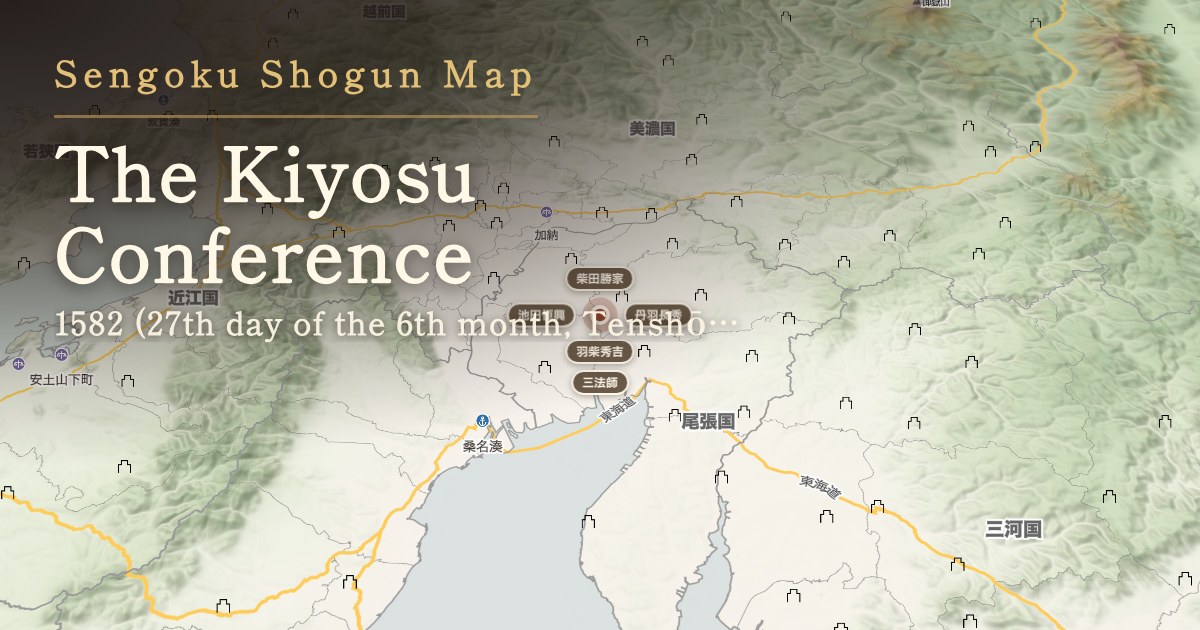
The Kiyosu Conference was a meeting held on 16 July 1582 (27th day of the 6th month by the old calendar), after the Honnoji Incident, at which the four senior retainers Shibata Katsuie, Hashiba Hideyoshi, Niwa Nagahide and Ikeda Tsuneoki gathered at Kiyosu Castle in Owari Province (present-day Kiyosu, Aichi Prefecture) and decided the Oda heir and the division of Nobunaga's former lands. It was decided that the three-year-old Sanbōshi would succeed to the headship.
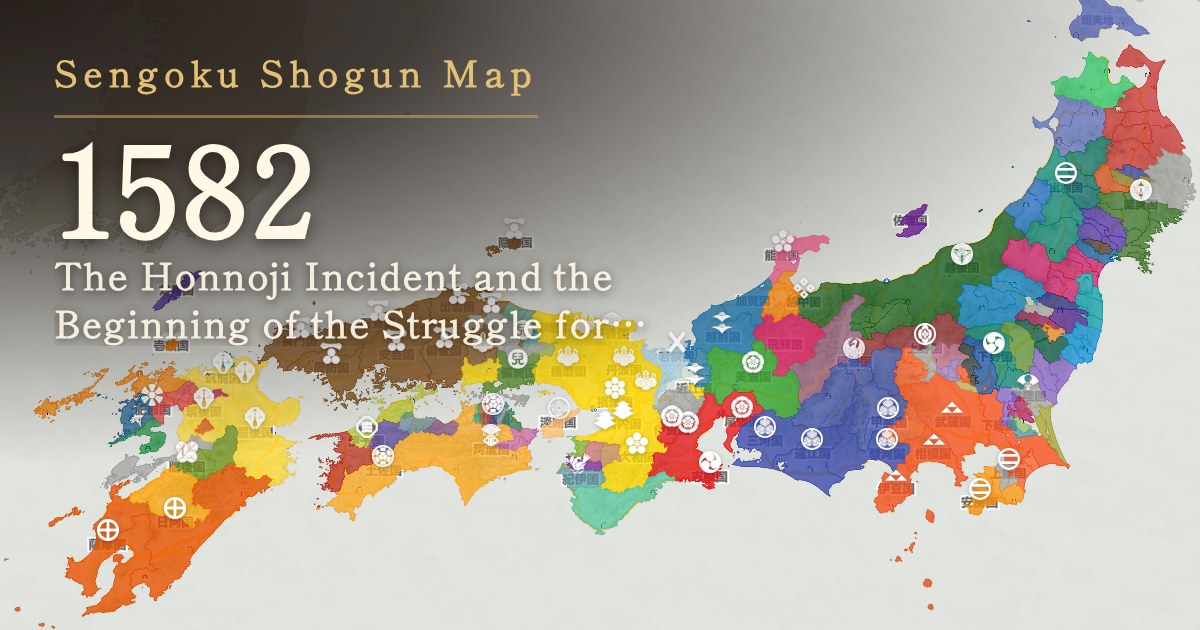
Explore the 1582 map
Change the year to watch territories shift
Background
In the 6th month of Tenshō 10 (1582), Oda Nobunaga and his heir Nobutada died in the Honnō-ji Incident, leaving the Oda house with neither an heir nor an agreed division of its lands. Hashiba Hideyoshi had defeated Akechi Mitsuhide at the Battle of Yamazaki on the 13th, while Shibata Katsuie had returned from Etchū and secured the area around Nagahama, and Takigawa Kazumasu in the Kantō had been defeated by the Hōjō at the Battle of the Kanna River on the 18th and 19th. On the 27th, the senior retainers gathered at Kiyosu Castle in Owari.
Outcome
The conference decided that Sanbōshi, Nobunaga's three-year-old eldest grandson, would succeed to the headship of the Oda house. Katsuie had backed Nobunaga's third son, Nobutaka, while Hideyoshi backed Sanbōshi, the son of Nobutada. Nobukatsu was to hold Owari and Nobutaka Mino. Hideyoshi was to add Yamashiro, Kawachi and Tamba, and Nagahide was to add two districts of Ōmi. Hideyoshi also handed Nagahama Castle to Katsuie. It was further decided that Oichi no Kata would marry Katsuie.
Course of the battle
1 2nd day of the 6th month of Tenshō 10 (1582)
The Honnōji Incident: Nobunaga and Nobutada die
Oda Nobunaga and his heir Nobutada died at Honnōji in Kyoto, and the Oda house lost its head and its successor at once. Hashiba Hideyoshi defeated Akechi Mitsuhide at the Battle of Yamazaki on the 13th.
Sources
Sources111·Certainty: High
2 6th month of Tenshō 10
Shibata Katsuie's force secures the area around Nagahama in Ōmi
Shibata Katsuie's army in Hokuriku withdrew before the 8th of the 6th month and, judging from a prohibition notice dated the 18th, appears to have secured the area around Nagahama. It did not arrive in time for Yamazaki.
Sources differ – details
Points of debate
The 18th of the 6th month is the date of the prohibition notice, not the day Katsuie secured the area around Nagahama.
Sources112·Certainty: Medium
3 27th day of the 6th month of Tenshō 10
Council of senior retainers at Kiyosu Castle
Shibata Katsuie, Hashiba Hideyoshi, Niwa Nagahide and Ikeda Tsuneoki gathered at Kiyosu Castle and discussed the succession and the division of the inheritance. Katsuie backed Nobutaka, and Hideyoshi backed Sanbōshi. Takigawa Kazumasu had been defeated by the Hōjō at the Kanna River and could not attend.
Attends the council at Kiyosu castle
Attends the council at Kiyosu castle
Attends the council at Kiyosu castle
Attends the council at Kiyosu castle
Sources differ – details
Points of debate
It is not clear whether Sanbōshi, Nobukatsu and Nobutaka were present in person. It is also unknown whether Kazumasu could not attend because of distance or time, or was not invited because of his defeat.
Sources12612·Certainty: High
4 27th day of the 6th month of Tenshō 10
Sanbōshi succeeds as head; territories redistributed
Sanbōshi succeeded as head of the house, Nobukatsu took Owari and Nobutaka took Mino. Hideyoshi received Yamashiro, Kawachi and Tamba, and Nagahide was given two districts of Ōmi in addition to Wakasa.
Succeeds as heir of the Oda house
Sources differ – details
Points of debate
Some sources give the territories of Nobukatsu and Nobutaka the other way round. Here the account of the municipal materials is followed, in which Nobukatsu held Owari and Nobutaka held Mino.
Sources13712·Certainty: Medium
5 27th day of the 6th month of Tenshō 10
It is decided that Oichi will marry Katsuie
The council decided that Oichi, Oda Nobunaga's sister, would marry Shibata Katsuie. Around the 10th month, Oichi is thought to have set out for Kita-no-shō with her daughters.
Sources
Sources1212·Certainty: High
6 after the 7th and 8th months of Tenshō 10
Katsutoyo enters Nagahama; Nobutaka keeps Sanbōshi in Gifu
Katsuie put his adopted son Katsutoyo into Nagahama Castle, and on the 24th day of the 8th month Katsutoyo issued a debt-cancellation decree. Sanbōshi was to move to Azuchi, but Nobutaka objected and kept him in Gifu.
Sources
Sources1712·Certainty: High
Historical significance
Setting up the infant Sanbōshi with the senior retainers supporting him did not concentrate the Oda succession in a single adult but reorganised the relations among powerful men. However, the chosen successor remained a figurehead, and the conflict went on. Katsuie allied with Nobutaka against Hideyoshi and was defeated at the Battle of Shizugatake in 1583. Nobutaka took his own life the same year.
Advertisement
People involved
One of the four senior retainers at the conference
Hashiba Hideyoshi attended the conference after defeating Akechi Mitsuhide at the Battle of Yamazaki. Kiyosu City explains that Hideyoshi took the initiative at the conference.
Sources
Sources513·Certainty: Medium

One of the four senior retainers at the conference
A leading retainer of the Oda. After the conference he backed Oda Nobutaka against Hideyoshi, and the quarrel led to Shizugatake the following year.
Sources
Sources913·Certainty: High

One of the four senior retainers at the conference
Attended alongside Katsuie and Hideyoshi. His standing mattered in working out how the Oda house would be run around the infant Sanbōshi.
Sources
Sources13·Certainty: High
One of the four senior retainers at the conference
One of the four senior retainers present at the conference on the 27th day of the 6th month of Tenshō 10, with Katsuie, Hideyoshi and Nagahide.
Sources
Sources13·Certainty: High
Nobunaga's grandson, who took the headship of the Oda house
Nobutada's son. The conference made him head of the Oda house. Being an infant, real political and military initiative rested on the relations among the powerful men around him. Later known as Oda Hidenobu.
Sources
Sources310·Certainty: High
Nobunaga's second son, who received Owari
Received Owari and became lord of Kiyosu Castle, rebuilding the castle and its town on a large scale. In 1584 he broke with Hideyoshi and allied with Tokugawa Ieyasu.
Sources
Sources349·Certainty: High
Nobunaga's third son, who received Mino
Received Mino and was placed at Gifu Castle as Sanbōshi's guardian. He later joined Shibata Katsuie against Hideyoshi, was defeated in 1583 and took his own life.
Sources
Sources3913·Certainty: High

Senior retainer who could not attend the council
He was in the Kantō and, having been defeated by the Hōjō at the Battle of the Kanna River on the 18th and 19th of the 6th month, could not take part in the council.
Sources
Sources6·Certainty: High
Katsuie's adopted son
After the council he entered Nagahama Castle.
Sources
Sources1·Certainty: High
Commander who took over Niwa Nagahide's former lands
He took over Sawayama, which Nagahide had ceded.
Sources
Sources1·Certainty: High
Other events of 1582
Notes on the data
Dates follow the Japanese calendar of the sources (27th day of the 6th month, Tenshō 10). The heading gives only the year, because the basis for converting the date has not been sufficiently checked. On what was actually at issue, municipal accounts describe the meeting as deciding who would succeed Nobunaga, while scholarship treats Sanbōshi's succession as a given and the immediate purpose as naming his guardian. This page records the conference as a meeting that settled the succession and the division of the lands, and keeps any judgement of Hideyoshi's personal leadership separate from the established facts. Later war tales depict the speeches, seating and confrontations in detail; the sources and studies consulted here cannot reconstruct the exchanges, so they are not reproduced.
Sources consulted
- 福井県『福井県史』通史編3 近世一「清洲会議」
- 福井県「戦国ふくい歴史紀行 天下分け目の清洲会議」
- 江南市「織田信雄禁制」
- 清須市「清洲城」
- 清須市「清須の人物伝」
- 上里町「かみさと文化財ニュース002 神流川合戦を考える」
- 岐阜市「岐阜城の歴代城主」
- 尼崎市立地域研究史料館「池田恒興」
- 愛知県公文書館「愛知の歴史資料」
- 文教大学教育学部・中村修也「清須会議の意味」
- 京都市「NA149 本能寺跡」(京都市歴史的地名等保存事業・石標一覧)
- 城郭マスタ(shiro.geojson)
- 滋賀県「賤ヶ岳の戦いから小牧・長久手の戦いへ」
The numbers in the text refer to the list above. Certainty indicates how far a statement is supported by the cited sources; it does not refer to the precision of the coordinates or the dating.
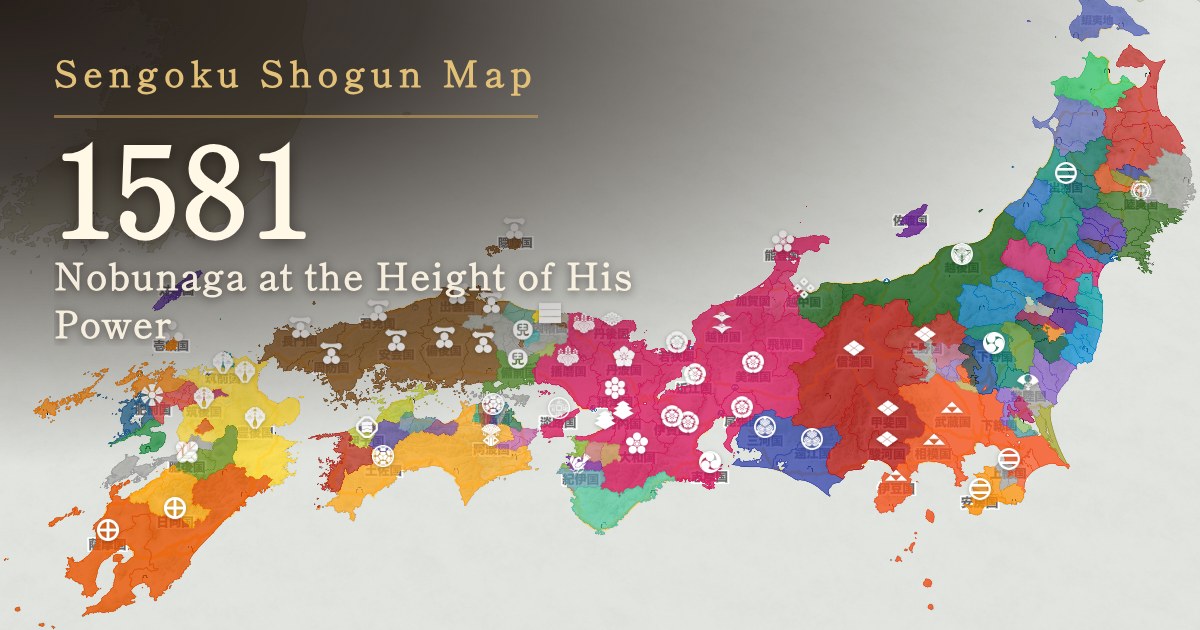
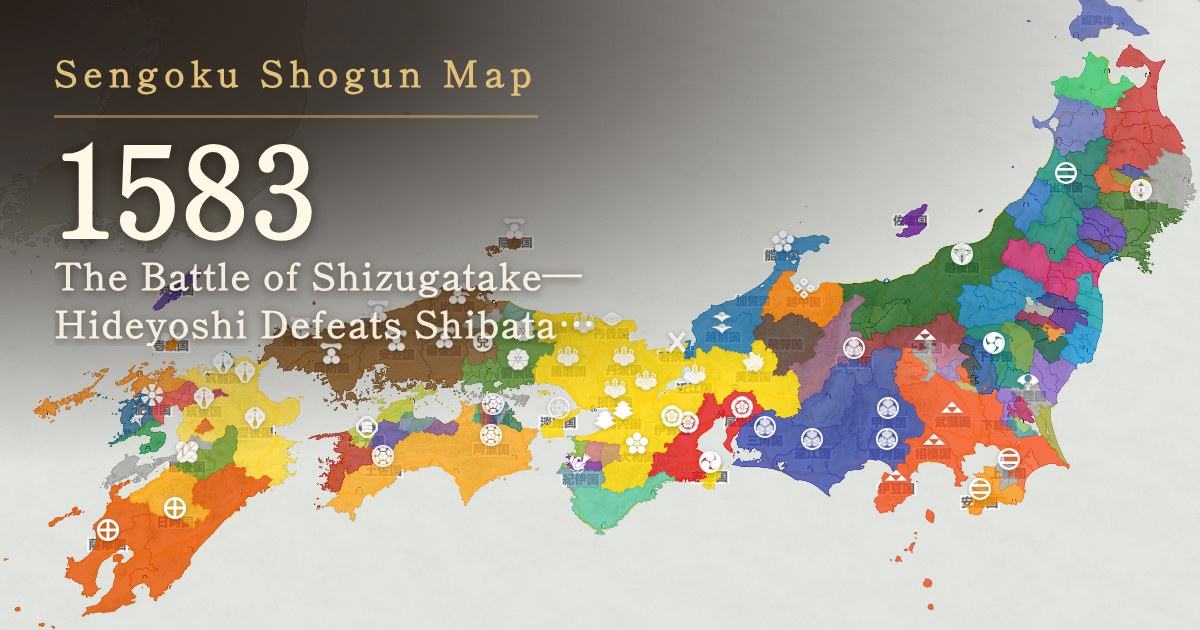
Territories before and after the battle
The year before, the year of the battle, and the year after, side by side. Tap a map to open that year.
Advertisement