INTERACTIVE BATTLE
Siege of Bitchū Takamatsu Castle
April 1582 · Takamatsu Castle (Bitchū)
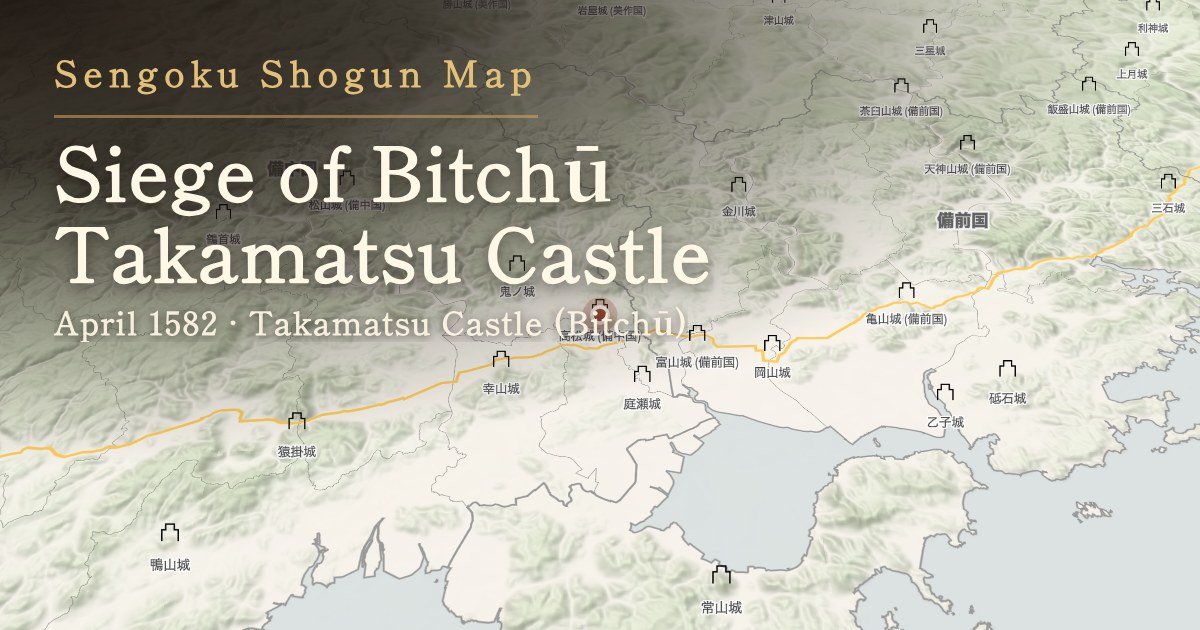
From spring to June 1582, Hashiba Hideyoshi flooded Takamatsu Castle in Bitchū Province (present-day Kita Ward, Okayama City) by a dike, cutting off its commander, Shimizu Muneharu, who was on the Mōri side. After the Honnōji Incident, Hideyoshi made peace with the Mōri, and the castle was handed over.
Explore the 1582 map
Change the year to watch territories shift
Background
In March 1582, Hideyoshi sent Hachisuka Masakatsu and Kuroda Yoshitaka as envoys to Shimizu Muneharu, offering Bitchū and Bingo Provinces as terms if he would join Hideyoshi's side. But Muneharu refused and kept his loyalty to the Mōri. From early April, Hideyoshi advanced his forces and took Kanmuriyama Castle and Miyajiyama Castle, both border castles on the Mōri side, and by May he had fully surrounded Takamatsu Castle.
Outcome
Hideyoshi drew water from the Ashimori River into the dike to submerge Takamatsu Castle, but during the siege the Honnōji Incident occurred. Hideyoshi made peace with the Mōri side while concealing Nobunaga's death. On June 4 (old calendar), Shimizu Muneharu committed seppuku in exchange for the lives of the garrison, and the castle was handed over.
Course of the battle
1 April 1582
Siege of Bitchū Takamatsu Castle
Takamatsu Castle was surrounded by low marshland, terrain unfavorable to an ordinary siege. Hideyoshi's side took the method of building a dike and drawing in water, and forces of Bizen, including Ukita Tadaie, also joined. The castle was submerged partly by the rising water of the rainy season, and it was isolated.
Sources
Sources123·Certainty: Medium
Historical significance
The terms of the peace included the handling of the area east of Takahashi River and the seppuku of Muneharu. Hideyoshi turned his army toward the Kinai, which led to the Great Return from Chūgoku, the Battle of Yamazaki, and the Kiyosu Conference.
Advertisement
Other events of 1582
Sources consulted
- 岡山県「備中高松城跡」
- 岡山市「高松城跡附水攻築堤跡」
- 岡山市「宇喜多氏と高松城水攻め~八幡山陣跡~」
The numbers in the text refer to the list above. Certainty indicates how far a statement is supported by the cited sources; it does not refer to the precision of the coordinates or the dating.
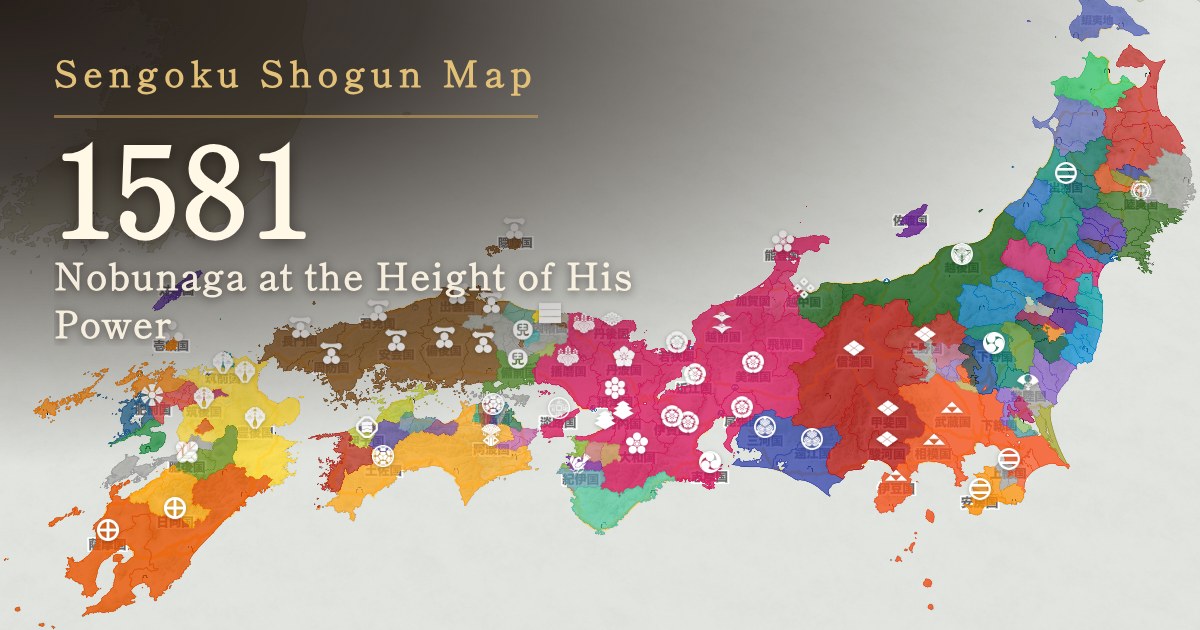
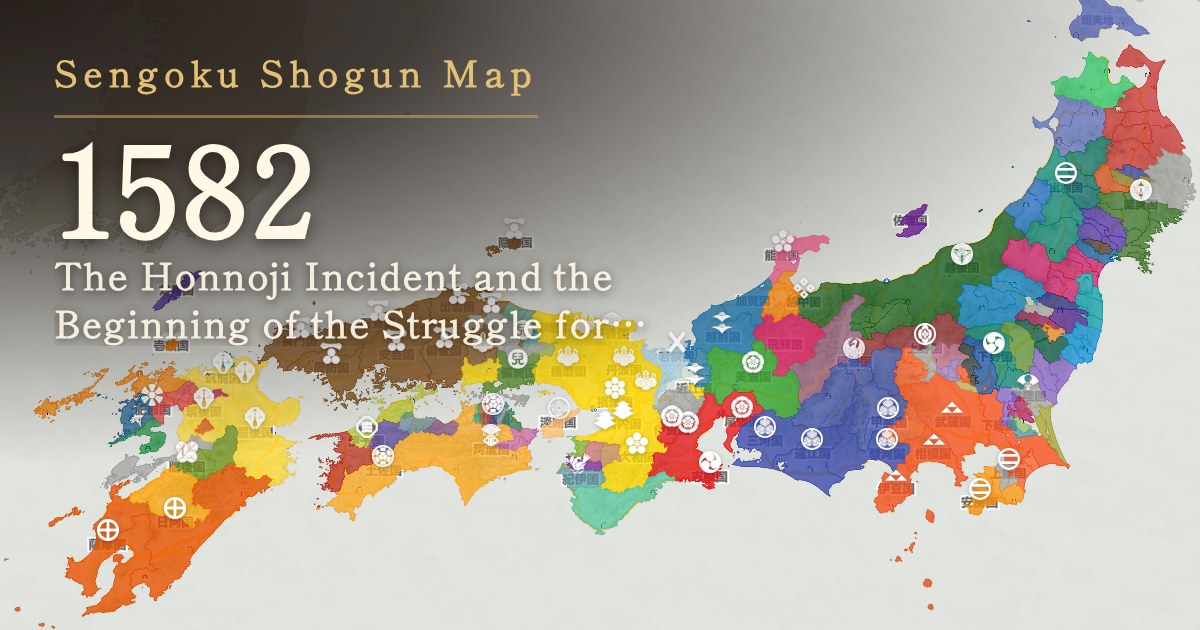
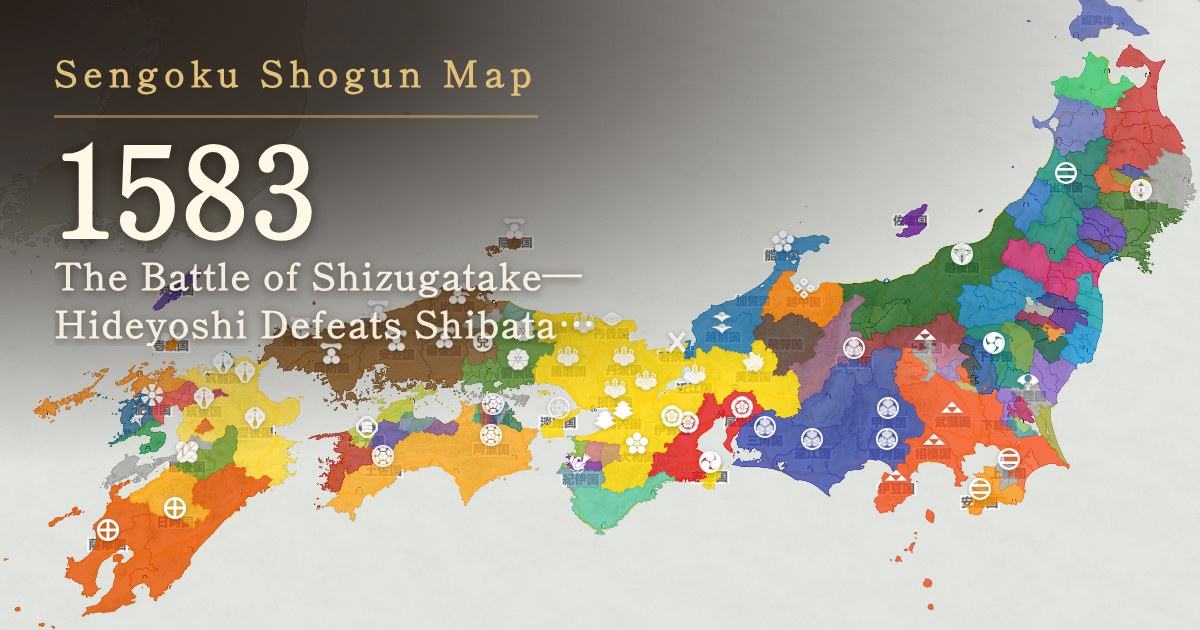
Territories before and after the battle
The year before, the year of the battle, and the year after, side by side. Tap a map to open that year.
Advertisement