INTERACTIVE BATTLE
Mikawa Ikkō-ikki
Autumn 1563 – spring 1564 (Eiroku 6–7) · Mikawa Province (Jōgū-ji, Honshō-ji and Shōman-ji temples)
From autumn 1563 into the following spring, in Mikawa Province (present-day Okazaki and Anjō, Aichi Prefecture), Ieyasu fought the Honganji-affiliated Three Mikawa Temples and their followers, together with retainers who had joined them. After a truce, Ieyasu tore down the temples and drove the abbots and others out of the country.
徳川氏: Tokugawa Ieyasu
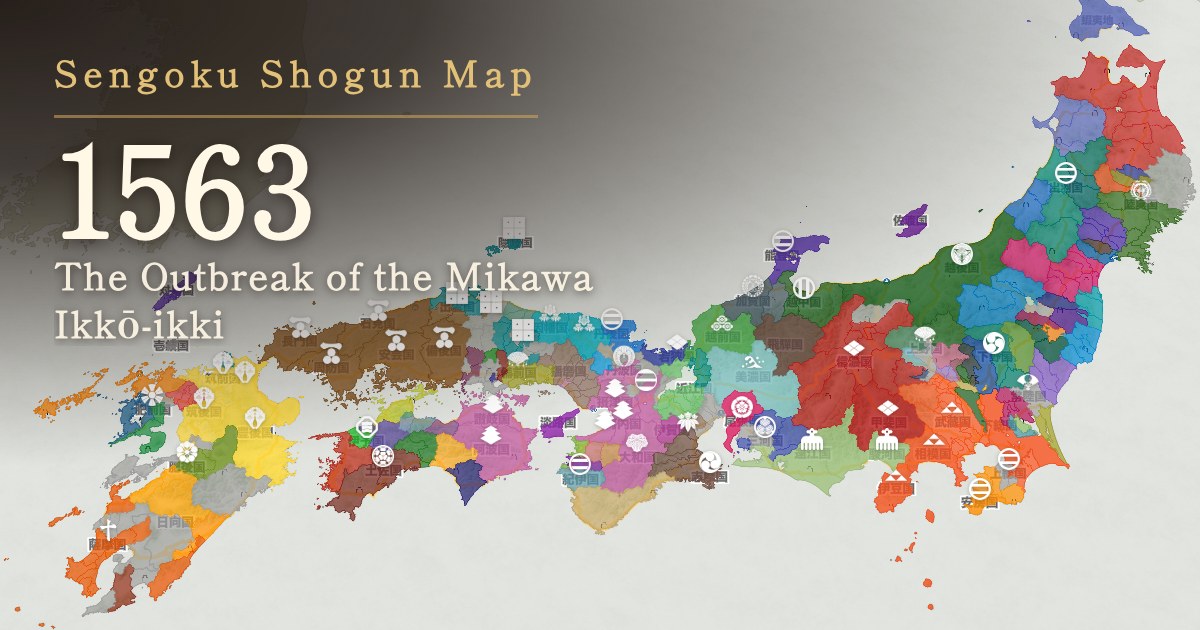
Explore the 1563 map
Change the year to watch territories shift
Background
Among the Honganji-affiliated temples in Mikawa, Jōgu-ji, Honshōji and Shōmyōji were known as the Three Mikawa Temples, and they had been granted the privilege of fu-nyū (immunity), which kept the lord's officials from entering. The temples and the surrounding villages were united to bind their followers together, and some temples strengthened their defenses with moats and earthen ramparts. In 1563 (Eiroku 6), a violation of the immunity privilege at Jōgu-ji set off a clash, and the temples centered on the three and on Honshū-ji came into conflict with their lord, Ieyasu.
Outcome
Ieyasu's side won, and the uprising was settled in about half a year. A truce was agreed in 1564 (Eiroku 7), on condition that the immunity privilege be confirmed and that participants be spared. However, when Ieyasu demanded that the temples convert away from the Honganji school and the temples refused, the truce was broken. The temples were torn down, the abbots and others were driven out of the domain, and Kūsei of Honshōji fled to Sugetawa in Toyota City.
Course of the battle
1 1563 (Eiroku 6)
A clash over immunity privileges at Jōgū-ji
Since the time of the Matsudaira, the three temples of Mikawa had been granted immunity (funiri), which barred lords' officials from entering. In 1563, when this privilege was violated at Jōgū-ji, the temples, centered on the three temples and Honshū-ji, opposed Tokugawa Ieyasu, and the conflict spread into an uprising that drew in followers and retainers.
Sources differ – details
Points of debate
The trigger is said by some to have been the collection of provisions at Jōgū-ji, and by others to have been a dispute over the handover of people who had fled into the temple precincts. It is unclear.
Sources167·Certainty: Medium
2 Autumn 1563 (Eiroku 6)
The three temples become bases of the uprising
Led by Kurachi Heizaemon, more than a hundred mounted warriors are said to have holed up at Jōgū-ji. Shōmyō-ji also became a base, and at Honshō-ji the abbot Kūsei became the center. Honshō-ji was a temple like a castle, with double moats and earthen banks, and temple and village united to strengthen its defenses.
Sources
Sources1289·Certainty: High
3 Autumn 1563 onward
Ieyasu's retainers split in two
The uprising drew in not only peasant followers but also some of Ieyasu's retainers. Retainers who were followers were forced to choose between their lord and their faith. For Ieyasu, this was not an enemy attacking from outside, but a crisis in which his own house was splitting apart.
Sources
Sources1510·Certainty: High
4 1564 (Eiroku 7)
Fighting from Batōhara to Azukizaka
In Eiroku 7, Ieyasu's forces and the uprising fought across the area from Batōhara to Azukizaka. Azukizaka was also an old battlefield, where the Imagawa and Oda clashed in the Tenbun era, but on this occasion the opponents were the uprising forces.
Sources differ – details
Points of debate
The date varies by source, and some sources give early January.
Sources1112·Certainty: High
5 1564 (Eiroku 7)
The Ogawa fight and Kūsei's false name
At Ogawa in Anjō city, near Honshō-ji, Junshō, abbot of Enkō-ji on the uprising side, reportedly called out, 'I am Kūsei of Honshō-ji!' and took his own life. Deceived by this ploy, Ieyasu's side reportedly did not attack Honshō-ji directly. The episode also shows that Kūsei was the central figure of the uprising.
Sources
Sources129·Certainty: Medium
6 Spring 1564 (Eiroku 7)
A truce is concluded, then broken
A truce was first concluded on condition that the immunity privileges be confirmed and that the lives of those who took part in the uprising be spared. But when Ieyasu demanded that the temples convert away from the Honganji branch and the temples refused, the truce was broken. The temples were demolished, their moats filled in, and their abbots and others were driven out of the domain. Kūsei fled to Sugetawa in Toyota city.
Sources
Sources1249·Certainty: High
7 1583–1585 (Tenshō 11–13)
Followers are pardoned and the temples return
In Tenshō 11, about 20 years after the uprising, followers of the Ikkō sect were pardoned. In Tenshō 13, the abbots and monks of the seven Mikawa temples, beginning with Honshō-ji, were also allowed to return, and Ieyasu's aunt, the nun Ishikawa Myōshun, is said to have been instrumental in this. Honshō-ji went on to rebuild its temple complex and was designated a national Historic Site in 2015.
Sources
Sources129·Certainty: High
Historical significance
Some of Ieyasu's retainers also joined the uprising, and the house split over whether to side with their lord or with their faith. For Ieyasu it was less a fight with an outside enemy than a struggle to regroup his own retainers. The followers were pardoned about twenty years later, in 1583 (Tenshō 11), and in 1585 (Tenshō 13) the return of the abbots of the Seven Temples of Mikawa was permitted. Honshōji rebuilt its temple grounds, and it is now designated a National Historic Site.
Advertisement
Key figures
徳川氏
1

Lord of Mikawa; brought the uprising under control
He clashed with the immunity privileges of the Mikawa Sanka-ji (the Three Temples of Mikawa), and as his retainers split into opposing camps, he brought the uprising under control in about half a year. After the peace, he demolished the temples, drove the abbots and others out of the country, and in Tenshō 11 (1583) pardoned the followers.
Sources
Sources14·Certainty: High
Other events of 1563
Sources consulted
- 安城市「史跡本證寺境内保存活用計画」
- 安城市「本證寺境内」
- 岡崎市「上宮寺境内地」「勝鬘寺境内地」「小豆坂古戦場跡」
- 愛知県総合教育センター「三河一向一揆と本證寺」
- 岡崎市「歴史文化の特徴」
- 岡崎市「上宮寺境内地」
- 国土地理院 住所検索(上佐々木町梅ノ木34)
- 岡崎市「上宮寺境内地」「勝鬘寺境内地」
- 国土地理院 住所検索(野寺町野寺26)
- 城郭マスタ(shiro.geojson)
- 岡崎市「小豆坂古戦場跡」
- 国土地理院 住所検索(戸崎町牛転)
The numbers in the text refer to the list above. Certainty indicates how far a statement is supported by the cited sources; it does not refer to the precision of the coordinates or the dating.
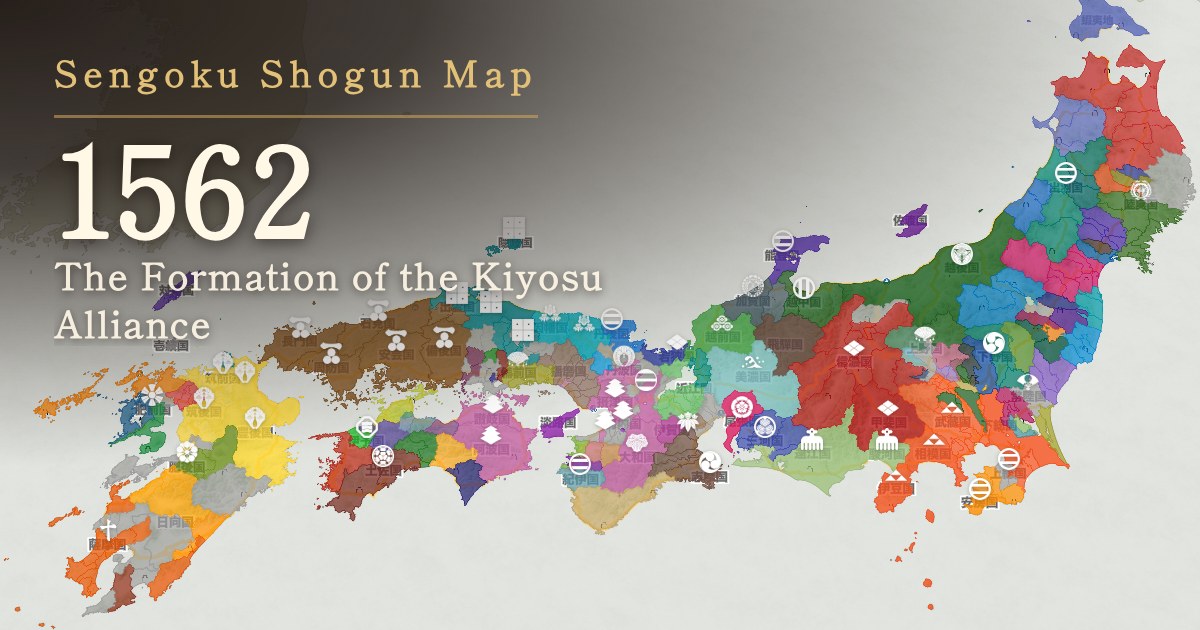
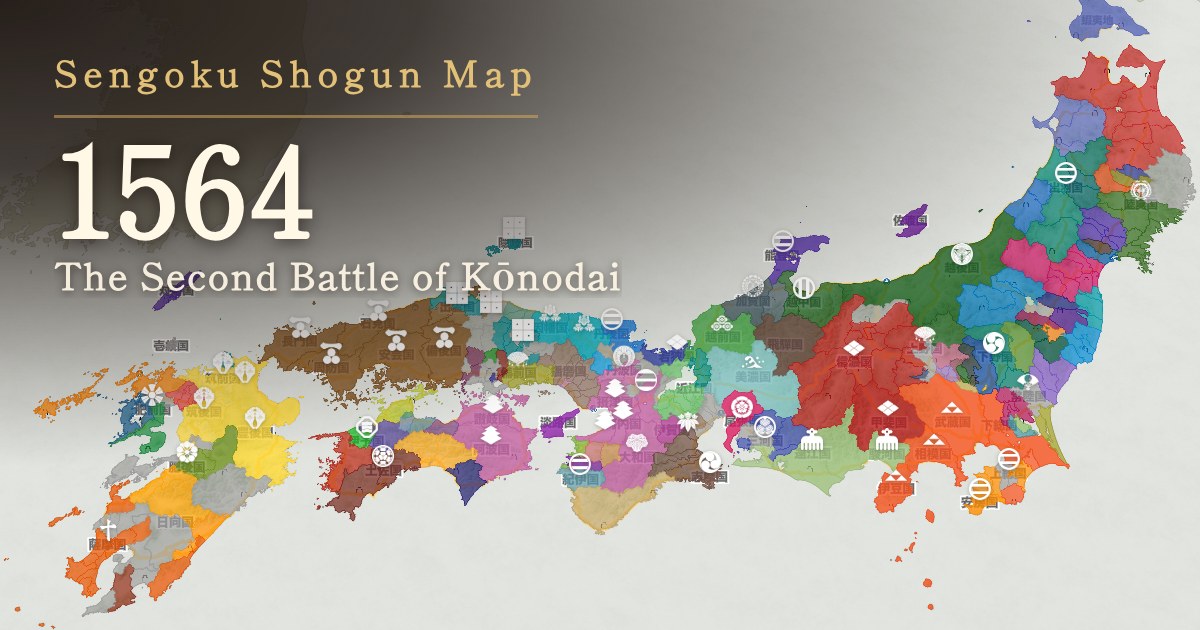
Territories before and after the battle
The year before, the year of the battle, and the year after, side by side. Tap a map to open that year.
Advertisement