INTERACTIVE BATTLE
Second Battle of Kōnodai
7–8 January 1564 (Eiroku 7, 1st month) · Kōnodai (present-day Ichikawa, Chiba Prefecture)
In January 1564, at Kōnodai in Shimōsa Province (present-day Ichikawa, Chiba Prefecture), the forces of Hōjō Ujiyasu fought the army of Satomi Yoshihiro and Ōta Sukemasa. The Satomi side had the advantage on the 7th, but it collapsed in a surprise attack before dawn on the 8th and was defeated heavily.
後北条氏: Hōjō Ujiyasu / 里見氏: Satomi Yoshihiro, Ōta Sukemasa
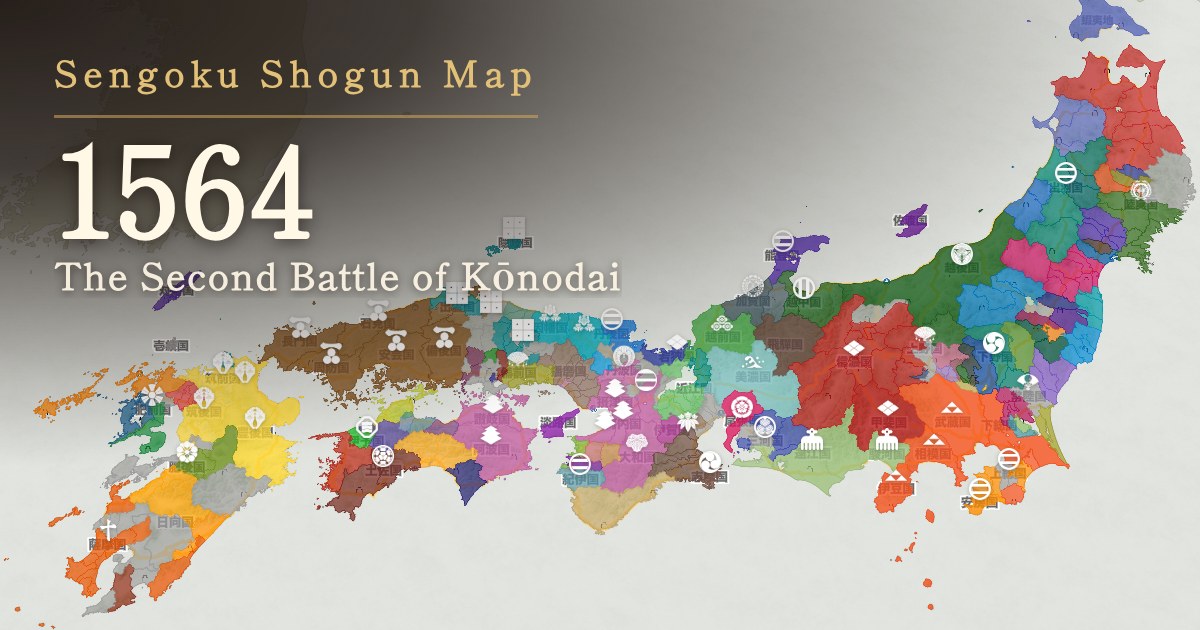
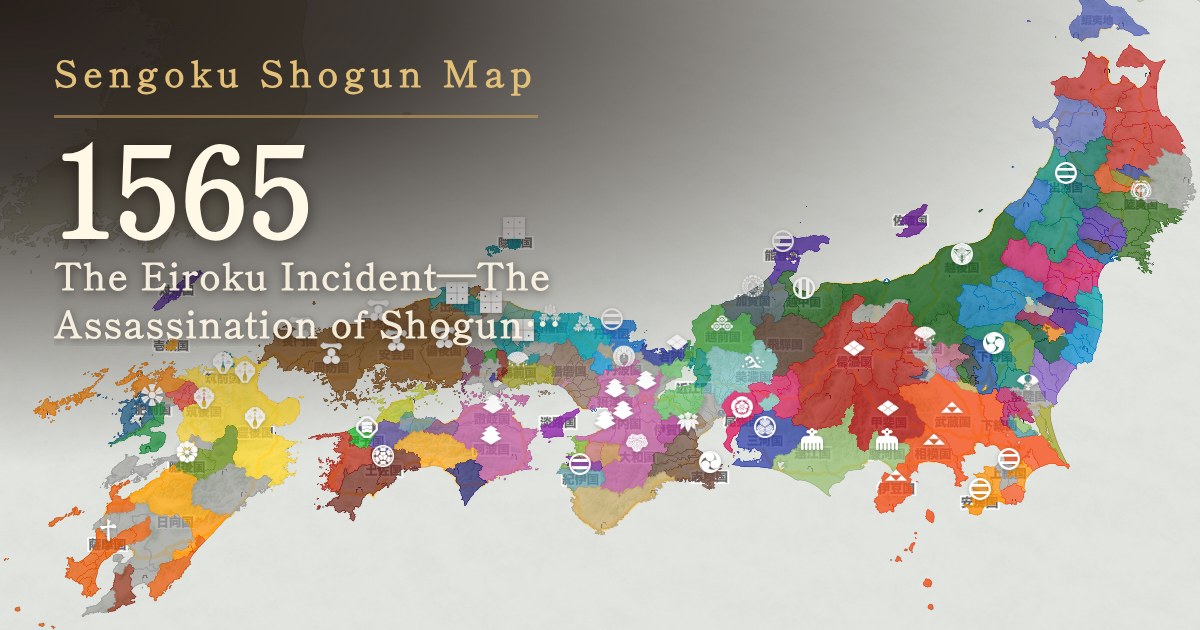
Explore the 1564 map
Change the year to watch territories shift
Background
When the Uesugi forces of Echigo withdrew from the Kantō, Hōjō Ujiyasu attacked the local lords (kokujin) who had sided with the Uesugi one by one. He took Kasai Castle in 1562 and Matsuyama Castle in February 1563, leaving Ōta Sukemasa, lord of Iwatsuki Castle, isolated. When Satomi Yoshihiro moved north along the shore of Edo Bay to attack Kasai Castle to help Sukemasa, the castle's defender, Ōta Yasusuke, turned to the Satomi side. Ujiyasu entered Kasai Castle with a large army and prepared for a decisive battle.
Outcome
It ended in a great victory for the Hōjō side. Satomi Yoshihiro set up camp at Kōnodai with about 8,000 men and faced the Hōjō army, said to be about 20,000 strong. The Satomi side had the advantage on the 7th, but when the Hōjō side mounted a surprise attack before dawn on the 8th, the Satomi forces fell into great confusion, and the dead are said to have numbered as many as 5,000. Ōta Sukemasa also lost senior retainers and was himself seriously wounded, and he fled to Iwatsuki Castle.
Course of the battle
1 April 1562 (Eiroku 5)
The Hōjō side takes Kasai Castle
The Hōjō side attacked Kasai Castle with the Edo forces under Ōta Yasusuke as its main force, also making use of shinobi. The castle held out for about two months but fell in late April. Yasusuke is reportedly said to have killed a senior retainer of the Satomi clan who was inside the castle.
Sources
Sources346·Certainty: High
2 November 1562 to February 1563
Matsuyama Castle falls and Ōta Sukemasa is isolated
Ujiyasu surrounded Matsuyama Castle with the support of Takeda Shingen. The castle's lord, Ōta Sukemasa, asked Nagao Kagetora (later Uesugi Kenshin) of the Uesugi side for relief, but the Echigo forces could not arrive in time, and the castle fell in February 1563. Sukemasa was left isolated, and the subjugation of the Iwatsuki domain became only a matter of time.
Sources
Sources36·Certainty: High
3 1563–1564
Ōta Yasusuke defects to the Satomi side
To aid Sukemasa, Satomi forces moved north along the shore of Edo Bay and attacked Kasai Castle. Thereupon, Ōta Yasusuke, who had been defending the castle, moved over to the Satomi camp. Following this defection, Hōjō Ujiyasu entered Kasai Castle with a large army and prepared for a decisive battle against the combined Satomi and Ōta forces.
Sources
Sources346·Certainty: Medium
4 Early January 1564
Satomi Yoshihiro sets up camp at Kōnodai
Satomi Yoshihiro led some 8,000 troops and set up camp at Kōnodai, prepared to meet the Hōjō army of Ujiyasu, said to number about 20,000. Ōta Sukemasa and Yasusuke also joined him here. Kōnodai is a plateau overlooking the Edo River, the same place as the First Battle of Kōnodai in 1538.
Sources differ – details
Points of debate
The Ichikawa city guide gives the Satomi strength as 8,000, but there is also an account that puts it at 12,000 including reinforcements from Uesugi Kenshin.
Sources156·Certainty: High
5 7 January 1564
The Satomi side has the advantage on the first day
The fighting on the 7th went in favor of the Satomi side. Holding the plateau, the Satomi forces faced the Hōjō army, which is said to have been the side attacking across the Edo River. The Satomi kept their advantage until they were struck by a surprise attack the next morning. The first day's advantage was overturned in a single night.
Sources
Sources16·Certainty: High
6 8 January 1564
A dawn surprise attack routs the Satomi forces
Around dawn on the 8th, the Hōjō side struck the Satomi forces where they were unprepared, throwing them into great confusion and defeating them. Deaths are said to have reached about 5,000, and Satomi Hirotsugu was among them. Ōta Sukemasa also saw his retainers, including Ōta Shimōsa, killed, and he escaped with grave wounds, helped by his close attendants.
Sources
Sources136·Certainty: High
7 1564 (Eiroku 7)
Ōta Sukemasa is driven from Iwatsuki Castle
Sukemasa barely made it back to Iwatsuki Castle, but soon afterward he was driven out by his son Ujisuke. Ujisuke submitted to the Hōjō, and the Iwatsuki domain came under Hōjō control. Three years later Ujisuke was killed in the Battle of Mifunayama, and the Iwatsuki line of the Ōta clan died out.
Sources
Sources367·Certainty: High
Historical significance
Ōta Sukemasa, who had lost the battle, was soon driven out of Iwatsuki Castle by his son Ujisuke, and the Iwatsuki domain came under Hōjō control. The Satomi clan kept its domains in Awa and Kazusa, but the trend toward Hōjō supremacy in the Kantō was set. The site of Kōnodai Castle, the battlefield, is now Satomi Park, and within the park stands the Satomi Gunbō monument, which mourns the war dead.
Advertisement
Key figures
後北条氏
1
Commander of the Hōjō forces
He attacked the local lords allied with the Uesugi, took Kasai Castle and Matsuyama Castle, and left Ōta Sukemasa at Iwatsuki Castle isolated. In the New Year of 1564 he entered Kasai Castle with a large army and defeated the combined Satomi and Ōta forces at Kōnodai.
Sources
Sources13·Certainty: High
里見氏
2
Commander of the Satomi forces
The son of Satomi Yoshitaka, he set up camp at Kōnodai with about 8,000 troops. He had the upper hand on the 7th, but early on the 8th he was defeated by a surprise attack from the Hōjō side. He later became head of the Satomi clan.
Sources
Sources1·Certainty: High
Lord of Iwatsuki Castle; joined the Satomi side
After losing Matsuyama Castle and being left isolated, he joined the Satomi side and fought with them. After his senior retainers were killed and he was seriously wounded himself, he retreated to Iwatsuki Castle, but before long his son Ujisuke drove him out of the castle.
Sources
Sources3·Certainty: High
Other events of 1564
Sources consulted
- 市川市「里見公園」
- 市川市「国府台・堀之内界隈」
- さいたま市「岩槻城跡を探る(中編・下)」
- 葛飾区「葛西城周辺での戦い」
- 松戸市観光協会「相模台・国府台合戦」
- 城郭マスタ(shiro.geojson)
- さいたま市「岩槻城跡を探る」
The numbers in the text refer to the list above. Certainty indicates how far a statement is supported by the cited sources; it does not refer to the precision of the coordinates or the dating.
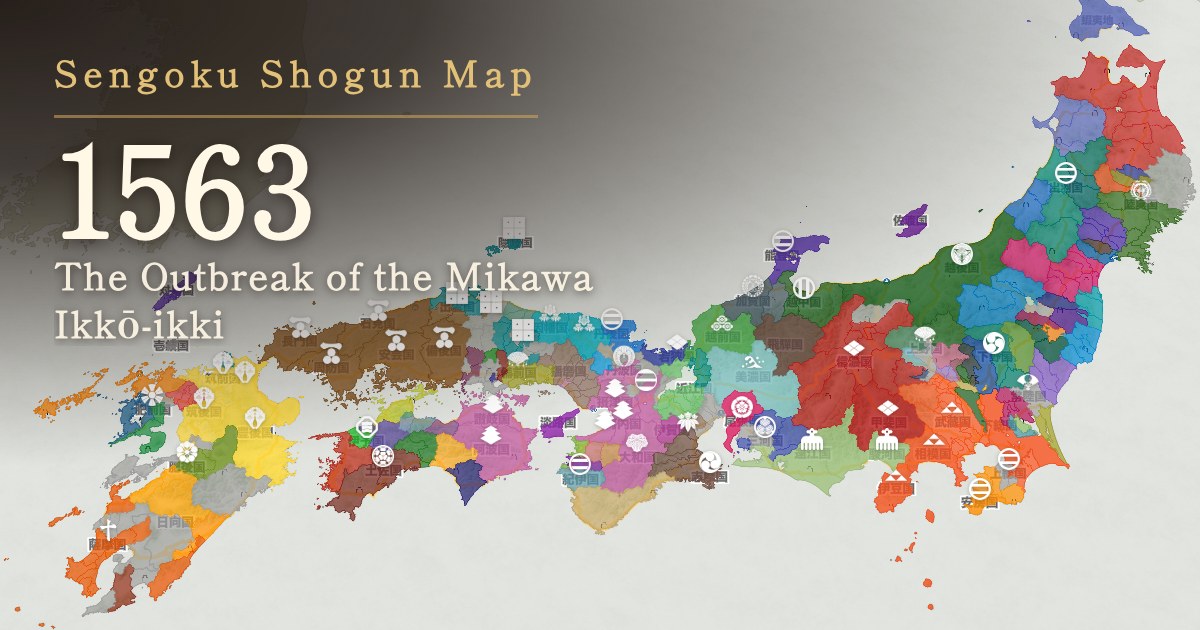
Territories before and after the battle
The year before, the year of the battle, and the year after, side by side. Tap a map to open that year.
Advertisement