INTERACTIVE BATTLE
Battle of Gassan-Toda Castle
April 1565 – November 1566 (Eiroku 8–9) · Gassan-Toda Castle, Izumo Province (present-day Yasugi, Shimane Prefecture)
From 1565 into the following year, the forces of Mōri Motonari and Terumoto attacked Gassan-Toda Castle in Izumo Province (present-day Yasugi, Shimane Prefecture), and Amago Yoshihisa surrendered and left the castle. The Amago clan, as a sengoku daimyo, was destroyed here.
毛利氏: Mōri Motonari, Mōri Terumoto, Kobayakawa Takakage / 尼子氏: Amago Yoshihisa
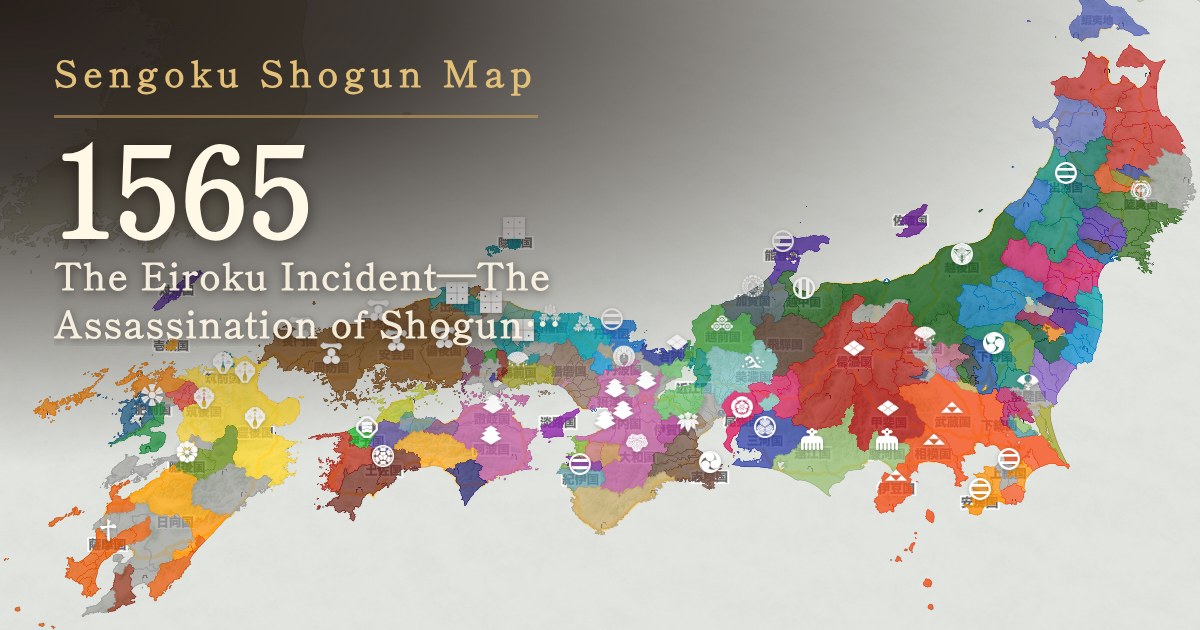
Explore the 1565 map
Change the year to watch territories shift
Background
Gassan-Toda Castle was the mountain castle in Izumo from which the Amago clan had long held its base. After Amago Haruhisa died suddenly, Yoshihisa succeeded to the headship, but the Mōri clan cut off the surrounding castles and supply routes one by one, driving the Amago side into a corner. In 1565 (Eiroku 8), Mōri Motonari, together with his grandson Terumoto, set up camp in Izumo and began the attack on Gassan-Toda Castle.
Outcome
The Mōri side won, and Amago Yoshihisa surrendered. On 21 November 1566 (Eiroku 9), the Mōri clan accepted the surrender, and on the 28th Yoshihisa left Gassan-Toda Castle and went down to Aki Province. His younger brothers Tomohisa and Hisahisa were also sent to Aki. The castle that had been the Amago base was not abandoned, and it was kept in use as the base for Mōri rule over Izumo.
Course of the battle
1 April 1565 (Eiroku 8)
Mōri Terumoto's first campaign and the main camp at Arai
On the 16th day of the 4th month, Mōri Terumoto made his first campaign at Arai in Izumo Province. On the 28th, while Motonari, Terumoto and others were returning from Hoshigami-yama to the main camp at Arai, they were attacked by the Amago army, but they beat it off. The Mōri army had pushed deep into Izumo and was keeping watch on Gassan-Toda Castle.
Sources
Sources245·Certainty: High
2 September 1565 (Eiroku 8)
Advancing toward the Tonda front and setting up camp on Hoshigami-yama and other peaks
On the 20th day of the 9th month, the Mōri army advanced toward the Tonda front. According to the Moriwaki Hidan Oboegaki, Hoshigami-yama served as the main camp, and camps were set up in a line along the ridges of Hachiman, Jōanji-yama, Ishihara and Ueda, facing the front of Gassan-Toda Castle. The castle was thus surrounded from the mountains above, looking down on it.
Sources
Sources245·Certainty: High
3 1565–1566 (Eiroku 8–9)
Field fortresses built on the ridge of Kyōragi-yama
Kyōragi-yama is a mountain from which Gassan-Toda Castle can be seen directly below. In 1543 (Tenbun 12), when Ōuchi Yoshitaka attacked, a main camp was also set up here. On the ridge are the remains of Katsuyama Castle and Sangun-yama Castle, which have unejō tatebori (ridge-shaped vertical moats), an advanced defensive feature of the period, and they are said to fit the time of the Mōri attack on Gassan-Toda Castle.
Sources differ – details
Points of debate
Views differ on Katsuyama Castle. One holds that it was originally an Amago castle that the Mōri army remodeled, and another holds that the Mōri side built it to keep watch.
Sources45·Certainty: Medium
4 April 1566 (Eiroku 9)
Battle at the foot of Gassan-Toda Castle
On the 21st day of the 4th month, the Mōri army fought the Amago army at the foot of Gassan-Toda Castle. The Mōri side surrounded the castle from camps such as Hoshigami-yama, while the Amago side held the castle on the mountaintop. The scale and result of the fighting itself have not been handed down.
Sources
Sources26·Certainty: High
5 Around October 1566 (Eiroku 9)
Amago retainers leave the castle one after another
According to a record dated the 10th day of the 10th month, two or three days earlier, forty to fifty of the Amago clan's main retainers had left Gassan-Toda Castle. As the siege dragged on, the ties within the castle seem to have weakened.
Sources
Sources26·Certainty: High
6 21 November 1566 (Eiroku 9)
Mōri clan accepts the surrender
On 21 November, the Mōri clan accepted the surrender of Amago Yoshihisa and others. The fighting in Izumo was not decided by a single all-out assault. It ended, after the capture of the surrounding castles and a long siege, with the Amago side handing over the castle.
Sources
Sources26·Certainty: High
7 28 November 1566 (Eiroku 9)
Amago Yoshihisa leaves the castle and goes down to Aki
On 28 November, Amago Yoshihisa left Gassan-Toda Castle, went down to Aki Province, and entered Enmyō-ji temple in Takada District. His younger brothers Tomohisa and Hisahisa were also sent to Aki. The mountain castle on Gassan ended its role as the base from which the Amago clan governed Izumo.
Sources
Sources246·Certainty: High
8 Late 1566 onward
The Mōri clan makes Gassan-Toda Castle the base for ruling Izumo
Even after the surrender, Gassan-Toda Castle was not abandoned. Fukuhara Sadatoshi and Kuchiba Michiyoshi entered as castellans, and Amano Takashige, a kunishū (local lord) of Aki, was placed there as jōtoku (castle supervisor). Later, Mōri Motoaki and Mōri Motoyasu entered the castle and served as the core of Mōri rule over Izumo.
Sources
Sources46·Certainty: High
Historical significance
The Amago clan as a sengoku daimyo was ended by this surrender at the castle. Izumo was brought into the Mōri domains and became the foothold for Mōri rule over the San'in region. Fukuhara Sadatoshi and Kuchiba Michiyoshi entered the castle as castellans, and Amano Takashige, a kunishū (local lord) of Aki, was placed there as jōtoku (castle supervisor). It is thought that by keeping the former lord's castle as it was, the change of ruler was made visible.
Advertisement
Key figures
毛利氏
3

Commander-in-chief of the Mōri side, stationed in Izumo
Together with his grandson Terumoto, he set up camp in Izumo and attacked Amago's Tōda Castle. In February of Eiroku 9, owing to illness, Kikkawa Motoharu and Kobayakawa Takakage took his place in exchanging oaths with the commanders.
Sources
Sources2·Certainty: High
Motonari's grandson; first campaign to Izumo
He came of age on 16 February, Eiroku 8, and made his first campaign on 16 April at Sengai in Izumo Province. Together with his grandfather Motonari and others, he remained in Izumo and joined the attack on Tōda Castle as a member of the Mōri army, which set up camp at Hoshigamiyama and elsewhere.
Sources
Sources24·Certainty: High

Commander in the Mōri army
Together with his elder brother Kikkawa Motoharu, he formed the core of the Mōri army. In February of Eiroku 9, he exchanged oaths with Hiraga Hirosuke and others in place of the ailing Motonari. His individual posts during the siege of Tōda Castle are not known.
Sources
Sources2·Certainty: Medium
尼子氏
1
Head of the Amago clan; commander of Tōda Castle
After succeeding Haruhisa, he shut himself in Tōda Castle and was besieged by the Mōri army. In November of Eiroku 9 his surrender was accepted; on the 28th he left the castle, went down to Aki Province, and entered Enmyō-ji in Takata District.
Sources
Sources24·Certainty: High
Other events of 1565
Sources consulted
- 島根県古代文化センター「陣城からみる戦国時代の戦いと城」(中井均)
- 広島県文書館「広島県史年表(中世2)」
- 島根県「富田城跡」
- 島根県古代文化センター「陣城からみる戦国時代の戦いと城」
- 国土地理院 住所検索(山名。位置は概略)
- 城郭マスタ(shiro.geojson)
The numbers in the text refer to the list above. Certainty indicates how far a statement is supported by the cited sources; it does not refer to the precision of the coordinates or the dating.
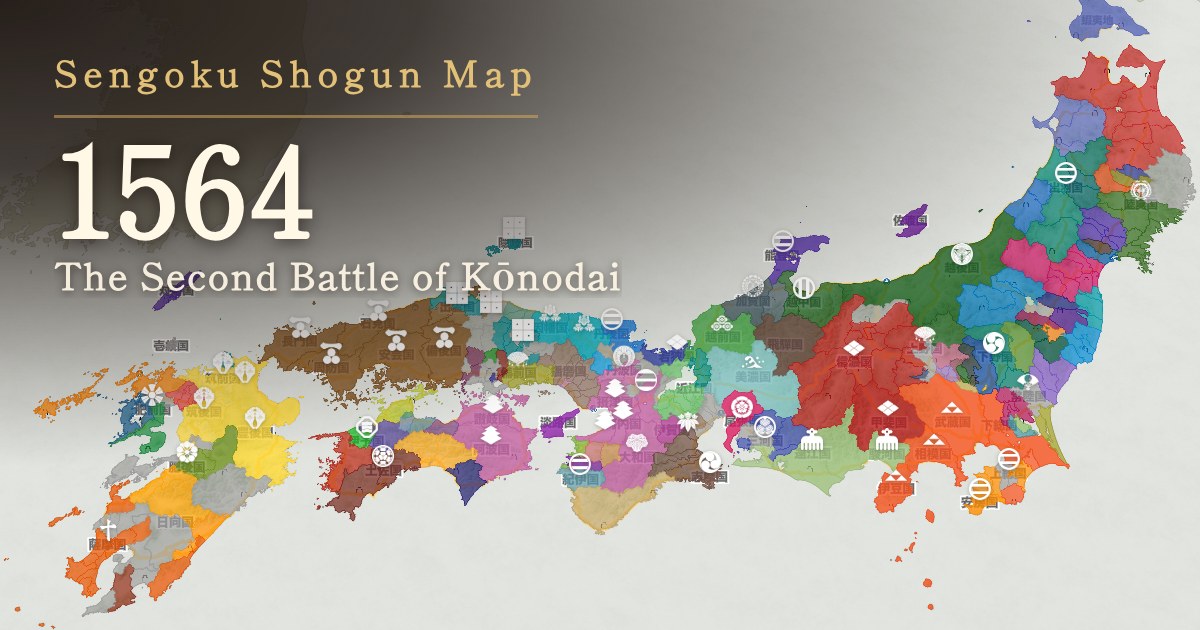
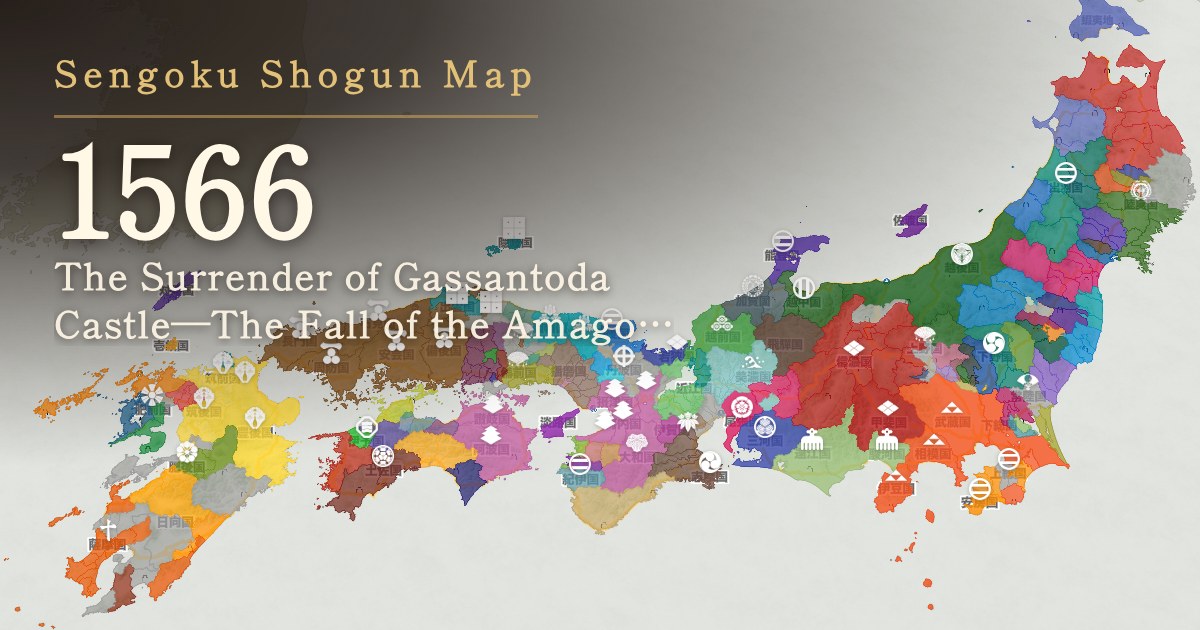
Territories before and after the battle
The year before, the year of the battle, and the year after, side by side. Tap a map to open that year.
Advertisement