INTERACTIVE BATTLE
Battle of Kannonji Castle
October 1568 (9th month of Eiroku 11) · Kannonji Castle, Ōmi Province
In September 1568 (Eiroku 11), Oda Nobunaga marched toward Kyoto escorting Ashikaga Yoshiaki and attacked Rokkaku Jōtei and his son Yoshiharu, who held Kannonji Castle in Ōmi (present-day Omihachiman City). Mitsukuri Castle, a subsidiary fortress, fell, and the Rokkaku father and son abandoned their castle and fled.
織田氏: Oda Nobunaga, Sakuma Nobumori, Toyotomi Hideyoshi, Niwa Nagahide, Ashikaga Yoshiaki / 六角氏: Rokkaku Yoshikata, 六角義治
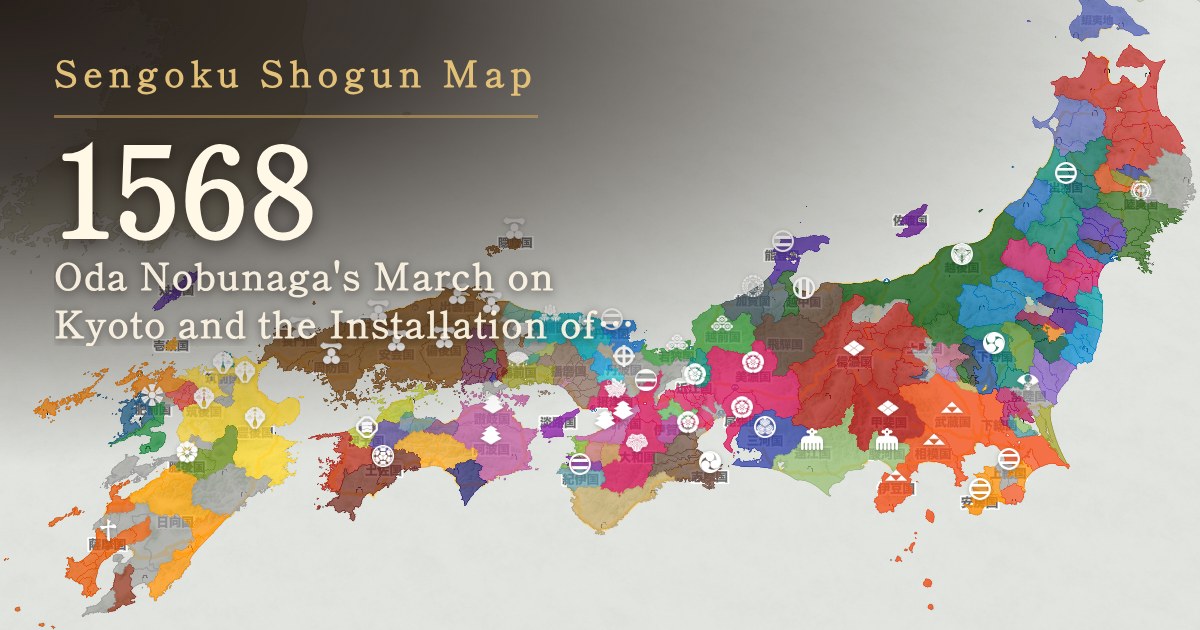
Explore the 1568 map
Change the year to watch territories shift
Background
For Nobunaga, who was escorting Ashikaga Yoshiaki toward Kyoto, the Rokkaku clan, which governed southern Ōmi on the southern shore of Lake Biwa, stood in the way. Nobunaga went as far as Sawayama and asked Jōtei to open a route for him, but Jōtei refused. Kannonji Castle was the Rokkaku main base, built on Mount Kinugasa, and it was one of the largest mountain castles in Ōmi.
Outcome
On the 12th day of the 9th month, Nobunaga's forces attacked Mitsukuri Castle, a subsidiary of Kannonji Castle, and took it between evening and night. The next day, Jōtei and Yoshiharu abandoned Kannonji Castle and fled toward Kōga, and the castle came into Nobunaga's hands. Many of the local warriors of Ōmi who had served the Rokkaku had already submitted to Nobunaga before the fighting, and the Rokkaku side was crumbling from within.
Course of the battle
1 September 1568 (8th month of Eiroku 11)
Asking Rokkaku Jōtei for passage at Sawayama
Before heading to Kyoto, Nobunaga went to Sawayama in Ōmi and asked Jōtei to open the road to the capital. Jōtei did not agree. Nobunaga stayed for about seven days, persuading him, but the talks did not come together, and force became the only way to open the road.
Sources
Sources346·Certainty: High
2 Early October 1568 (7th to 11th day of the 9th month, Eiroku 11)
Nobunaga’s army camps at the Echigawa River
On the 7th day of the 9th month, Nobunaga bid farewell to Yoshiaki, who was to become shogun, and set out for Ōmi with troops from Owari, Mino, and elsewhere. Passing through Hirao village and Takamiya, on the 11th he set up camp around the Echigawa River, facing the Rokkaku forces on Mitsukuri-yama and Kannonji-yama.
Sources
Sources346·Certainty: High
3 12 October 1568 (12th day of the 9th month, Eiroku 11)
Fighting for Mitsukuri Castle
Nobunaga ordered Sakuma Nobumori, Kinoshita Tōkichirō, and Niwa Nagahide to attack Mitsukuri Castle. The castle fell after attacks that continued from evening into night, and that night Nobunaga set up camp on Mitsukuri-yama. The Three Men of Mino (Inaba, Ujiie, and Andō) are said to have been impressed by how quickly the castle was taken.
Sources
Sources346·Certainty: High
4 13 October 1568 (13th day of the 9th month, Eiroku 11)
Rokkaku father and son leave Kannonji Castle
On the night Mitsukuri Castle fell, Jōtei and Yoshiharu left Kannonji Castle and fled toward Kōga. On the 13th, Nobunaga took Kannonji-yama, and the remaining Rokkaku side surrendered and handed over hostages. The Rokkaku main base passed into Nobunaga’s hands with little fighting.
Sources differ – details
Points of debate
The date the castle was taken is given either as the night of the 12th, when Mitsukuri Castle fell, or as the following 13th. Some accounts say it was handed over without a fight.
Sources1346·Certainty: Medium
5 October 1568 (9th month of Eiroku 11)
Pacifying Ōmi and marching on Kyoto
Nobunaga had those of the Rokkaku side who had submitted keep their former lands and governed Ōmi. On the 14th he sent envoys to welcome Yoshiaki. The army carrying Yoshiaki entered Kyoto in the latter part of the month, then went on to attack Akutagawayama Castle and other fortresses in Settsu, moving to hold the Kinai region.
Sources
Sources1356·Certainty: High
6 1568 onward
Later fate of the Rokkaku clan and Kannonji Castle
The Rokkaku clan withdrew to Kōga and continued resistance, but lost its last stronghold in the 1573 fighting at Namazue Castle. Kannonji Castle is said to have ended its historical role when Azuchi Castle was completed in 1579.
Sources differ – details
Points of debate
Records and traditions do not agree on when the castle suffered a major fire.
Sources16·Certainty: High
Historical significance
This victory gave Nobunaga control of southern Ōmi and opened the road to Kyoto with nothing left to block it. The Rokkaku clan, long prominent as shugo of Ōmi, lost its main base and was pushed into resisting from Kōga. After entering Kyoto, Nobunaga went on to pacify the Kinai region. Kannonji Castle is said to have ended its role once Nobunaga’s Azuchi Castle was completed in 1579.
Advertisement
Key figures
織田氏
5

Commander-in-chief of the march on Kyoto
Setting out from Gifu with Ashikaga Yoshiaki, he camped at the Echigawa River in Ōmi. He took Mitsukuri Castle and drove the Rokkaku out of Kannonji Castle, opening the road to Kyoto. At Sawayama he had asked Jōtei in advance to open the road.
Sources
Sources3·Certainty: High
Commander in the attack on Mitsukuri Castle
Under Nobunaga’s orders, he attacked Mitsukuri Castle with Kinoshita Tōkichirō and Niwa Nagahide. He kept up the attack from evening into night and took the castle, the first step in breaking the Rokkaku defenses.
Sources
Sources3·Certainty: High

Commander in the attack on Mitsukuri Castle
Later Toyotomi Hideyoshi. Ordered to attack Mitsukuri Castle with Sakuma Nobumori and Niwa Nagahide, he attacked from evening until night and took the castle. It was one of his earliest feats that made his name in the campaign to Kyoto.
Sources
Sources3·Certainty: High

Commander in the attack on Mitsukuri Castle
He attacked Mitsukuri Castle with Sakuma Nobumori and Kinoshita Tōkichirō. He kept up the attack from evening into night and took the castle, a result that led to the Rokkaku leaving Kannonji Castle the next day.
Sources
Sources3·Certainty: High

The shogunal claim behind Nobunaga’s march to Kyoto
Escorted by Nobunaga toward Kyoto. Whether the road would be opened for the march led by Yoshiaki, who had been under Nobunaga’s protection in Mino, became the direct trigger for the clash between the Rokkaku and Nobunaga.
Sources
Sources13·Certainty: High
六角氏
2
Former head of the Rokkaku clan (Jōtei)
He refused Nobunaga’s request to open the road. After Mitsukuri Castle fell, he left Kannonji Castle with his son Yoshiharu at night and fled toward Kōga, which had close ties to the Rokkaku. He is better known by his religious name, Jōtei.
Sources
Sources14·Certainty: High
Head of the Rokkaku clan
Together with his father Jōtei, he abandoned Kannonji Castle and fled to Kōga, losing his main base. The Rokkaku family, which had long carried on as shugo of Ōmi, reached a major turning point here and lost its strength.
Sources
Sources14·Certainty: High
Other events of 1568
Sources consulted
- 滋賀県「史跡観音寺城跡の調査と整備」
- 滋賀県文化財保護課「観音寺城跡」
- 太田牛一『信長公記』巻一
- 八木厚之「甲賀の中世城館」
- 高槻市史
- 城郭マスタ(shiro.geojson)
The numbers in the text refer to the list above. Certainty indicates how far a statement is supported by the cited sources; it does not refer to the precision of the coordinates or the dating.
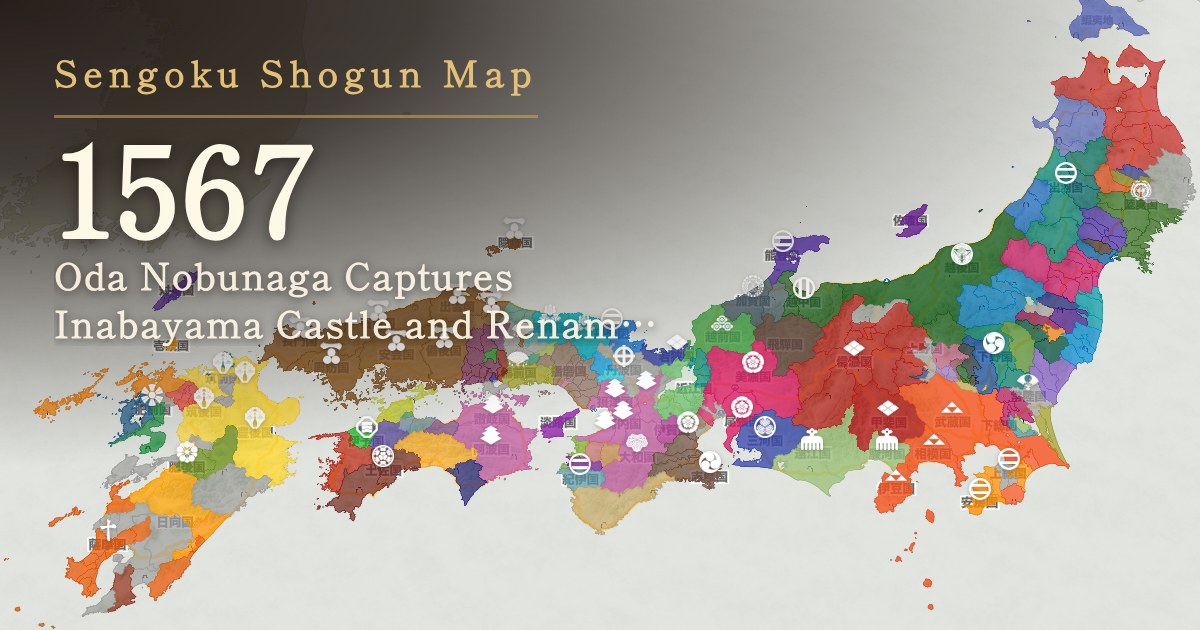
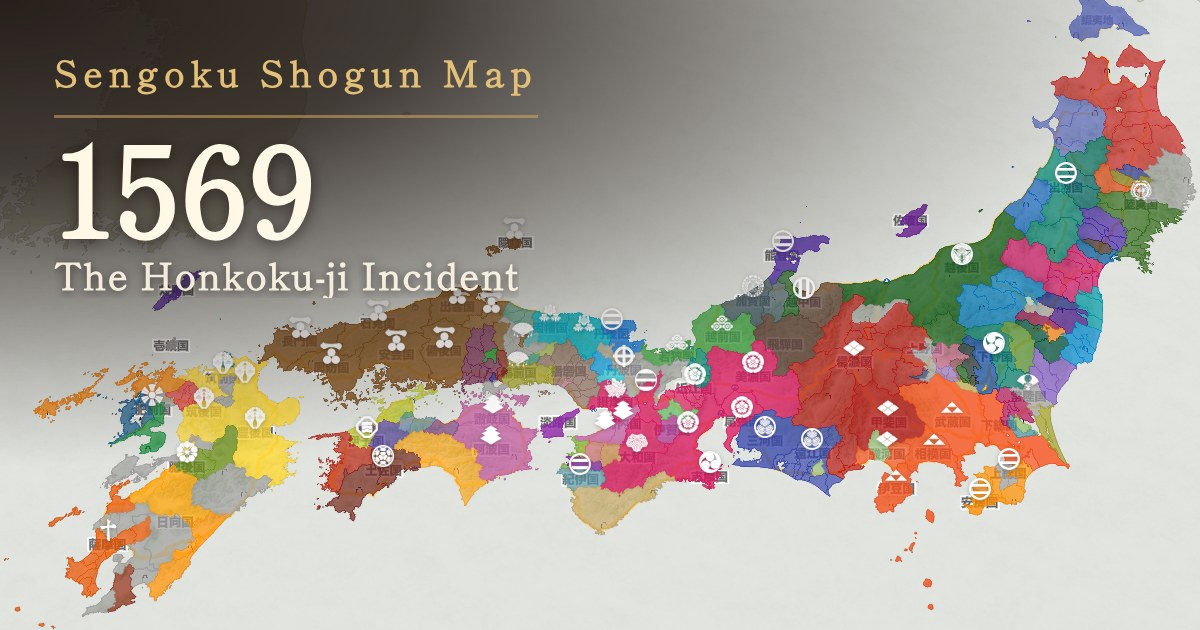
Territories before and after the battle
The year before, the year of the battle, and the year after, side by side. Tap a map to open that year.
Advertisement