INTERACTIVE BATTLE
Battle of Mimase Pass
October 1569 (10th month of Eiroku 12) · Mimasetoge (Mimase Pass), Sagami Province
In October 1569 (Eiroku 12), as Takeda Shingen’s army lifted its siege of Odawara Castle and headed back to Kai, Hōjō forces met it at Mimase Pass in Sagami (present-day Aikawa Town, Kanagawa Prefecture). The Hōjō side had the upper hand at first, but the Takeda side rallied and won.
武田氏: Takeda Shingen / 後北条氏: Hōjō Ujiyasu, Hōjō Ujimasa, Hōjō Ujiteru, Hōjō Ujikuni, Hōjō Tsunashige
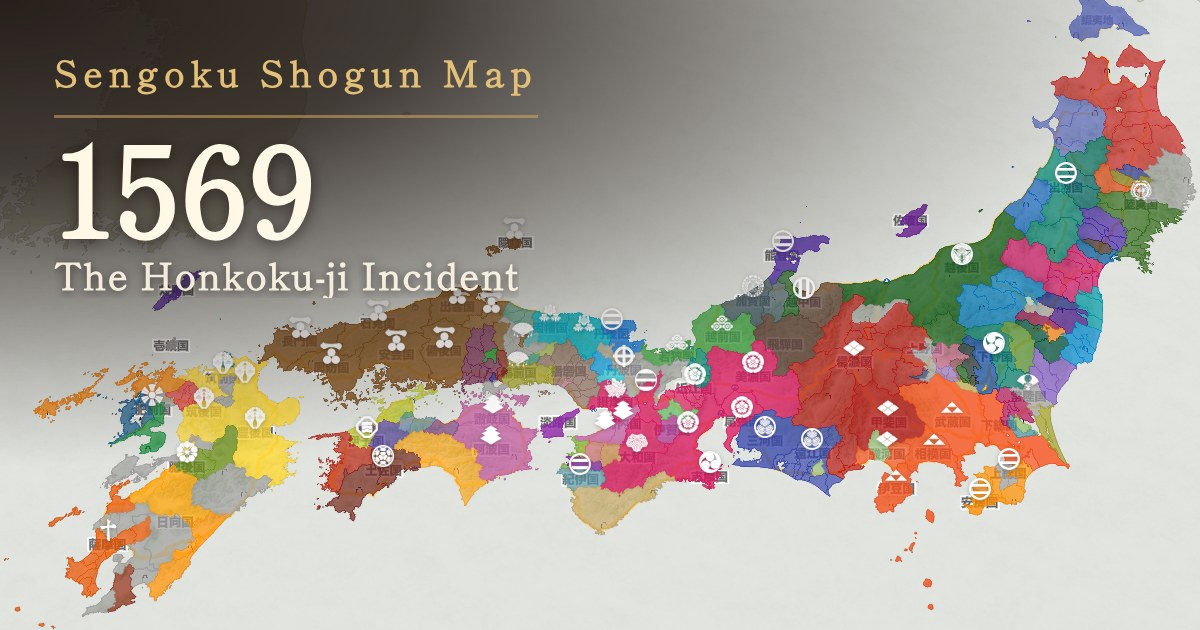
Explore the 1569 map
Change the year to watch territories shift
Background
In October 1569, Takeda Shingen surrounded Odawara Castle, the stronghold of Hōjō Ujiyasu and his son Ujimasa, with a large army, but could not break its strong defenses. Shingen set fire to the castle town and withdrew, choosing a route over the mountains back to Kai. Seeing this move, the Hōjō advanced troops to Mimase, on the return route, and waited for the retreating Takeda army.
Outcome
The Hōjō forces pressed the left flank of the Takeda army with gunfire, and the Takeda field commander Asari Nobutane was killed. However, when Yamagata Masakage’s detached force struck the Hōjō army from high ground on its flank, the tide turned sharply toward the Takeda. The Hōjō forces broke and fled, and the Takeda army, though suffering heavy losses, returned safely to Kai.
Course of the battle
1 October 1569 (1st day of the 10th month, Eiroku 12)
Shingen besieges Odawara Castle
Takeda Shingen surrounded Odawara Castle with an army said to number about 20,000. The head of the Hōjō family at the time was Ujimasa, and his retired father Ujiyasu was also in the castle. The year before, Ujimasa had sent back his principal wife, a daughter of Shingen, to her family, and had broken off the alliance with the Takeda.
Sources
Sources3567·Certainty: High
2 October 1569 (4th day of the 10th month, Eiroku 12)
Withdrawal after setting fire to the castle town
Unable to take Odawara Castle, Shingen set fire to the town below the castle on the 4th day of the 10th month and withdrew. The siege had lasted only a few days. The army turned at Hiratsuka and took a route through the mountain valleys of Sagami toward Kai.
Sources
Sources367·Certainty: High
3 October 1569 (10th month of Eiroku 12)
Hōjō forces take position at Mimase
Sensing the Takeda withdrawal, the Hōjō side advanced an army said to number 20,000 to Mimase and waited there. Mimase lies on the mountain road from Sagami to Kai. On learning the enemy’s deployment, Shingen split his army into three and advanced.
Sources differ – details
Points of debate
On the Hōjō side, the command is described as Ujiyasu by Aikawa Town, and as Ujiteru and Ujikuni by Kanagawa Prefecture and Odawara City.
Sources138910·Certainty: Medium
4 October 1569 (6th day of the 10th month, Eiroku 12)
Early Hōjō advantage in the opening clash
On the 6th day of the 10th month, the two armies clashed at several points in the mountain valleys of Mimase. The Hōjō side had the advantage early on. The Takeda field commander Asari Nobutane, who was on the left wing, is said to have been killed by fire from the musketeer unit led by Hōjō Tsunashige.
Sources
Sources12910·Certainty: High
5 October 1569 (10th month of Eiroku 12)
Yamagata Masakage’s detached force attacks from high ground
What changed the course of the battle was a detached force of 5,000 led by Yamagata Masakage. Masakage circled around by way of Shida Pass and struck the flank of the Hōjō army from high ground. It is also said that the Hōjō rear units failed to reach the fighting in time, which added to the damage.
Sources
Sources2311·Certainty: High
6 October 1569 (10th month of Eiroku 12)
Hōjō forces flee and the Takeda army returns to Kai
The Hōjō army broke and fled in disarray, and the Takeda army took the battlefield. The Takeda army then returned to Kai. At the battlefield remain a mound of heads (kubizuka) built to mourn the war dead, and Asari Myōjin, a shrine enshrining Asari Nobutane.
Sources differ – details
Points of debate
The Kōyō Gunkan records the dead as 3,269 on the Hōjō side and 900 on the Takeda side, but Aikawa Town presents this only as a description from the historical record.
Sources12910·Certainty: High
Historical significance
Shingen did not take Odawara Castle, but he defeated the Hōjō forces waiting for him in the mountains and saved face for the expedition. The battle shows the kind of tactics Shingen was known for, splitting his army and seizing high ground, which paid off in the mountain fighting. It is known as a battle fought in mountain valleys, and sites linked to it remain in Aikawa Town, including Shingen’s flag-raising pine and a mound of heads (kubizuka).
Advertisement
Key figures
武田氏
1

Commander-in-chief of the Takeda army
After surrounding Odawara Castle, he fought the Hōjō forces at Mimase on the way home. He split his army into three and turned the situation with a surprise attack by Yamagata Masakage’s detached force, securing victory.
Sources
Sources13·Certainty: High
後北条氏
5

Former head, said to have commanded the Mimase forces
Aikawa Town explains that it was Ujiyasu who anticipated the Takeda army's line of retreat and advanced 20,000 troops to Mimase. Ujiyasu had already retired by then and is said to have been in the honmaru of Odawara Castle.
Sources
Sources15·Certainty: Medium
Head of the Hōjō family
He was the head of the clan when Shingen attacked Odawara. He had broken off the alliance with Takeda the year before, and together with his father Ujiyasu he held out against the siege at Odawara Castle and repelled the attack.
Sources
Sources4·Certainty: High
Commander guarding the Kōshū Kaidō route
According to explanations from Kanagawa Prefecture, Ujiteru, who was responsible for guarding the Kōshū Kaidō, deployed at Mimase with Ujikuni and 20,000 troops to wait for the retreating Takeda army. He was a younger brother of Ujimasa and based himself at Takiyama Castle in Hachiōji and other sites.
Sources
Sources38·Certainty: High
Commander guarding the Chichibu route
According to explanations from Kanagawa Prefecture, Ujikuni, who was responsible for guarding the Chichibu direction, fought alongside Ujiteru at Mimase to meet the Takeda army, but was defeated. He was a younger brother of Ujimasa and based himself at Hachigata Castle in Musashi.
Sources
Sources38·Certainty: High
Commander of the arquebus unit
In the early fighting he commanded the arquebus unit, struck the left wing of the Takeda army, and is said to have killed the senior samurai commander Asari Nobutane. He was a central figure in the stage of the battle when the Hōjō forces gained the upper hand early on.
Sources
Sources2·Certainty: Medium
Other events of 1569
Sources consulted
- 愛川町「三増合戦場跡」
- 愛川町観光協会「三増合戦史跡」
- 神奈川県「三増合戦場跡」
- 小田原市「新・北条五代記」「小田原北条氏の年表」
- 小田原市「新・北条五代記」
- 城郭マスタ(shiro.geojson)
- 小田原城「歴史年表」
- 小田原市「小田原北条氏の年表」
- 愛川町「三増合戦場跡」(三増合戦場碑は愛川町三増1182-3付近)
- 既存年表の座標
- 神奈川県「三増合戦場跡」(三増峠の南西約1km)。座標は三増合戦場碑からの概算
The numbers in the text refer to the list above. Certainty indicates how far a statement is supported by the cited sources; it does not refer to the precision of the coordinates or the dating.
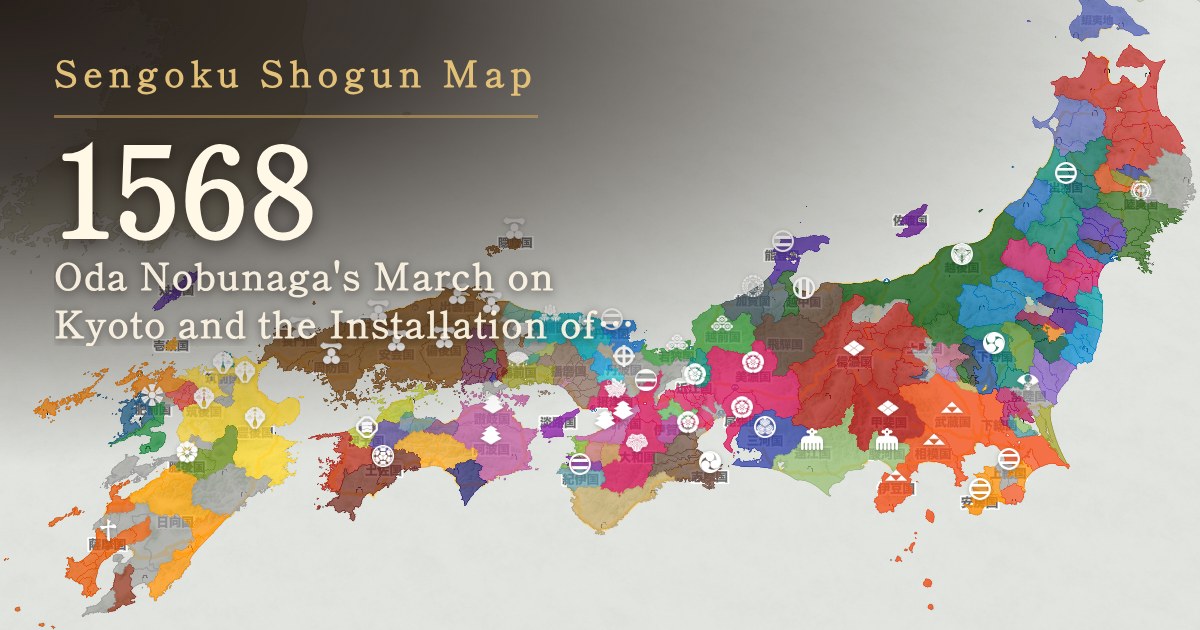
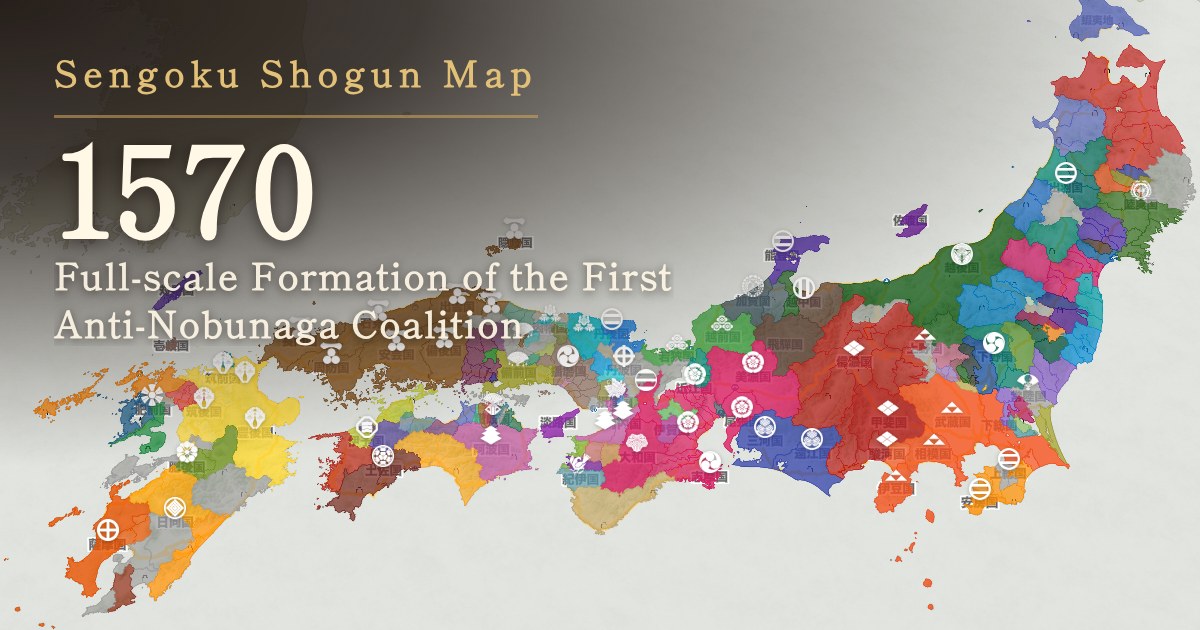
Territories before and after the battle
The year before, the year of the battle, and the year after, side by side. Tap a map to open that year.
Advertisement