1568: Oda Nobunaga's March on Kyoto and the Installation of Ashikaga Yoshiaki as Shogun
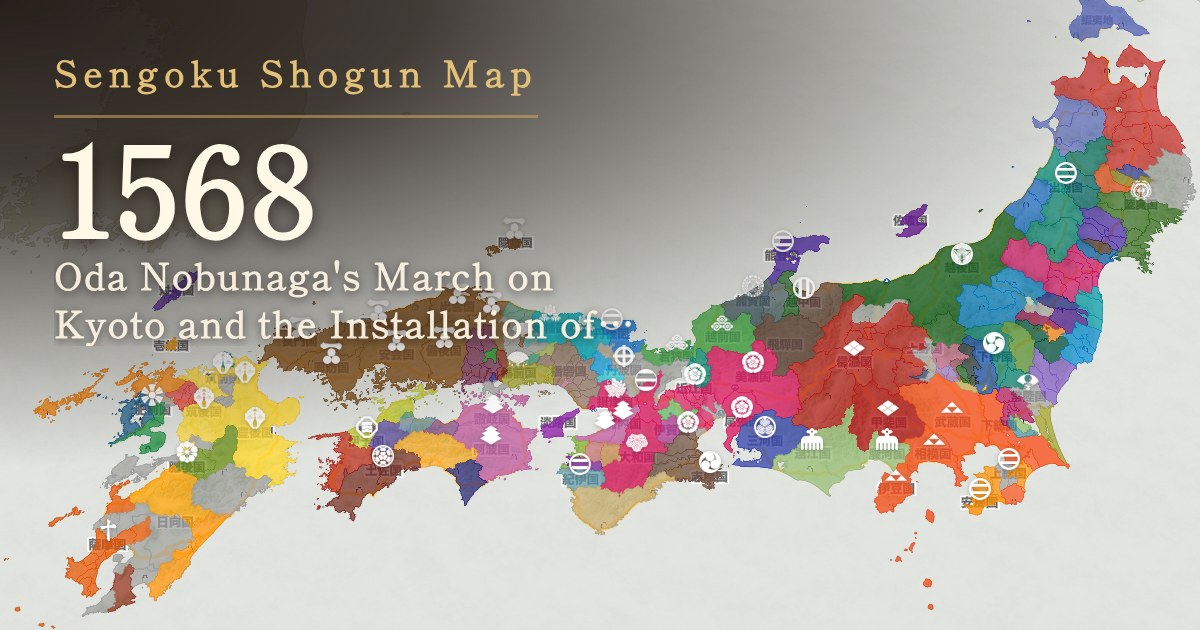
Responding to Ashikaga Yoshiaki's request, Oda Nobunaga marched on Kyoto with a large army, brushing aside Miyoshi resistance and seizing control of the capital. In October, Yoshiaki was appointed the 15th shogun, and shogunal government was rebuilt under the protection of Nobunaga's military might, an arrangement that simultaneously gave Nobunaga himself an opening to dominate central politics.
Events this year
Month 4
Under Asakura Yoshikage's guardianship, Ashikaga Yoshiaki performed his coming-of-age ceremony at Ichijōdani and changed his name from Yoshiaki to Yoshiaki.
Sources 福井県立一乗谷朝倉氏遺跡博物館「朝倉氏の歴史」
Month 10
Elevated by Oda Nobunaga, Ashikaga Yoshiaki entered Kyoto and assumed office as Shōgun. The Muromachi shogunate's leadership structure was restored.
Sources 高槻市「11.足利義昭の上洛と高槻」
Advancing toward Kyoto with Ashikaga Yoshiaki, Oda Nobunaga attacked Kannonji Castle, drove out Rokkaku Yoshikata and his allies, and secured the route to the capital.
Sources 滋賀県「史跡観音寺城跡の調査と整備」
Takeda Shingen invaded Imagawa Ujizane's province of Suruga and occupied Sunpu. The Later Hōjō, bound to the Imagawa by marriage, broke with the Takeda, bringing the tripartite alliance to an end.
Sources 静岡市歴史博物館「今川義元」/おだわらデジタルミュージアム「北条氏康書状(永禄12年3月13日)」
Tokugawa Ieyasu agreed with Takeda Shingen to divide Suruga and Tōtōmi, then invaded Tōtōmi with the help of the Three Ii of Iijima. He captured Hikuma Castle and expanded it into Hamamatsu Castle.
Sources 浜松市「徳川家康公顕彰四百年記念事業特別展 家康と遠江の国衆」
Shortly after entering Kyoto, Nobunaga demanded 20,000 kan of arrow tax—military funds—from the autonomous merchant city of Sakai. Records indicate Sakai's residents deepened their moats for defense.
Sources 堺市「堺環濠都市遺跡」
Fuji Nobutada resisted Takeda attacks at Ōmiya Castle. While there were apparently multiple attacks, public records confirm only the period of Eiroku 11-12, with individual dates remaining unknown.
Sources 富士宮市「大宮城の発掘」