INTERACTIVE BATTLE
Battle of Inabayama Castle
August 1567 (Eiroku 10) · Inabayama Castle, Mino Province (present-day Gifu, Gifu Prefecture)
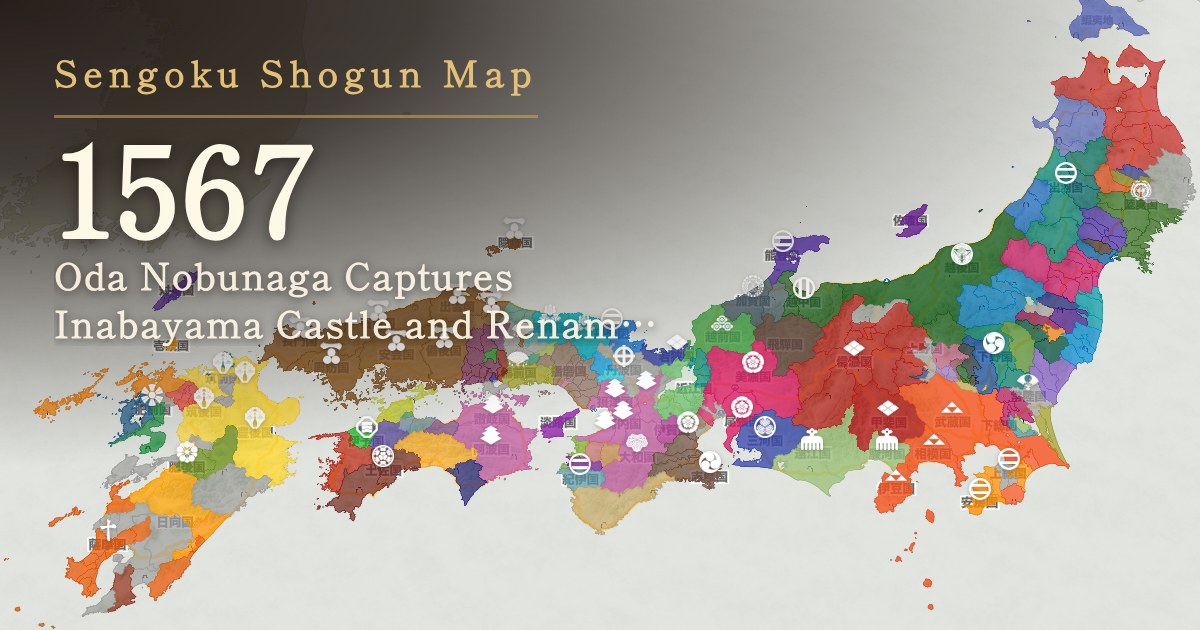
In August 1567, Oda Nobunaga took Inabayama Castle in Mino Province (present-day Gifu Castle in Gifu City, Gifu Prefecture), drove out Saitō Tatsuoki, and pacified Mino. Nobunaga renamed Inokuchi, the town below the castle, Gifu, and moved his base there.
織田氏: Oda Nobunaga, 安藤守就 / 斎藤氏: Saitō Tatsuoki
Explore the 1567 map
Change the year to watch territories shift
Background
Inabayama Castle was known as the castle of Saitō Dōsan and was the center of the rule of Mino. After Saitō Yoshitatsu died suddenly in 1561 and his son Tatsuoki succeeded him, the house fell into disorder, and in 1564 Takenaka Shigeharu (Hanbei) and Andō Morinari seized Inabayama Castle. Nobunaga had been advancing into Mino from Komakiyama Castle as his base, but he was struggling to make progress.
Outcome
Nobunaga's side won, and Inabayama Castle fell in August 1567 (Eiroku 10). Andō Morinari, who had served the Saitō house, joined the Nobunaga side in this attack. Saitō Tatsuoki was expelled, and Nobunaga moved from Komakiyama and renamed the castle Gifu Castle. Inokuchi, the town below, also came to be called Gifu. Excavations at the foot of the mountain have found a layer of charcoal that appears to be the trace of the fire from that time.
Course of the battle
1 1561–1564 (Eiroku 4–7)
Disorder in the Saitō house and the seizure of Inabayama Castle
In 1561, Saitō Yoshitatsu died of illness, and his son Tatsuoki succeeded him. Disorder in the house continued under Tatsuoki, and in 1564 Takenaka Shigeharu (Hanbei) and Andō Morinari seized Inabayama Castle, revealing how unstable the footing of the Saitō house was.
Sources
Sources15·Certainty: High
2 1567 (Eiroku 10)
Andō Morinari lends his support to Nobunaga
Andō Morinari, lord of Kitagata Castle (Kitagata, Gifu Prefecture), was known together with Inaba Yoshimichi and Ujiie Naomoto as the Three Men of Western Mino, and he had served the Toki and Saitō clans. He lent his support to Nobunaga, who was struggling in the attack on Mino, and in the 10th year of Eiroku he joined the capture of Inabayama Castle.
Sources differ – details
Points of debate
It is not known from the confirmed sources how or when Inaba Yoshimichi and Ujiie Naomoto turned to the Nobunaga side.
Sources456·Certainty: High
3 August 1567 (Eiroku 10)
Nobunaga takes Inabayama Castle
In the 8th month of Eiroku 10, Nobunaga captured Inabayama Castle and pacified the whole Mino region. The day-by-day movements of the siege are not recorded, but excavations at the foot of the mountain have found layers of charcoal and burnt earth that appear to be the traces of the fire from that time.
Sources differ – details
Points of debate
The Gifu City guide dates the capture to the 8th month of Eiroku 10 (1567), but one theory puts it in Eiroku 7.
Sources235·Certainty: High
4 1567 (Eiroku 10)
Saitō Tatsuoki is expelled, and Nobunaga enters Gifu
Nobunaga expelled Saitō Tatsuoki and moved his base from Komakiyama to Inabayama. The town was also renamed from Inokuchi to Gifu at this time, it is said. Inabayama Castle came to be called Gifu Castle, and from here Nobunaga's advance toward the unification of the realm began.
Sources
Sources125·Certainty: High
5 September–December 1567 (Eiroku 10)
Rebuilding the castle town with prohibitions and letters of confirmation
Nobunaga issued many prohibitions and letters of confirmation, trying to bring back farmers and townsmen who had fled the war and to restore order in the newly acquired domains. For the Entokuji temple town of Kami-Kanō, he allowed the rakuichiba (free market) to continue.
Sources
Sources15·Certainty: High
6 1567 (Eiroku 10)
The red seal 'Tenka fubu' comes into use
In the land-grant letters that Nobunaga issued when he took land from the surrounding area and gave it to his retainers, a red seal reading 'Tenka fubu' was used. It is said to be the earliest example of a red-seal letter (shuinjō) by Nobunaga. In the following year, 1568, Nobunaga escorted Ashikaga Yoshiaki and went up to Kyoto.
Sources
Sources15·Certainty: High
Historical significance
Nobunaga gained the whole Mino region, and from Gifu he set out on the path to unifying the realm. From September to December of the same year, he issued prohibitions and letters of confirmation to bring back farmers and townsmen who had fled, and he also permitted a rakuichiba (free market) at the Entokuji temple town in Kami-Kanō. The red seal reading 'Tenka fubu' is said to first appear in land-grant letters of about this time. In the following year, 1568, Nobunaga escorted Ashikaga Yoshiaki and went up to Kyoto.
Advertisement
Key figures
織田氏
2

Commander-in-chief of the attacking side
Advancing his campaign against Mino from Komakiyama Castle, he took Inabayama Castle in August 1567. After pursuing Tatsuoki, he moved his base to Gifu and renamed Inokuchi as Gifu. He later used the seal motto 'Tenka fubu' (pacify the realm by force) on his vermilion seal.
Sources
Sources12·Certainty: High
Lord of Kitagata Castle; one of the Three Lords of Western Mino
Lord of Kitagata Castle in Motosu District, Mino Province, he served the Toki and Saitō clans. In 1564 he and Takenaka Shigeharu seized Inabayama Castle, and in 1567 he lent strength to Nobunaga, who was struggling, and joined the capture of Inabayama Castle.
Sources
Sources14·Certainty: High
斎藤氏
1
Lord of Inabayama Castle; head of Mino
He succeeded after his father Yoshitatsu's sudden death but could not restore order among his retainers, and in 1564 Inabayama Castle was taken from him. In August 1567 Inabayama fell, and he was expelled from Mino.
Sources
Sources1·Certainty: High
Other events of 1567
Sources consulted
- 岐阜市「史跡岐阜城跡整備基本計画 2021-2031」
- 岐阜市「岐阜城天守閣」
- 岐阜市「史跡岐阜城跡総合調査報告書Ⅰ」
- 北方町教育委員会「安東伊賀守守就戦死の地」「北方城跡」
- 城郭マスタ(shiro.geojson)
- 北方町教育委員会「北方城跡」
The numbers in the text refer to the list above. Certainty indicates how far a statement is supported by the cited sources; it does not refer to the precision of the coordinates or the dating.
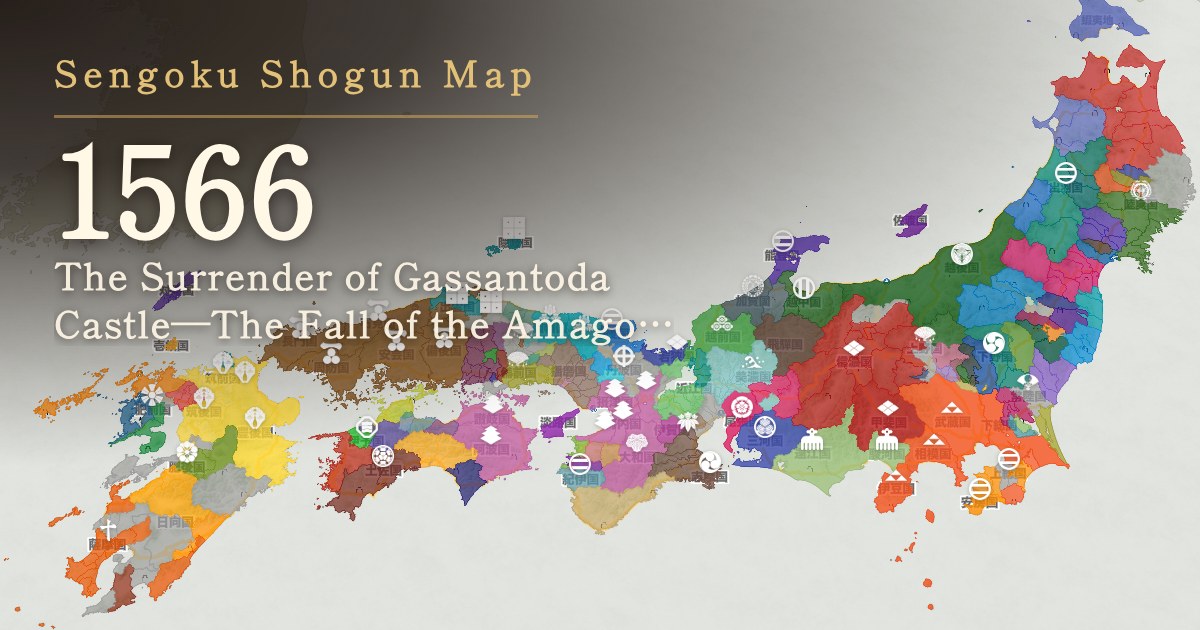
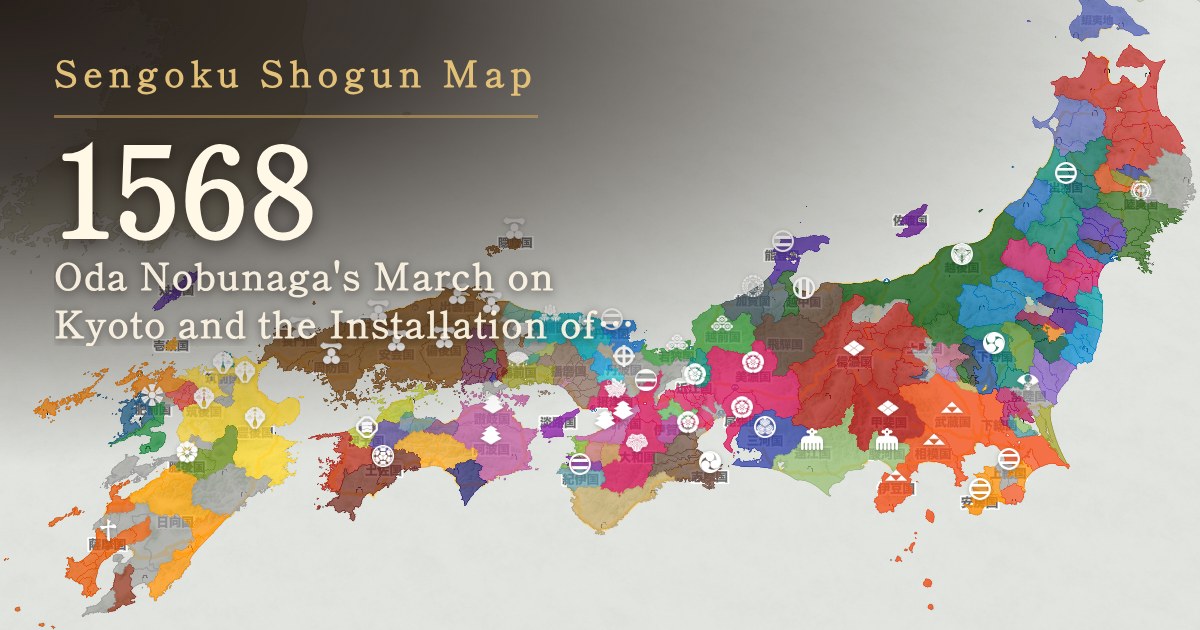
Territories before and after the battle
The year before, the year of the battle, and the year after, side by side. Tap a map to open that year.
Advertisement