INTERACTIVE MARCH
The Keichō Campaign
July 1597 – November 1598 · Southern Korean Peninsula
With the peace talks broken, the Japanese crossed again, crushed the Korean navy at Chilcheollyang and took Namwon, securing Jeolla. Halted at Jiksan and beaten at Myeongnyang by the reinstated Yi Sun-sin, they were pinned to their coastal forts. Hideyoshi's death in August 1598 brought withdrawal, and the seven-year war ended with the sea battle of Noryang in November.
Background
When peace talks from the Bunroku campaign remained unresolved, Hideyoshi ordered a second invasion in 1597. A second mobilization based at Nagoya Castle imposed severe logistical and manpower demands on the daimyo and their Kyushu bases, prolonging the conflict.
Outcome
The Japanese crushed the Korean navy at Chilcheollyang and took Namwon Castle, securing Jeolla Province, but were halted at Jiksan in their northward advance. They were defeated by Yi Sun-sin, restored to command, at Myeongnyang and pinned down in coastal fortifications. Following Hideyoshi's death in August 1598, they withdrew, with the final sea battle at Noryang in November ending the campaign.
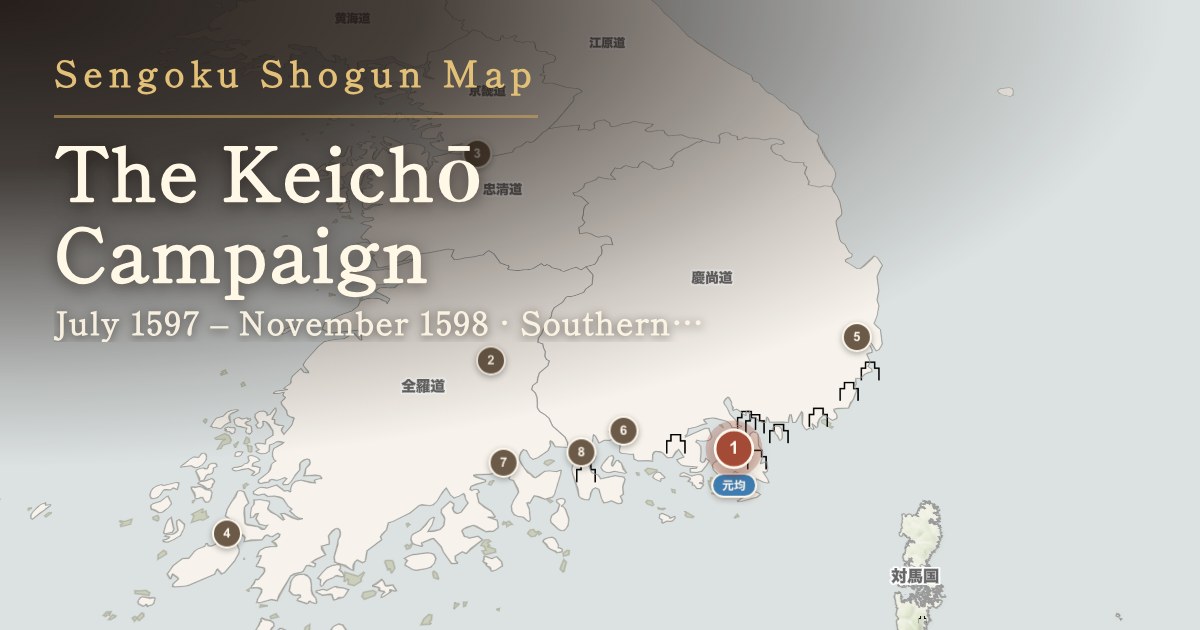
Course of the battle
1 16 July 1597
Battle of Chilcheollyang
Won Gyun, who had replaced Yi Sun-sin, lost the Korean fleet in a night attack. It was the only battle in which the Korean navy was all but destroyed, and it opened Jeolla to the Japanese.
The Joseon fleet is destroyed in a night attack
Orders the second expedition from Nagoya in Hizen
Sources4·Certainty: Medium
2 16 August 1597
Siege of Namwon
Ukita Hideie and Konishi Yukinaga besieged the city with over 50,000 men and overcame the Ming and Korean garrison. Jeolla, which had held out through the Bunroku campaign, fell to the Japanese for the first time.
Sources4·Certainty: Medium
3 7 September 1597
Battle of Jiksan
Kuroda Nagamasa's advance toward Hanseong ran into the Ming army and halted here. This was the northernmost point the Japanese reached in the Keicho campaign.
Clashes with the Ming at Jiksan and the advance halts
Sources4·Certainty: Medium
4 16 September 1597
Battle of Myeongnyang
The reinstated Yi Sun-sin, with only thirteen ships, used the tidal race of the narrow strait to drive off the Japanese fleet. With the sea route cut again, the Japanese were fixed to the southern coast.
Repels the Japanese fleet with thirteen ships and the tide
Sources4·Certainty: Medium
5 December 1597 – January 1598
Siege of Ulsan
Kato Kiyomasa was besieged in the still-unfinished Dosan fortress by over 50,000 Ming and Korean troops. He held out without water or food until relief broke the siege.
Withstands the siege at the unfinished Ulsan castle
Sources4·Certainty: Medium
6 1 October 1598
Battle of Sacheon
Shimazu Yoshihiro drove off a much larger Ming and Korean force with a small garrison. With withdrawal near, it was a decisive win for holding the southern coast.
Repels a large Ming and Joseon force with few troops
Sources4·Certainty: Medium
7 September – October 1598
Siege of Suncheon
At Suncheon, the westernmost Japanese fort, Konishi Yukinaga was attacked by Liu Ting of Ming by land and Yi Sun-sin by sea. The fort held, and Konishi opened talks to withdraw.
Is attacked by land and sea at Suncheon
Attacks Suncheon from the land
Attacks Suncheon from the sea
Sources4·Certainty: Medium
8 19 November 1598
Battle of Noryang
The allied Ming and Korean fleets pursued the withdrawing Japanese in the last great sea battle. Yi Sun-sin was struck by a stray shot and died here. With it the seven-year war came to an end.
Is killed in action at Noryang
Leads the Ming fleet in pursuit
Sources4·Certainty: Medium
Historical significance
Tensions arose between frontline commanders and the officials and military overseers responsible for orders and reports. The disputes over punishments following the relief of Ulsan Castle are considered to have influenced factional choices after Hideyoshi's death. Seven years of warfare consumed the strength of the Toyotomi regime.
Advertisement
Key figures
豊臣氏
7





朝鮮軍
3
Supreme naval commander of three provinces
Returned to service at Myeongnyang and died in the Battle of Noryang
Sources123·Certainty: Medium
Supreme naval commander of three provinces
Died in battle after defeat at Chilcheollyang
Sources123·Certainty: Medium
Supreme commander
Commanded the Korean land forces
Sources123·Certainty: Medium
明軍
3
Quartermaster general
Directed the siege of Ulsan Castle
Sources123·Certainty: Medium
Commander
Attacked Suncheon Japanese Castle from the land
Sources123·Certainty: Medium
Supreme naval commander
Coordinated with Yi Sun-sin and pursued the Japanese fleet at Noryang
Sources123·Certainty: Medium
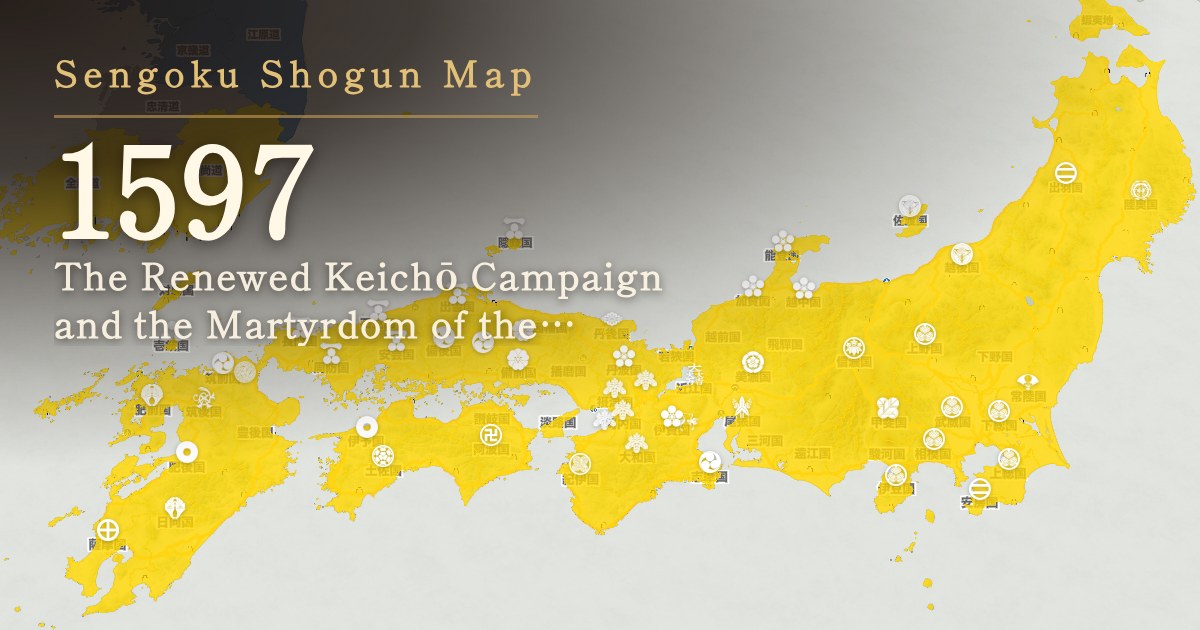
Other events of 1597
Notes on the data
Scene coordinates are given at city or county level, not to the street. The peninsula is drawn from the eight Joseon provinces derived from Natural Earth.
Sources consulted
- 九州国立博物館メールマガジン362号
- 長崎県「年表で学ぼう」
- 行橋市デジタルアーカイブ『行橋市史』
- (公的資料での裏付けが取れていない)
The numbers in the text refer to the list above. Certainty indicates how far a statement is supported by the cited sources; it does not refer to the precision of the coordinates or the dating.
Advertisement