INTERACTIVE BATTLE
Battle of Mimikawa
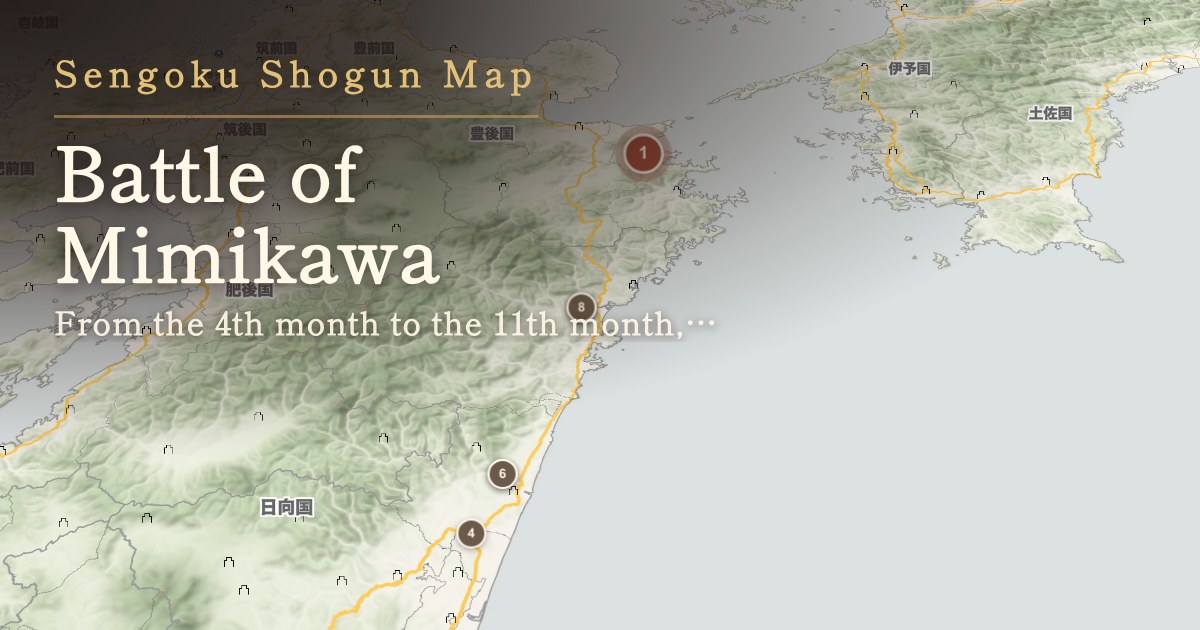
From the 4th month to the 11th month, Tenshō 6 (1578) (the Battle of Takajō River was on the 12th day of the 11th month) · Mimikawa area: Takajō Castle and the Komaru River area (Kijō, Hyūga Province), and Matsuo Castle in Nobeoka
On 12 November 1578, in the area of Takajō Castle and the Komaru River in Hyūga Province (present-day Kijō, Miyazaki Prefecture), the army of Ōtomo Sōrin was crushingly defeated by Shimazu Yoshihisa, Yoshihiro, Iehisa and others. Also called the Battle of Mimikawa or the Takajō River battle, it firmly established Shimazu rule over Hyūga.
大友氏: Ōtomo Sōrin, 田原親賢, 佐伯惟教, 田北鎮周, 吉岡鑑興, 志賀親守 et al. / 島津氏: Shimazu Yoshihisa, Shimazu Yoshihiro, Shimazu Iehisa, 山田有信, 土持親成 / 伊東氏(日向): Itō Yoshisuke
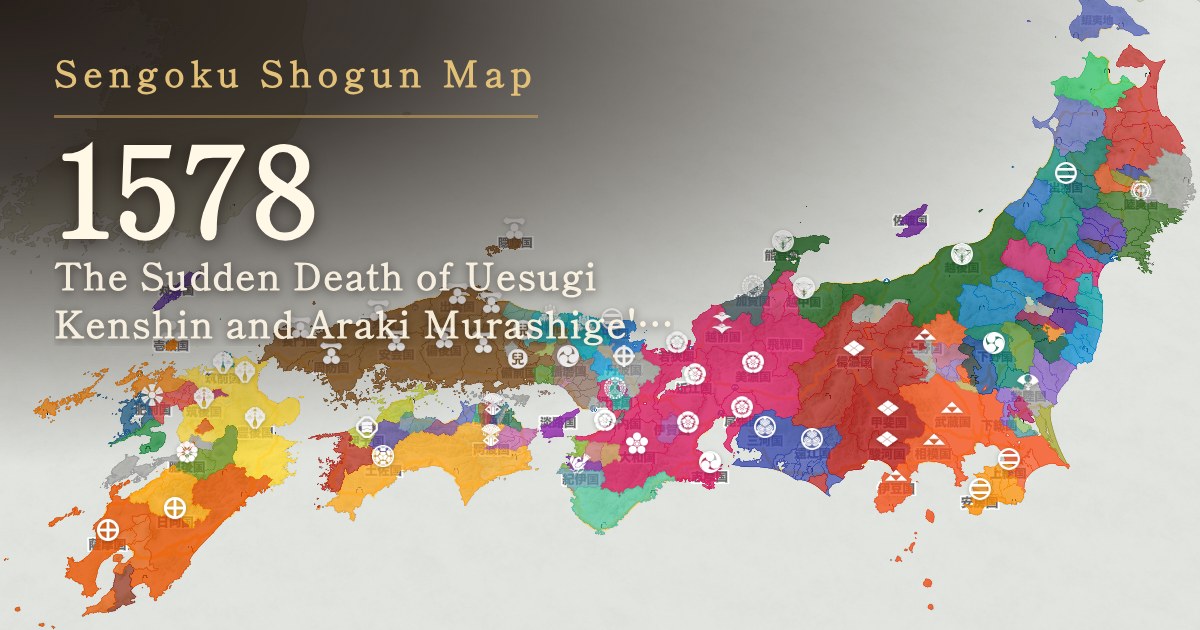
Explore the 1578 map
Change the year to watch territories shift
Background
In Tenshō 5 (1577), Itō Yoshisuke was defeated by the Shimazu and fled to the Ōtomo in Bungo, and the following year the Ōtomo sent troops into Hyūga. The Tsuchimochi clan, pressed by the Itō, had allied with the Shimazu, and when Shimazu Yoshihisa sent reinforcements to the Tsuchimochi, the conflict grew into the great war between Bungo and Satsuma (Hōsatsu no Ōsensō).
Outcome
On 12 November, the Ōtomo forces that had been besieging Takajō were broken by the Shimazu side as they tried to cross the Komaru River, and they were driven from Takajō as far as the Mimikawa area in a crushing defeat. Saeki Korenori, Takita Shigekane and Yoshioka Akioki were killed, and Tahara Chikakata was gravely wounded but survived. Sōrin withdrew by land to Usuki.
Course of the battle
1 Tenshō 5 (1577)
Itō Yoshisuke withdraws to Bungo
Itō Yoshisuke, who had ruled Hyūga, was defeated by the Shimazu clan, left the province, and turned to the Ōtomo clan of Bungo. The Ōtomo clan's Hyūga campaign the following year took the recovery of the Itō clan's former lands as its stated cause.
Sources
Sources148·Certainty: High
2 4th month, Tenshō 6 (1578)
The Ōtomo forces attack Matsuo Castle
In April of Tenshō 6 (1578), Ōtomo Sōrin invaded Hyūga and took Matsuo Castle, which was held by the Tsuchimochi clan. The area around Nobeoka remained for a time under Ōtomo rule.
Is attacked by the Ōtomo forces at Matsuo Castle
Sources differ – details
Points of debate
It is unclear on which day of the 4th month this happened, and whether the castle was stormed or surrendered.
Sources1238·Certainty: High
3 Tenshō 6 (1578), month and day unknown
Sōrin takes the field at Mushika
Ōtomo Sōrin took the field in Hyūga in person and advanced as far as Mushika (Muka) in Nobeoka.
Takes the field as far as Mushika
Sources differ – details
Points of debate
There is also an account that Sōrin tried to build an ideal Christian realm in Hyūga, but there are no similar records in the materials of Nobeoka City or Kijō Town, so it cannot be said to be the reason for the expedition. The location of Mushika is not clear, so the map point is placed at Matsuo Castle in Nobeoka.
Sources38·Certainty: Medium
4 From autumn to the 11th month, Tenshō 6 (1578)
The Shimazu side's deployment
The Shimazu also moved. Yoshihisa set out from Kagoshima, Yoshihiro from Iino, and Iehisa is said to have entered Takajō from Sadowara as a reinforcement. The castle was defended by its commander, Yamada Arinobu.
Sources differ – details
Points of debate
There are sources saying that Iehisa entered Takajō and sources naming only Yamada Arinobu, so the treatment differs.
Sources348·Certainty: Medium
5 Before the 12th day of the 11th month, Tenshō 6 (1578)
The siege of Takajō
The Ōtomo side surrounded Takajō, which was held by Yamada Arinobu. Even when surrounded by a large army, Arinobu held firm and did not let the castle fall.
Defends Takajō
Sources differ – details
Points of debate
It is unclear on which day the siege began or the Shimazu army arrived. The number of Ōtomo troops differs by source, at 30,000, over 40,000 or 50,000.
Sources568·Certainty: Medium
6 12th day of the 11th month, Tenshō 6 (1578)
Battle of Takajō River
On November 12, Ōtomo commanders Takita Shigekane, Saeki Korenori and others tried to cross the Komaru River but were broken by Shimazu Yoshihiro and others. The Ōtomo side was pursued from Takajō to the area of the Mimikawa River and suffered a crushing defeat. Shimazu Yoshihisa set up his headquarters at Nejirozaka, and Ōtomo Yoshishige (Sōrin) is said to have taken the field himself.
Breaks while trying to cross the Komaru River
Breaks while trying to cross the Komaru River
Breaks the Ōtomo side
Sources differ – details
Points of debate
The name of the battlefield is given as either 'Mimikawa' or 'Takajō River' in the sources. The main battlefield may have been the Takajō River, with the Mimikawa a river crossed during the retreat, but this cannot be decided. Placing Yoshihisa's headquarters at Nejirozaka rests on a single source.
Sources678·Certainty: Medium
7 After the 12th day of the 11th month, Tenshō 6 (1578)
The Ōtomo rout and retreat to Bungo
On the Ōtomo side, Saeki Korenori, Takita Shigekane and Yoshioka Akioki were killed in action. Tahara Chikakata (Jōnin) returned alive though gravely wounded, and he was the only member of the Hyūga army's kaban council to survive. Sōrin fled back to Usuki by land.
Flees back to Usuki
Survives despite grave wounds
Is killed in action
Is killed in action
Is killed in action
Sources differ – details
Points of debate
Yoshioka Akioki is also written Shigeoki, and the spelling varies.
Sources378·Certainty: High
8 After the 11th month, Tenshō 6 (1578)
The Shimazu clan confirms the Tsuchimochi clan in its former lands
When the Ōtomo forces withdrew to Bungo, the Shimazu clan confirmed the Tsuchimochi clan in its former lands. With the defeat at Takajō and the Mimikawa, northern Hyūga slipped out of Ōtomo hands, and Shimazu rule over the whole of Hyūga came to be firmly established.
Is confirmed in its former lands
Sources
Sources178·Certainty: High
Historical significance
The defeat ended Ōtomo control of northern Hyūga, and the Shimazu firmly established their rule over the whole of Hyūga Province. Yamada Arinobu, who defended Takajō, later erected a six-Jizō memorial tower to mourn the dead on both sides. The tower is now designated a national historic site.
Advertisement
Key figures
大友氏
7

Commander of the Ōtomo side
Took the field in Hyūga in person and advanced as far as Mushika. After the defeat he fled back to Usuki by land.
Sources
Sources37·Certainty: High
Kaban council member of the Hyūga army
Joined at the head of the Buzen troops. The only kaban council member to survive, though gravely wounded, he was held responsible for the defeat. Also known as Jōnin.
Sources
Sources3·Certainty: High
Kaban council member of the Hyūga army
Killed in action.
Sources
Sources37·Certainty: High
Kaban council member of the Hyūga army
Killed in action. He was among those on the side that gave way while trying to cross the Komarugawa River.
Sources
Sources37·Certainty: High
Kaban council member of the Hyūga army
Killed in action. His name is also written Shigeoki.
Sources
Sources3·Certainty: High
Leading figure of the Nangun lords (Nangunshū)
A leading figure of the Nangun lords (Nangunshū), who were charged with the plan to enter Satsuma from Higo.
Sources
Sources3·Certainty: High
Leading figure of the Nangun lords (Nangunshū)
Together with Shiga Chikamori, Kutami Akiyasu was charged with the plan to enter Satsuma from Higo.
Sources
Sources3·Certainty: High
島津氏
5

Commander-in-chief of the Shimazu side
Shimazu Yoshihisa marched out from Kagoshima. He is said to have set up his headquarters at Nejirozaka.
Sources
Sources47·Certainty: High
Shimazu commander
Shimazu Yoshihiro marched out from Iino. The Ōtomo forces broke in front of Yoshihiro and his men.
Sources
Sources47·Certainty: High

Shimazu commander
Shimazu Iehisa is said to have entered Takajō from Sadowara as reinforcements.
Sources
Sources34·Certainty: Medium
Commander of Takajō
Held out to the end at Takajō in Niiroin. After the battle he built a Rokujizō stone tower to pray for the dead of both sides, and the tower is now a National Historic Site.
Sources
Sources567·Certainty: High
Lord of northern Hyūga (Tsuchimochi clan)
Was attacked by the Ōtomo invasion. Pressed by the Itō clan, it had allied with the Shimazu clan. How it was treated in the 4th month is unclear.
Sources
Sources13·Certainty: Medium
伊東氏(日向)
1
Former lord of Hyūga
Defeated by the Shimazu clan, he withdrew to Bungo and sought help from the Ōtomo clan. He did not take the field.
Sources
Sources4·Certainty: High
Other events of 1578
Notes on the data
The Ōtomo troop strength is not given here: Kijō Town says 30,000, another page of the same town says 40,000, the Toyotsu Town History says over 40,000, and the Kagoshima Prefecture Tourism Federation says about 50,000, so the figures are scattered and no primary-source basis is shown. For the Shimazu side, too, only Kijō Town's 20,000 exists. Only the Reimeikan places Shimazu Yoshihisa's headquarters at Nejirozaka; Kijō Town presents Nejirozaka as a battlefield of Tenshō 15 and does not mention a headquarters there in 1578, so it is not placed on the map. The Toyotsu Town History's claim that Sōrin tried to build a Christian ideal state in Hyūga is a single account and is not treated as the reason for the campaign. The coordinates of the Takajō River battlefield site and of Mushika (Muka) could not be confirmed, so the map points are represented by nearby strongholds (Takajō and Matsuo Castle). The Mimikawa is a river basin, so it is not given a single point.
Sources consulted
- 延岡市「延岡市の歴史」
- 延岡市「6.松尾城跡」
- みやこ町歴史民俗博物館「豊津町史ほか」(大友氏の日向侵略と大敗)
- 鹿児島県観光連盟「島津義弘公の戦い(第一部)」
- 木城町「高城城跡」
- 木城町「城山公園(高城城址)・高城川合戦場・根白坂古戦場跡」
- 鹿児島県立黎明館「日州耳川合戦日帳」
- 城郭マスタ(shiro.geojson)
The numbers in the text refer to the list above. Certainty indicates how far a statement is supported by the cited sources; it does not refer to the precision of the coordinates or the dating.
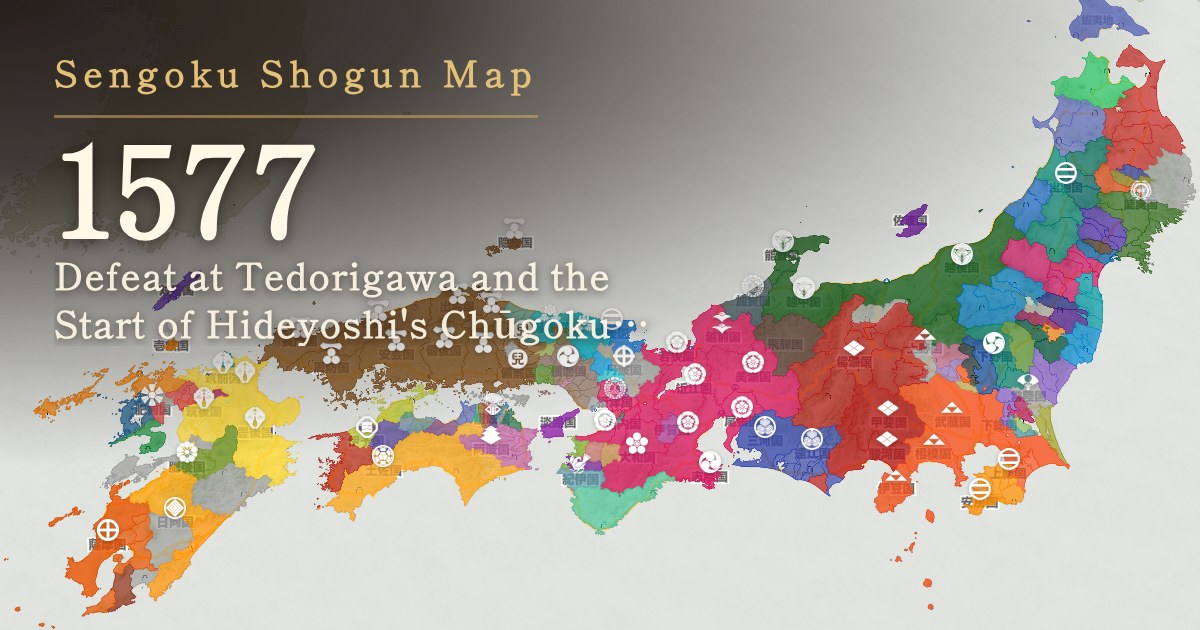
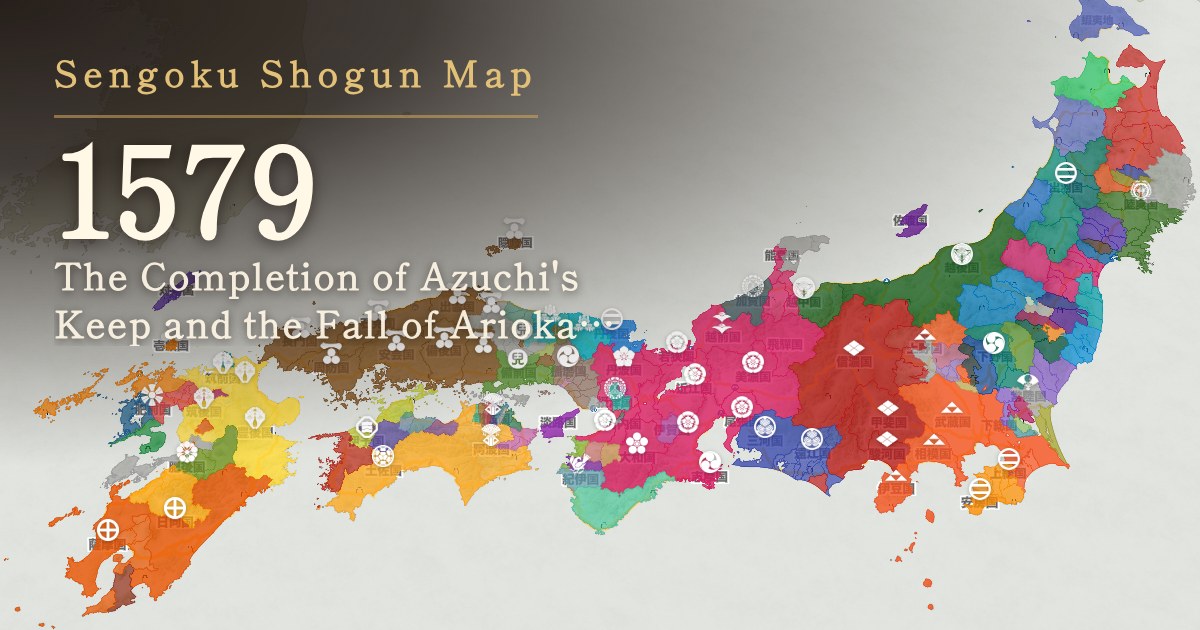
Territories before and after the battle
The year before, the year of the battle, and the year after, side by side. Tap a map to open that year.
Advertisement