INTERACTIVE BATTLE
Second Battle of Kizugawa Inlet
6th month to 11th month, Tenshō 6 (1578) (the naval battle at Kizugawa Inlet was on the 6th day of the 11th month) · Kizugawaguchi (Kizugawa Inlet), Settsu Province (Osaka Bay)
On 6 November 1578, at the Kizugawa Inlet in Settsu Province (near the mouth of the Kizu River in present-day Osaka City), the Oda navy, with the great ships of Kuki Yoshitaka, met the Mōri fleet and is said to have cut off the sea supply route to Ishiyama Honganji.
織田氏: Kuki Yoshitaka, Takigawa Kazumasu, Oda Nobunaga
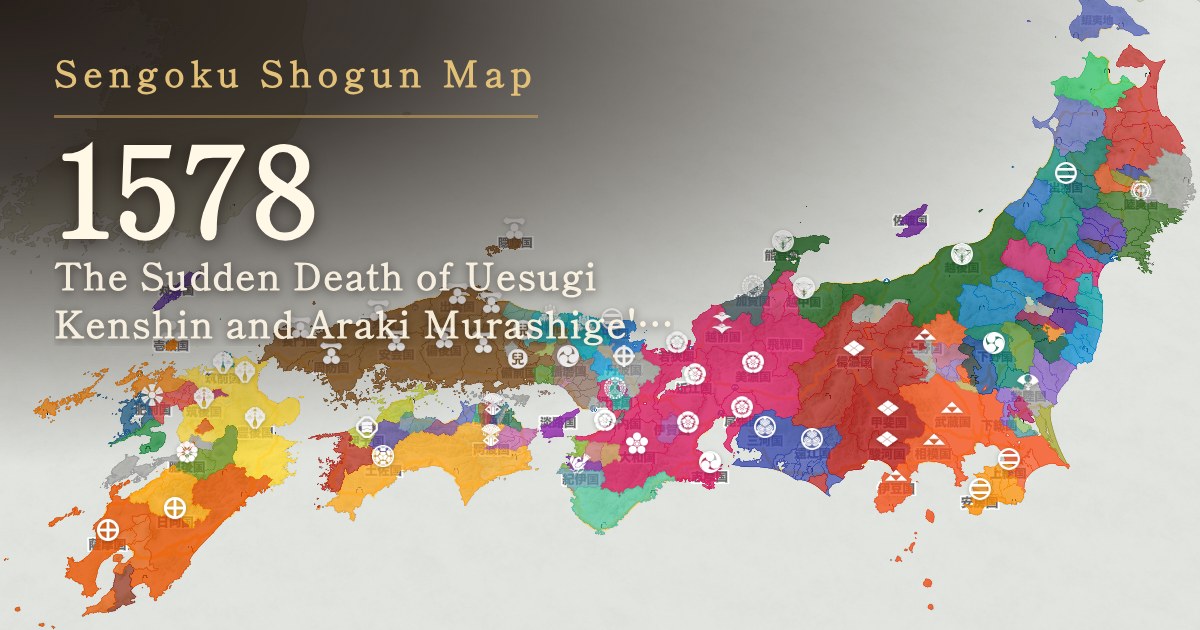
Explore the 1578 map
Change the year to watch territories shift
Background
Nobunaga, who had been defeated by the Mōri navy at the First Battle of Kizugawa Inlet in 1576, ordered Kuki Yoshitaka to build great ships. Ishiyama Honganji had kept receiving supplies from the sea, and the Oda side had set up siege forts around Osaka to block the land routes. The great ships were completed in 1578, left Ise in the 6th month and reached Sakai in the 7th month. On 30 September, Nobunaga is said to have inspected the great ships at Sakai and given Kuki Yoshitaka 20 pieces of gold and a stipend.
Outcome
On 6 November, when more than 600 western ships of the Mōri side sailed out toward the Kizu waters, Kuki Yoshitaka met them, and the sea battle went on until around noon. It is said that Yoshitaka drew the enemy in with the sturdiness of his great ships and broke them with large guns.
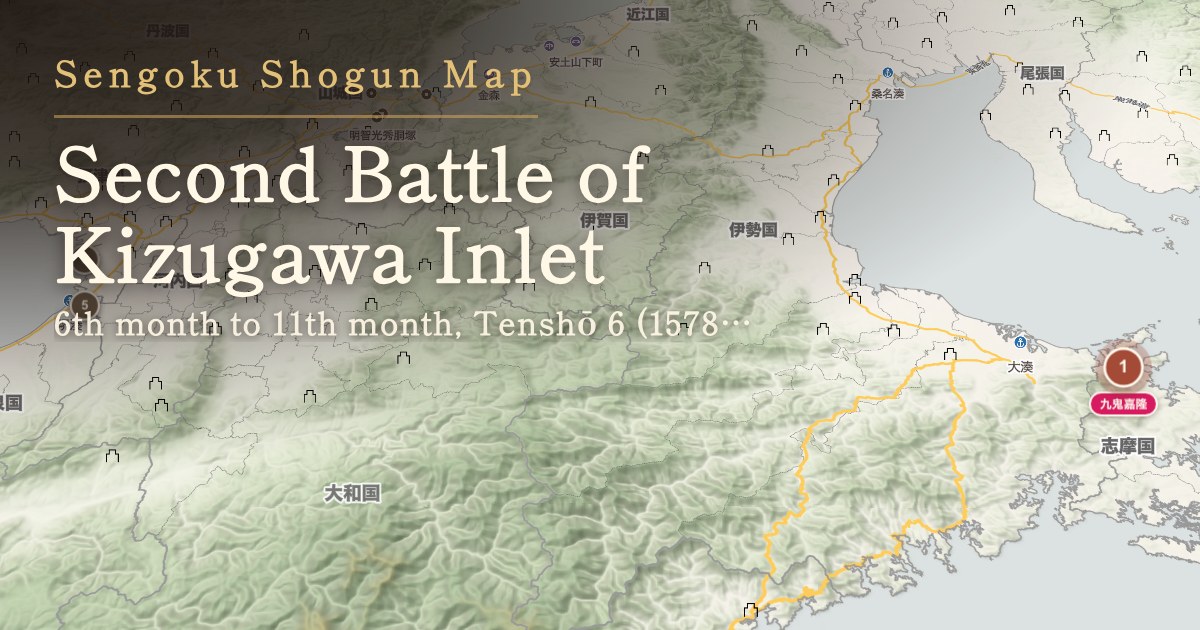
Course of the battle
1 Tenshō 6 (1578)
Building the great ships
Nobunaga, who had been beaten by the Mōri navy at the First Battle of Kizugawa Inlet, ordered Kuki Yoshitaka to build large ships. The ships are said to have been built at Toba and elsewhere in Shima Province, Yoshitaka's base, and Takigawa Kazumasu is also said to have had one built.
Sources differ – details
Points of debate
The number of great ships is handed down as either six or seven. Taking six for Kuki and one for Takigawa Kazumasu, six to seven is the safer reading.
Sources1234·Certainty: Medium
2 26th day of the 6th month, Tenshō 6 (1578)
The great ships leave Ise
On 26 June, the great ships are said to have left Ise.
Sources
Sources14·Certainty: Medium
3 17th day of the 7th month, Tenshō 6 (1578)
Landing at the port of Sakai
Kuki Yoshitaka's great ships reached the port of Sakai in Izumi Province, and onlookers are said to have been astonished. That the great ships which had left Ise entered Sakai is also seen in the Tamon'in Diary.
Led the great ships to Sakai
Sources differ – details
Points of debate
The date of 17 July is not certain; it is safest to treat it as some time in July.
Sources125·Certainty: Medium
4 18th day of the 7th month, Tenshō 6 (1578)
Sailing out toward Ōsaka
The next day, the great ships appear to have sailed out into the sea off Ōsaka and stopped the sea passage.
Sources differ – details
Points of debate
It is not clear whether the sea blockade was actually achieved or whether it was only a show of strength.
Sources167·Certainty: Medium
5 30th day of the 9th month, Tenshō 6 (1578)
Nobunaga inspects the great ships at Sakai
6 6th day of the 11th month, Tenshō 6 (1578)
The naval battle at Kizugawa Inlet
Western ships of the Mōri side, more than 600, sailed out toward the Kizu waters, and Kuki Yoshitaka met them. The fight at sea continued until around noon, and at first Kuki seemed unable to hold out. It is said that Yoshitaka drew the enemy in with the sturdiness of his great ships and broke them with large guns. With this victory, the sea supply route to Ishiyama Honganji was cut.
Met the Mōri side with the great ships
Sources differ – details
Points of debate
The figure of more than 600 Mōri ships appears in Oda-side records and cannot necessarily be taken at face value. The account of how the battle was decided comes from later oral tradition.
Sources1267·Certainty: High
7 After the 6th day of the 11th month, Tenshō 6 (1578)
Rewards for Kuki Yoshitaka
One record says that after the battle, Kuki Yoshitaka was given 7,000 koku from seven islands of Shima Province and the Noda and Fukushima areas of Settsu combined. Another record gives 35,000 koku in Ise and Shima.
Sources differ – details
Points of debate
The scale of the reward is divided between 7,000 and 35,000 koku.
Sources234·Certainty: Medium
Historical significance
The sea supply route to Ishiyama Honganji was cut, and the Oda encirclement was tightened at sea as well. As for Yoshitaka's reward after the battle, one source gives 7,000 koku from seven islands of Shima Province and the Noda and Fukushima areas of Settsu, while another gives 35,000 koku in Ise and Shima. The sources disagree.
Advertisement
Key figures
織田氏
3

Commander of the great ships
Led the great ships and met the Mōri side at Kizugawa Inlet on the 6th day of the 11th month. His base was Toba in Shima Province. The number of great ships is said to have been 6 or 7.
Sources
Sources123·Certainty: High

Commander made to build one great ship
Had one great ship built. Its commander is said to have been given gold by Nobunaga at Sakai on 30 September.
Sources
Sources1·Certainty: Medium

Commander-in-chief of the Oda side
Inspected the great ships at Sakai on the 30th day of the 9th month. He did not take part in the naval battle itself.
Sources
Sources1·Certainty: Medium
Other events of 1578
Notes on the data
The Shinchō Kōki was read in the electronic text (OCR) of the National Diet Library Digital Collections. The OCR has errors, and personal names and numbers have not yet been checked against printed editions or images of the original. On the number of great ships, Toba City writes both 7 and 6; the electronic text of the Shinchō Kōki appears to read 6 ships for Kuki and 1 for Takigawa Kazumasu, and there is a reading in which 6 matches Kuki's share and 7 is that number plus Takigawa's one ship, but this is not settled. The names of the three men aboard Takigawa's great ship and of those who accompanied the Sakai inspection come from the electronic text's reading, and are not adopted until checked against the original. The name of the Mōri commander does not appear in this passage of the Shinchō Kōki, and there is no source supporting individual commanders such as Murakami, Kurushima or Noshima, so no Mōri-side commanders are placed. Because the coastline at Kizugawa Inlet has changed through land reclamation, the point on the map is a representative point near the river mouth. The point for Sakai is a representative point in Sakai Ward, Sakai City, from the address search of the Geospatial Information Authority of Japan, and is not the location of the port of Sakai itself.
Sources consulted
- 太田牛一『信長公記』巻十一(国立国会図書館所蔵)
- 鳥羽市「九鬼嘉隆(人物概要)」
- 鳥羽市「水軍の将 九鬼嘉隆」
- 城郭マスタ(shiro.geojson)
- 国土地理院「地理院地図」住所検索(大阪府堺市堺区)
- 広島県立文書館『広島県史年表(中世2)』(天正4年7月13日〜14日、摂津国木津川口)
- 太田牛一『信長公記』巻九(国立国会図書館所蔵)
The numbers in the text refer to the list above. Certainty indicates how far a statement is supported by the cited sources; it does not refer to the precision of the coordinates or the dating.
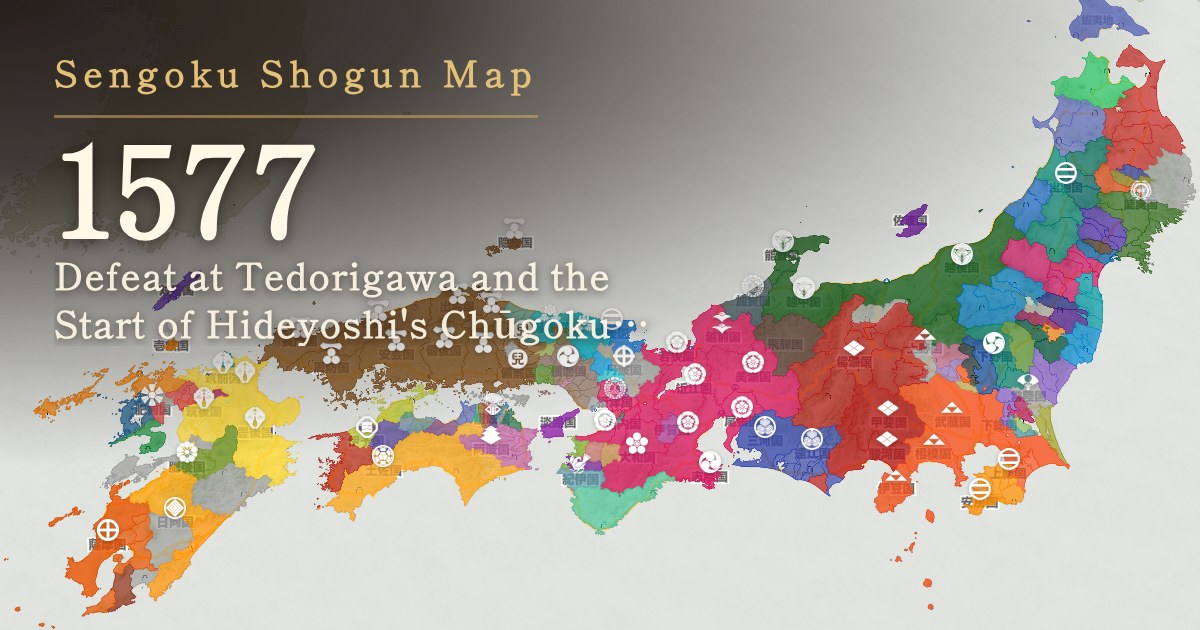
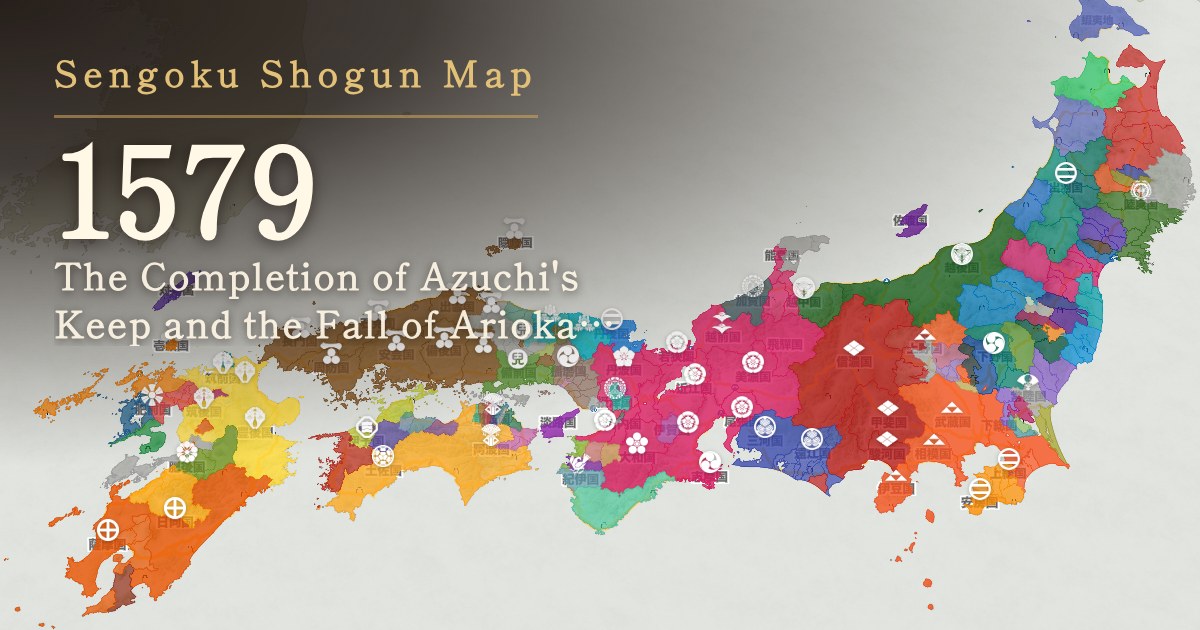
Territories before and after the battle
The year before, the year of the battle, and the year after, side by side. Tap a map to open that year.
Advertisement