INTERACTIVE BATTLE
Kyushu Campaign
1587年3月〜5月 · Kyushu
In 1587, Toyotomi Hideyoshi answered a request from the Ōtomo and sent a large army to Kyushu, forcing Shimazu Yoshihisa, who had continued to push northward, to surrender. This was the pacification of Kyushu (the Kyushu Campaign). The Shimazu were confirmed in possession of Satsuma and other provinces and submitted to the Toyotomi regime.
豊臣氏: Toyotomi Hideyoshi, Toyotomi Hidenaga / 島津氏: Shimazu Yoshihisa, Shimazu Yoshihiro
Explore the 1587 map
Change the year to watch territories shift
Background
In Kyushu, the Shimazu advanced northward from the south and pressed the Ōtomo of Bungo. In 1586 they occupied Funai in Bungo and extended their influence over almost all of Kyushu. When the Ōtomo asked Hideyoshi for help, Hideyoshi demanded peace between the Shimazu and the Ōtomo (sōmuji). Because the Shimazu did not stop attacking the Ōtomo, he intervened by force. Toyotomi Hidenaga's advance force and Hideyoshi's main army each set out for Kyushu.
Outcome
In May 1587, Shimazu Yoshihisa submitted to Hideyoshi at Taiheiji in Sendai, and the pacification of Kyushu was completed. The Shimazu were confirmed in parts of Satsuma, Osumi and Hyuga, and came under the Toyotomi regime.
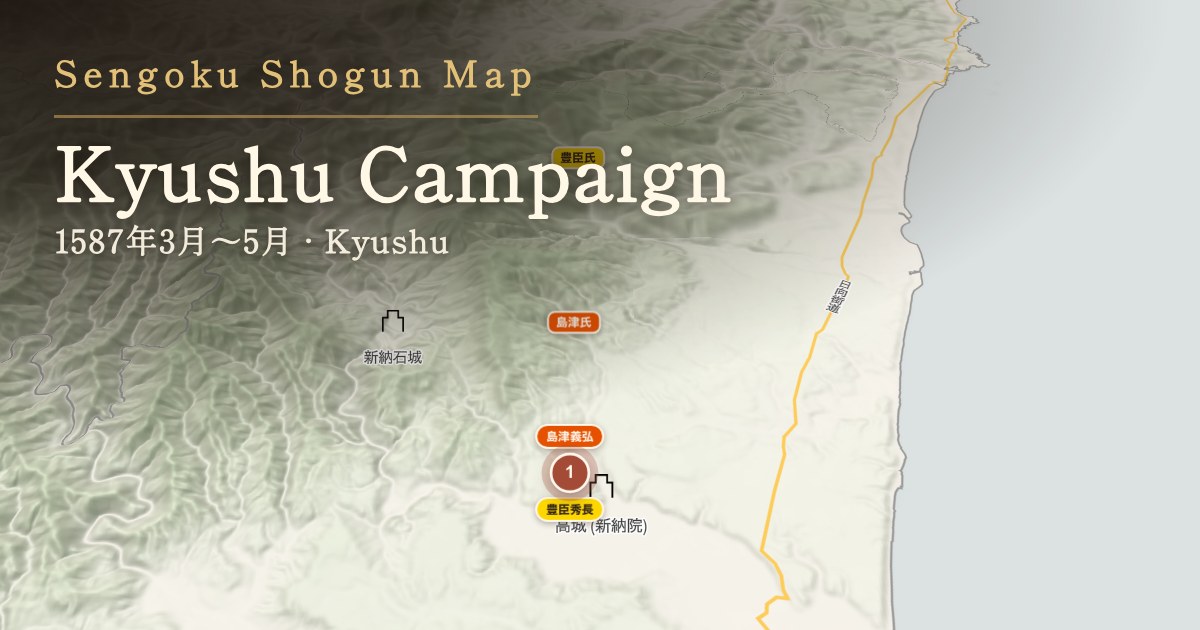
Course of the battle
1 March 1587
Toyotomi armies advance into Kyushu
Armies under Toyotomi Hidenaga and Hideyoshi advanced by several routes and attacked Shimazu positions.
Toyotomi Hideyoshi — supreme commander of the Toyotomi forces
Toyotomi Hidenaga — commands the vanguard force
Shimazu Yoshihisa — lord of the Shimazu clan
Shimazu Yoshihiro — commanded the Shimazu army
Sources
Sources123·Certainty: Medium
2 April 1587
Shimazu forces are defeated at Nejirozaka
Shimazu forces attacked Toyotomi positions at Nejirozaka in Hyuga but were defeated, weakening organized resistance.
Toyotomi Hideyoshi — 豊臣軍総指揮
Toyotomi Hidenaga — 先発軍の指揮
Shimazu Yoshihisa — lord of the Shimazu clan
Shimazu Yoshihiro — commanded the Shimazu army
Sources
Sources123·Certainty: Medium
3 May 1587
Shimazu Yoshihisa submits
Historical significance
Hideyoshi did not destroy the powerful Kyushu daimyo but reassigned their domains to bring them to submission. Kuroda Yoshitaka being given six districts of Buzen Province was one example. This large-scale mobilization led to the later construction of Nagoya Castle and the wide-ranging mobilization for the invasions of Korea.
Advertisement
Key figures
豊臣氏
2

Toyotomi Hideyoshi — 豊臣軍総指揮
Advanced a large army into Kyushu in the name of aiding the Ōtomo, and after the surrender redistributed the domains.
Sources
Sources123·Certainty: Medium
Toyotomi Hidenaga — Advanced force commander
Led the advance force to Kyushu.
Sources
Sources123·Certainty: Medium
島津氏
2

Shimazu Yoshihisa — 島津家当主
Head of the Shimazu house. Submitted to Hideyoshi at Taiheiji and was confirmed in possession of Satsuma.
Sources
Sources123·Certainty: Medium
Shimazu Yoshihiro — 島津軍の指揮
Younger brother of Yoshihisa. After the surrender, he was confirmed in parts of Osumi and Hyuga.
Sources
Sources123·Certainty: Medium
Other events of 1587
Sources consulted
- 鹿児島県「秀吉の九州遠征」
- 福岡市博物館「戦国時代の博多展4」
- 文化遺産オンライン「豊臣秀吉条書 筑前国箱崎宛」
The numbers in the text refer to the list above. Certainty indicates how far a statement is supported by the cited sources; it does not refer to the precision of the coordinates or the dating.
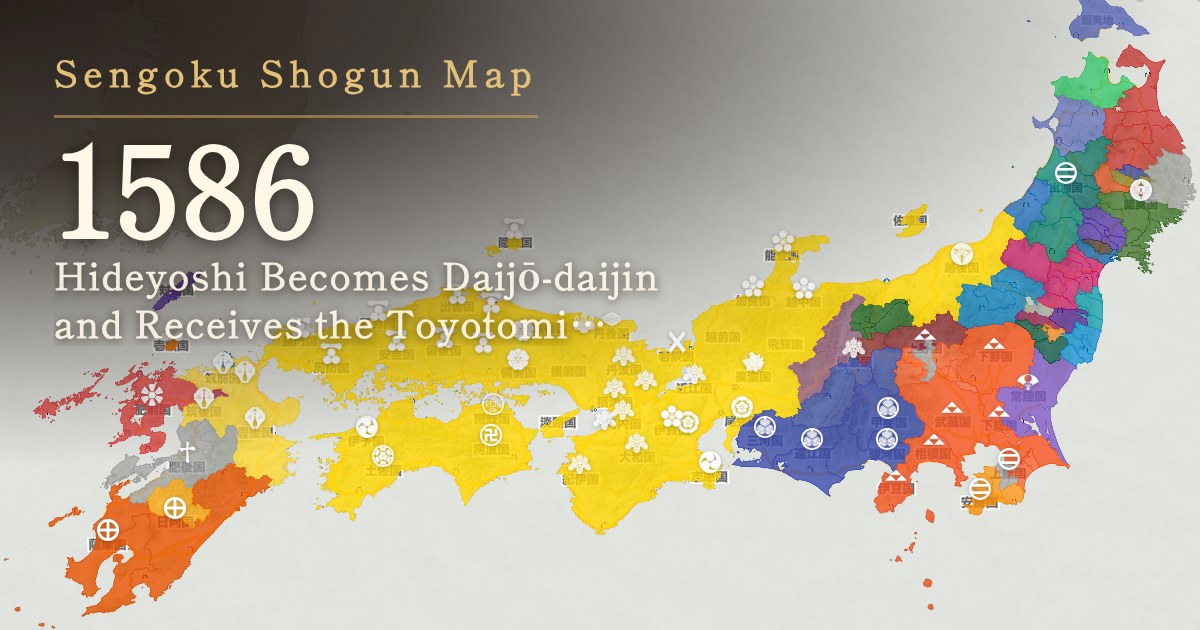
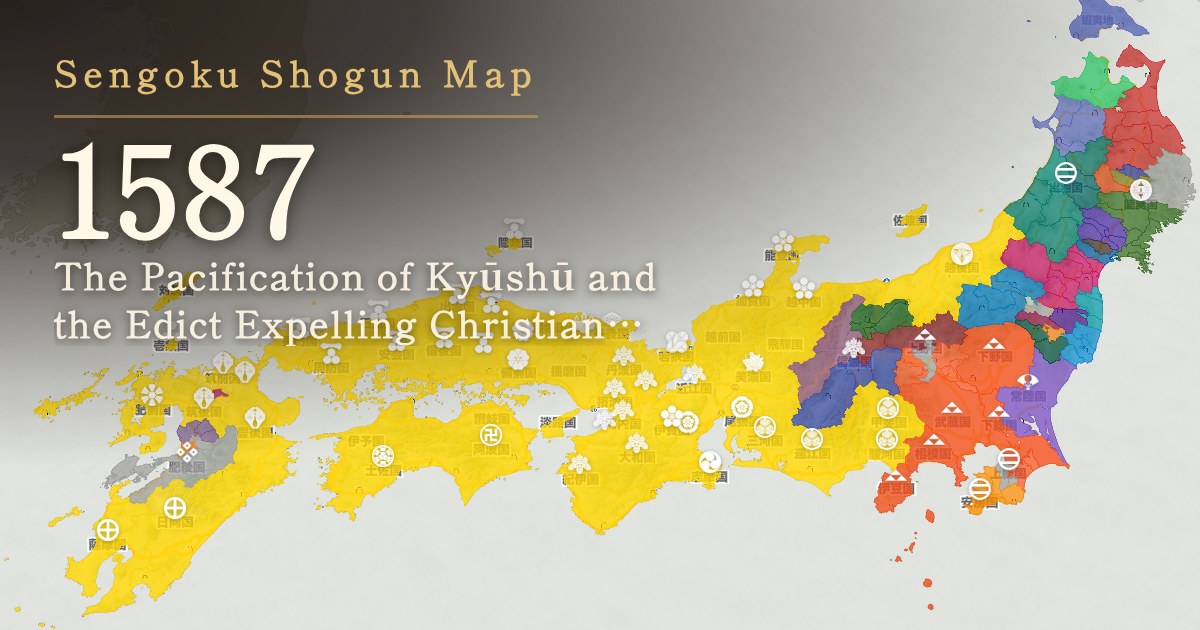
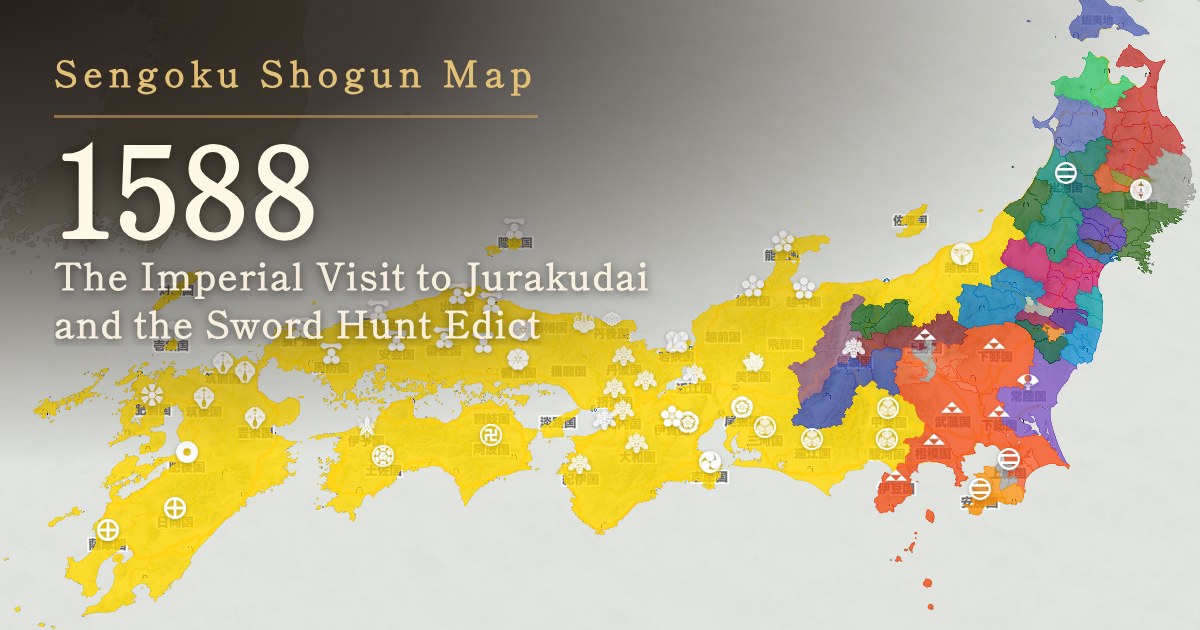
Territories before and after the battle
The year before, the year of the battle, and the year after, side by side. Tap a map to open that year.
Advertisement