INTERACTIVE BATTLE
Battle of Hetsugigawa
20 January 1587 (12th day of the 12th month, Tenshō 14) · Hetsugigawa River, Bungo Province
On the 12th day of the 12th month of Tenshō 14 (20 January 1587), at the Hetsugigawa River in Bungo Province (present-day Ōita City), the Shikoku forces of the Toyotomi side, led by Sengoku Hidehisa and Chōsokabe Motochika, together with the Ōtomo forces, were defeated by the army of Shimazu Iehisa.
島津氏: Shimazu Iehisa / 豊臣氏: Sengoku Hidehisa, Sogō Masayasu / 長宗我部氏: Chōsokabe Motochika / 大友氏: Ōtomo Yoshimune, Ōtomo Sōrin
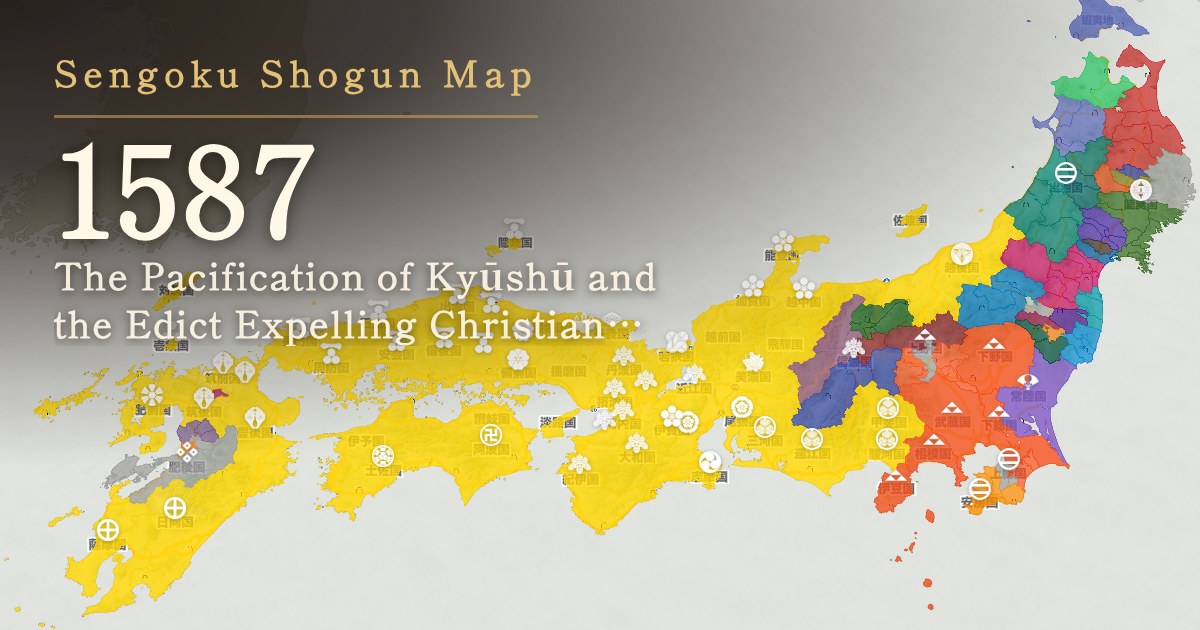
Explore the 1587 map
Change the year to watch territories shift
Background
In 1586, the Shimazu clan had taken most of Kyushu and invaded Bungo, the home territory of the Ōtomo clan. At the request of Ōtomo Sōrin, Toyotomi Hideyoshi sent reinforcements. With Sengoku Hidehisa of Sanuki as commander, the Shikoku forces, including Chōsokabe Motochika and his son Nobuchika of Tosa and Sogō Masayasu of Sanuki, crossed to Bungo. Tsuruga Castle at Hetsugi was holding out against the fierce assault of the Shimazu army.
Outcome
The Toyotomi side fell into a stratagem of the Shimazu army at the Hetsugigawa (Ōno River) and suffered a heavy defeat. Chōsokabe Nobuchika and Sogō Masayasu were killed in battle, and Motochika is said to have escaped the battlefield. Ōtomo Yoshimune withdrew to Takasaki Castle and then to Ryūō Castle (present-day Ajimu, Usa). The town of Funai, which had lost its main forces, was attacked by the Shimazu army, and most of it was burned.
Course of the battle
1 Autumn to November 1586 (Tenshō 14)
Shimazu army invades Bungo
Shimazu Iehisa invaded Bungo as the vanguard. Tsuruga Castle at Hetsugi, held by the Ōtomo side, came under fierce attack from the Shimazu army, but the castle held out until the Toyotomi reinforcements arrived. The Ōtomo clan was the daimyo that resisted the Shimazu clan's conquest of Kyushu to the very end.
Sources
Sources145·Certainty: High
2 Early December 1586 (Tenshō 14)
Toyotomi relief army arrives
Under Hideyoshi's orders, Sengoku Hidehisa and the Shikoku forces of Chōsokabe Motochika and his son Nobuchika arrived in Bungo. Ōtomo Yoshimune's army also joined them, and they are said to have set up camp in front of the Hetsugigawa to save Tsuruga Castle. The Shikoku forces had been sent to Kyushu from Tosa, Sanuki and elsewhere on Hideyoshi's orders.
Sources
Sources136·Certainty: High
3 About 19 January 1587 (11th day of the 12th month, Tenshō 14)
To cross the river or to wait
Sengoku Hidehisa argued that they should cross the river and save Tsuruga Castle. Motochika opposed this, saying they should wait for the reinforcements, but Sengoku did not accept his view, and Sogō Masayasu sided with Sengoku, so the crossing is said to have been decided. The scene of this war council is said to be preserved in the records of the missionary Luís Fróis and others.
Sources differ – details
Points of debate
The account of the war council is based on the records of Luís Fróis and others. There are also dissenting views that stress Sengoku Hidehisa's unilateral decision.
Sources67·Certainty: Medium
4 20 January 1587 (12th day of the 12th month, Tenshō 14)
Toyotomi forces cross the river and fall into the Shimazu stratagem
The Toyotomi and Ōtomo forces crossed the Hetsugigawa (Ōno River). The Shimazu forces on the far bank appeared to be few, but the rest were hidden, and it is said that they attacked all at once after the whole army had crossed. The combined Ōtomo and Shikoku forces were caught in the Shimazu stratagem and defeated.
Sources differ – details
Points of debate
The story that the Shimazu forces had hidden troops is based on Fróis's record.
Sources136·Certainty: High
5 Same day
Chōsokabe Nobuchika killed at the Nakatsuru riverbank
Nobuchika, whose unit had been cut off, is said to have held his ground at the Nakatsuru riverbank and died fighting. He is said to have been 22 years old. In the same battle, the Shikoku commander Sogō Masayasu also died. Nobuchika's body was first buried by the Shimazu side, and later Motochika's messenger is said to have taken it back and buried it at Tenpo-ji in Tosa.
Sources
Sources236·Certainty: High
6 Same day onward
Toyotomi and Ōtomo forces flee, and Funai burns
Ōtomo Yoshimune withdrew to Takasaki Castle and then to Ryūō Castle (present-day Ajimu, Usa). The Shimazu army attacked the town of Funai, which had lost its main forces, and in the confusion most of the town burned. Funai, the center of Bungo, suffered great damage at this time.
Sources
Sources18·Certainty: High
7 1587
Sōrin holds out against the Shimazu army at Usuki
Sōrin, who had retired, shut himself up in Niuji Castle at Usuki and met the Shimazu army with cannon and other guns known as 'kuni-kuzushi' (country breakers). When Hideyoshi's main army arrived in Kyushu, the Shimazu army withdrew from Bungo. Sōrin was offered Hyūga Province by Hideyoshi but declined it, and he died at Tsukumi in 1587, the following year.
Sources
Sources18·Certainty: High
Historical significance
This was a battle in which the advance force of the Toyotomi side was defeated by the Shimazu army before Hideyoshi's main army had reached Kyushu. Motochika lost his eldest son and heir, Nobuchika, and Hideyoshi is said to have later taken away Sengoku Hidehisa's domains. Ōtomo Sōrin shut himself up in Niuji Castle at Usuki to hold off the Shimazu army, and when Hideyoshi's main army arrived, the Shimazu army withdrew from Bungo.
Advertisement
Key figures
島津氏
1

Shimazu commander
Younger brother of Shimazu Yoshihisa and Yoshihiro. In the Bungo campaign he served as vanguard, and at the Hetsugigawa he defeated the Shikoku forces of Sengoku Hidehisa and Chōsokabe Motochika, and killed Chōsokabe Nobuchika and Sogō Masayasu.
Sources
Sources34·Certainty: High
豊臣氏
2
Commander of the Toyotomi relief force
Commander-in-chief of the relief force Hideyoshi sent. He is said to have insisted on crossing the river to fight in order to rescue Tsuruga Castle. After the defeat, he is said to have incurred Hideyoshi's anger and lost his domain.
Sources
Sources19·Certainty: Medium
Commander of the Shikoku forces
Head of the Sogō clan of Sanuki. Together with Sengoku Hidehisa, he marched into Bungo as a commander of the Shikoku forces, and he is said to have sided with Sengoku in the war council. He was killed in the Battle of Hetsugigawa.
Sources
Sources3·Certainty: High
長宗我部氏
1

Lord of Tosa and commander of the Shikoku forces
Daimyo of Tosa. He marched into Bungo with his eldest son Nobuchika. He is said to have been cautious about crossing the river. In the battle he lost Nobuchika, and he himself is said to have left the battlefield and escaped.
Sources
Sources29·Certainty: Medium
大友氏
2
Head of the Ōtomo clan
A son of Ōtomo Sōrin and head of the Ōtomo clan. He set out together with the Toyotomi reinforcements and was defeated, retreating to Takasaki Castle and then to Ryūō Castle. The town of Funai was then burned by the Shimazu forces.
Sources
Sources1·Certainty: High

Former head of the Ōtomo clan
He had retired and moved to Niūjima Castle in Usuki. Even after the defeat at Hetsugigawa, he shut himself in the castle and met the Shimazu forces with cannons known as Kunikuzushi and others.
Sources
Sources1·Certainty: High
Other events of 1587
Sources consulted
- 大分市「大友氏のその後」
- 高知市「長宗我部信親墓所」
- 宮崎市教育委員会 新名一仁「島津家久・豊久父子と日向国」
- 鹿児島県歴史・美術センター黎明館「九州略定図」
- 大分市「大友氏のその後」(戸次にある城)。座標は概略
- 戸次川(大野川)沿いの一帯を示す概略
- 調査ノート参照(公的資料では未確認)
- 城郭マスタ(shiro.geojson)
- 調査ノート参照
The numbers in the text refer to the list above. Certainty indicates how far a statement is supported by the cited sources; it does not refer to the precision of the coordinates or the dating.
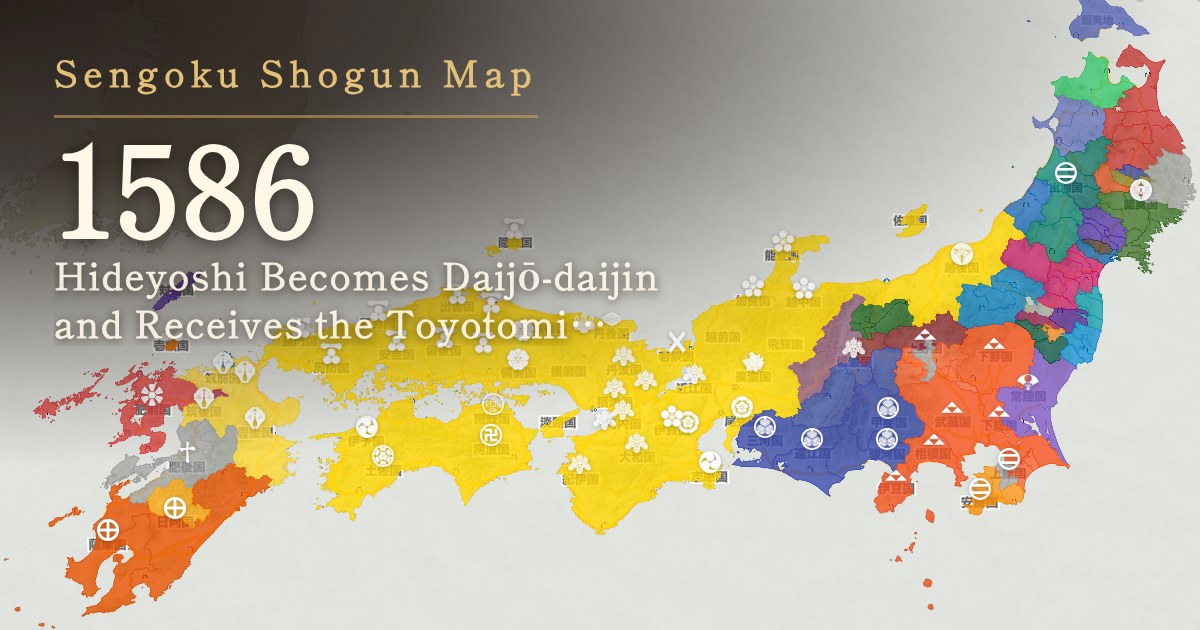
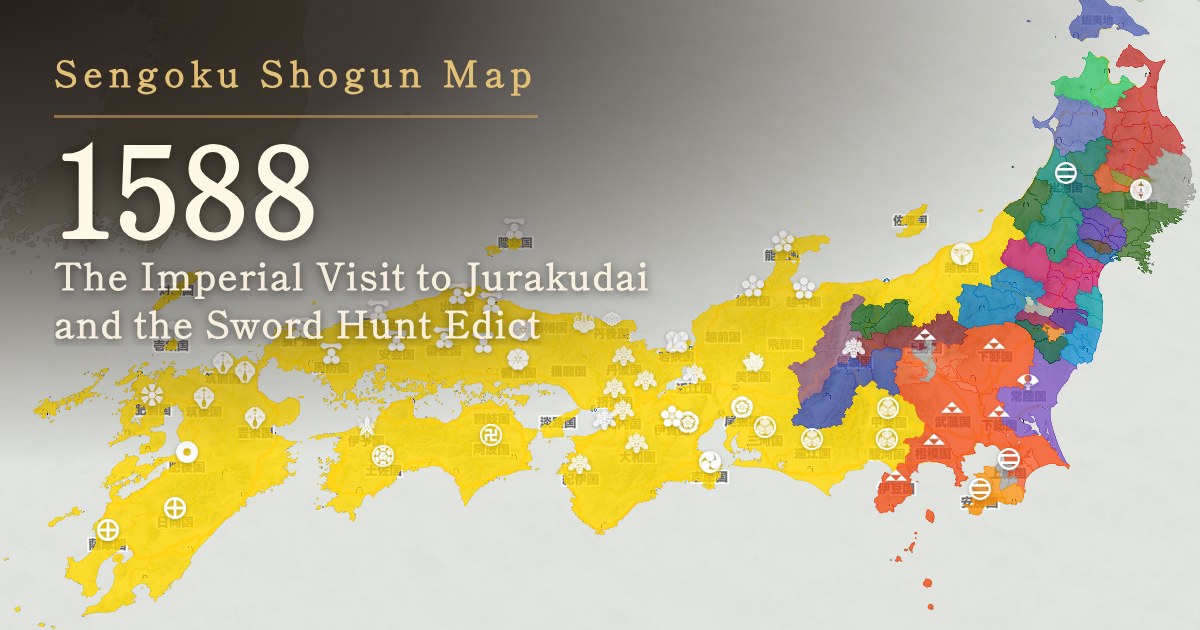
Territories before and after the battle
The year before, the year of the battle, and the year after, side by side. Tap a map to open that year.
Advertisement