INTERACTIVE BATTLE
Battle of Iwaya Castle
10 September 1586 (27th day of the 7th month, Tenshō 14) · Iwaya Castle, Chikuzen Province (present-day Dazaifu, Fukuoka Prefecture)
In the 7th month of Tenshō 14 (1586), at Iwaya Castle in Chikuzen Province (present-day Dazaifu, Fukuoka Prefecture), Takahashi Jōun and about 700 castle troops held out for about half a month against the great army of the Shimazu clan, and all of them died in battle.
大友氏: Tachibana Muneshige / 島津氏: Niiro Tadamoto
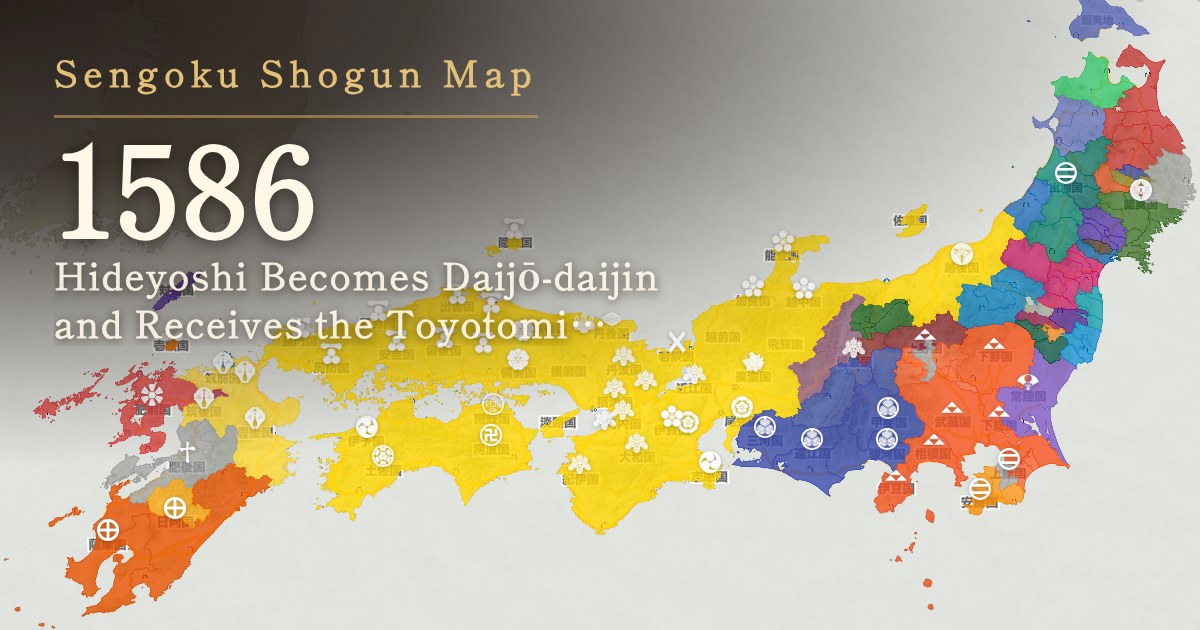
Explore the 1586 map
Change the year to watch territories shift
Background
The Shimazu clan, advancing toward control of Kyushu, moved against three castles in Chikuzen: Hōman Castle, Iwaya Castle and Tachibanayama Castle. Iwaya Castle lay in front of Hōman and Tachibanayama and was the first target. Defending it was Takahashi Jōun, who served the Ōtomo clan, with a garrison of a little over 700 men. It was a battle to buy time until Toyotomi Hideyoshi's army arrived in Kyushu.
Outcome
Jōun refused the Shimazu side's call to surrender, and after about fourteen days of fighting he took his own life on the 27th day of the 7th month, and the castle fell. Jōun and all of the garrison are said to have died in battle. The Shimazu side is said to have numbered 40,000, or even 50,000, but it took half a month to take the castle, and many of its own men are said to have died.
Course of the battle
1 Spring to summer 1586 (Tenshō 14)
The Shimazu army advances into Chikuzen
Aiming to conquer Kyushu, the Shimazu army moved north toward three castles in Chikuzen: Hōman Castle, Iwaya Castle, and Tachibanayama Castle. Katsuo Castle, held by Chikushi Hirokado, is also said to have come under Shimazu attack at this time. Estimates of the total Shimazu strength differ, ranging from 20,000 to 50,000.
Sources
Sources234·Certainty: Medium
2 August 1586 (mid-July, Tenshō 14)
Iwaya Castle is surrounded
The Shimazu army chose Iwaya Castle, the forward post of Hōman and Tachibanayama, as its first target and surrounded it with a large force. The defenders were the castle commander Takahashi Jōun and some 700-odd soldiers. Iwaya Castle was a mountain castle on the slope of Mount Shiōji in Dazaifu.
Sources differ – details
Points of debate
Most accounts give July 14 as the start of the attack, but sources differ. Estimates of the Shimazu army's size also differ, ranging from 20,000 to 50,000.
Sources124·Certainty: High
3 Early in the siege
Jōun refuses the call to surrender
An envoy from the Shimazu side urged Jōun to surrender, but he refused. He is said to have replied that a lord is not only a lord in times of prosperity, and that loyalty means giving one's life for one's lord when his fortunes are in decline. Jōun is also said to have declared that a warrior is a flower only when he keeps to the way of righteousness.
Sources
Sources24·Certainty: High
4 About 14 days
Half a month of fierce fighting
The attacking Shimazu army and the defenders fought fiercely for about 14 days, and many died on both sides. Although the garrison was overwhelmingly outnumbered, it did not abandon the castle and kept fighting. The Somekawa River that flows beside the castle is also said to have run red with blood during the fierce fighting.
Sources
Sources124·Certainty: High
5 10 September 1586 (27 July, Tenshō 14)
The castle falls; Jōun takes his own life
Jōun fought at the front himself and then, before he could be taken by the enemy, committed seppuku. The garrison was also cut down one after another, and Iwaya Castle fell on 27 July. A memorial service is held on the day the castle fell. Jōun's grave is in the area of the Ninomaru, down a mountain path from the site of the Honmaru.
Sources differ – details
Points of debate
Regarding Jōun's last moments, some records state that negotiations were held with the Shimazu side on condition that he leave the castle.
Sources124·Certainty: High
6 Autumn 1586 onward
Fighting in Chikuzen continues as Hideyoshi's army enters Kyushu
After taking Iwaya Castle, the Shimazu army moved on toward Tachibanayama Castle. But while it had been held up at Iwaya, Hideyoshi's army entered Kyushu, and the Shimazu forces withdrew to Satsuma. Jōun's tenacious defense is said to have supported Hideyoshi's pacification of Kyushu, and Hideyoshi is said to have praised Jōun as a flower of the Sengoku era.
Sources
Sources124·Certainty: Medium
Historical significance
Although the Shimazu army took Iwaya Castle, their advance into Chikuzen was delayed by the time it cost them. In the meantime, Hideyoshi's army landed in Kyushu, and the Shimazu clan was forced to withdraw to Satsuma. Jōun's battle is regarded as having supported Hideyoshi's pacification of Kyushu. A memorial service is still held on the 27th day of the 7th month, the day the castle fell.
Advertisement
Key figures
大友氏
1

Eldest son of Jōun; lord of Tachibanayama Castle
Eldest son of Takahashi Jōun, he was adopted by Tachibana Dōsetsu and had succeeded to the Tachibana house. At the time of the Battle of Iwaya Castle, he is said to have been at Tachibanayama Castle, a different castle from his father's.
Sources
Sources5·Certainty: Medium
島津氏
1

Veteran senior retainer of the Shimazu house
A veteran retainer who had long served the Shimazu house. In the attack on Iwaya Castle, he is said to have played the role of urging the besieged Jōun to surrender, but this is not confirmed in official records.
Sources
Sources6·Certainty: Medium
Other events of 1586
Sources consulted
- 太宰府市「岩屋城跡」
- 太宰府市文化ふれあい館「戦国の花・高橋紹運を偲んで」
- 調査ノート参照
- 城郭マスタ(shiro.geojson)
- 調査ノート参照(日本大百科全書ほか)
- 調査ノート参照(公的資料では未確認)
The numbers in the text refer to the list above. Certainty indicates how far a statement is supported by the cited sources; it does not refer to the precision of the coordinates or the dating.
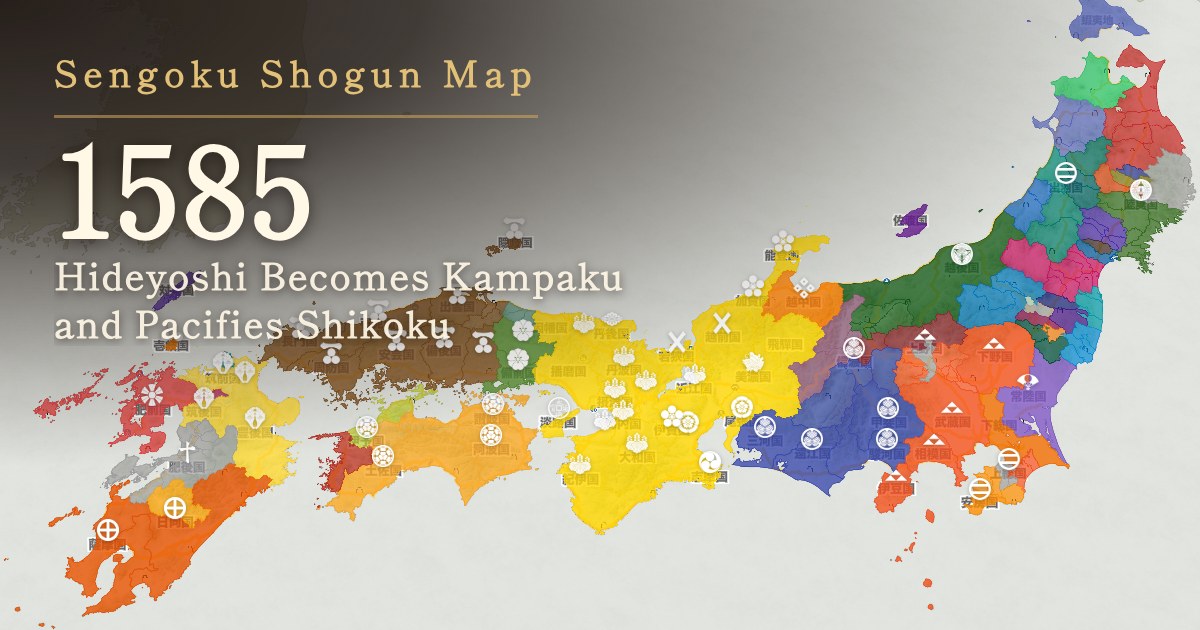
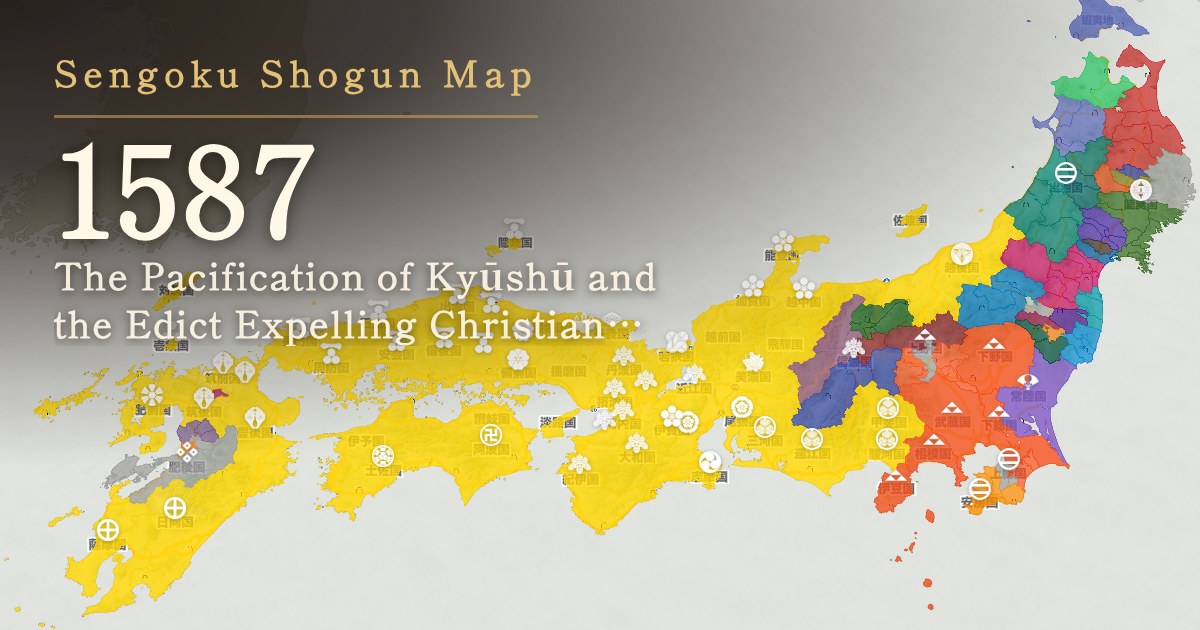
Territories before and after the battle
The year before, the year of the battle, and the year after, side by side. Tap a map to open that year.
Advertisement