1605 territory map and events: Ieyasu Cedes the Shogunate to Hidetada and Begins Rule as Retired Shogun
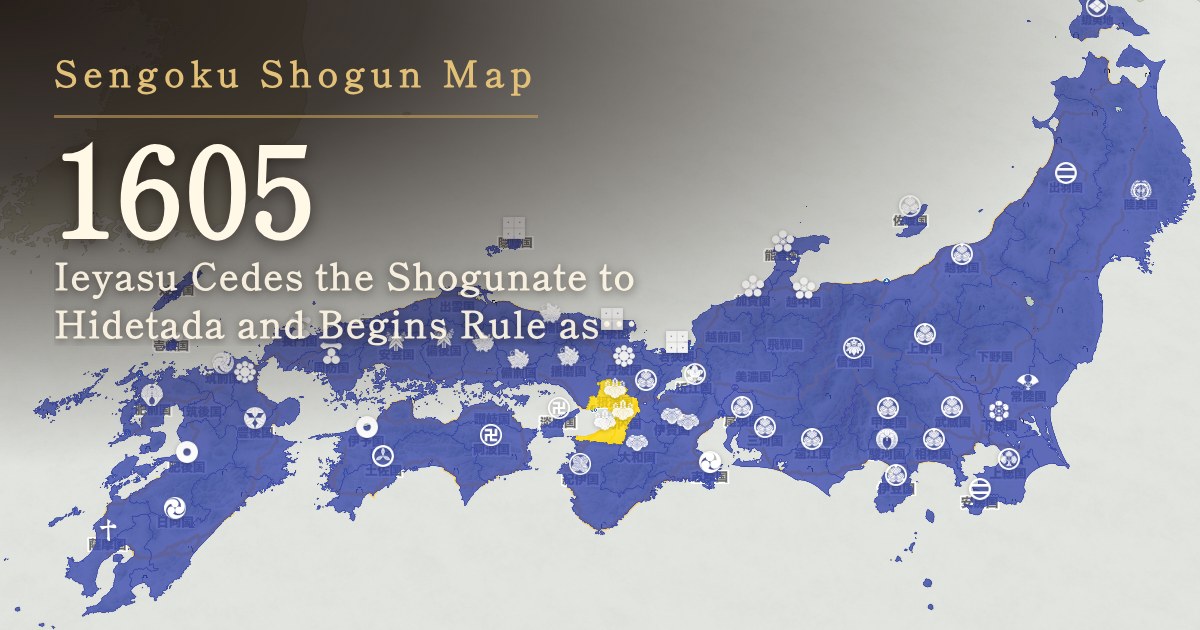
1605 was Keichō 10 (kinoto-mi).
Only two years after becoming shogun, Ieyasu ceded the title to his son Hidetada, a move intended to demonstrate to all that the shogunate would be hereditary within the Tokugawa house. Ieyasu himself retired to Sunpu, taking the title of Ōgosho (retired shogun), and while formally stepping back he retained real power, establishing a dual system of governance that oversaw Hidetada's administration in Edo.
1605 territory map: major daimyo and their provinces
Each province is counted under its main power. The map shows the finer division by district.
- 山城国 (Tokugawa Ieyasu, Itakura Katsushige), 大和国 (Honda Toshitomo, Fukushima Takaharu, Katagiri Sadataka, Tokugawa intendants and others), 伊賀国 (Tsutsui Sadatsugu), 伊勢国 (Tomita Nobutaka, Honda Tadakatsu and others), 志摩国 (Kuki Moritaka), 尾張国 (Matsudaira Tadayoshi), 三河国 (Tokugawa Ieyasu), 遠江国 (Matsudaira Sadakatsu and others), 駿河国 (Naitō Nobunari), 甲斐国 (Tokugawa Yoshinao), 伊豆国 (Tokugawa Ieyasu), 相模国 (Ōkubo Tadachika and others), 武蔵国 (Tokugawa Ieyasu), 安房国 (Satomi Tadayoshi), 上総国 (Honda Tadatomo and others), 下総国 (Doi Toshikatsu), 常陸国 (Tokugawa Yorinobu and others), 近江国 (Ii Naotsugu and others), 美濃国 (Okudaira Nobumasa and others), 飛驒国 (Kanamori Arishige), 信濃国 (Ishikawa Yasunaga and others), 上野国 (Sakai Shigetada and others), 下野国 (Okudaira Iemasa and others), 陸奥国 (Date Masamune and others), 出羽国 (Mogami Yoshiaki and others), 若狭国 (Kyōgoku Takatsugu, Kyōgoku Tadataka), 越前国 (Yūki Hideyasu), 加賀国 (Maeda Toshitsune), 能登国 (Maeda Toshitsune), 越中国 (Maeda Toshinaga and others), 越後国 (Hori Hideharu and others), 佐渡国 (Tokugawa intendants), 丹波国 (Maeda Shigekatsu, Arima Toyouji and others), 丹後国 (Kyōgoku Takatomo), 但馬国 (Koide Yoshihide, Sugihara Nagafusa and others), 因幡国 (Ikeda Nagayoshi, Kamei Korenori, Yamazaki Iemori and others), 伯耆国 (Nakamura Kazutada), 出雲国 (Horio Yoshiharu, Horio Tadaharu), 石見国 (Tokugawa intendants, Ōkubo Nagayasu, Sakazaki Naomori and others), 隠岐国 (Horio Yoshiharu, Horio Tadaharu), 播磨国 (Ikeda Terumasa), 美作国 (Mori Tadamasa), 備前国 (Ikeda Tadatsugu), 備中国 (Tokugawa intendants, Kobori Masatsugu, Kinoshita Iesada, Togawa Michiyasu and others), 備後国 (Fukushima Masanori), 安芸国 (Fukushima Masanori), 周防国 (Mōri Terumoto), 長門国 (Mōri Terumoto), 紀伊国 (Asano Yoshinaga), 淡路国 (Wakisaka Yasuharu), 阿波国 (Hachisuka Yoshishige), 讃岐国 (Ikoma Kazumasa), 伊予国 (Katō Yoshiaki, Tōdō Takatora and others), 土佐国 (Yamauchi Kazutoyo), 筑前国 (Kuroda Nagamasa), 筑後国 (Tanaka Yoshimasa), 豊前国 (Hosokawa Tadaoki), 豊後国 (Nakagawa Hidenari, Inaba Sadamichi, Hosokawa Tadaoki, Kinoshita Nobutoshi, Takenaka Shigetoshi and others), 肥前国 (Nabeshima Katsushige, Terasawa Hirotaka, Matsuura clan, Ōmura Yoshiaki and others), 肥後国 (Katō Kiyomasa, Sagara Yorifusa and others), 日向国 (Takahashi Mototane, Itō Sukenori, Akizuki Tanenaga, Shimazu Yukihisa, Shimazu Tadatsune and others), 大隅国 (Shimazu Tadatsune), 薩摩国 (Shimazu Tadatsune), 壱岐国 (Matsuura clan), 対馬国 (Sō clan), 蝦夷地 (Matsumae Yoshihiro)
Tokugawa regime66 provinces
- 河内国 (Toyotomi Hideyori, Hōjō Ujimori and others), 和泉国 (Toyotomi Hideyori), 摂津国 (Toyotomi Hideyori, Shinjō Naoyori, Arima Toyouji and others)
Toyotomi clan3 provinces
Events this year
4/8
Maeda Toshitsune, adopted heir of Kaga daimyō Maeda Toshinaga, had an audience with Tokugawa Ieyasu and Tokugawa Hidetada in Kyoto, underwent his coming-of-age ceremony, was appointed to court rank, and received the Matsudaira surname.
4/12
At court, Hideyori was promoted from Minister of the Interior to Minister of the Right. This appointment occurred four days before Tokugawa Hidetada's formal appointment as shogun.
4/16
At Fushimi Castle, Tokugawa Ieyasu transferred the shogunate to Hidetada, demonstrating that the office would be inherited within the Tokugawa family.
6/28
Kaga daimyō Maeda Toshinaga transferred the headship to his adopted heir Toshitsune and retired to Toyama Castle, receiving 220,000 koku in Shinkawa district of Etchu as his retirement lands.
Ieyasu oversaw woodblock printing operations at the Enkōji academy in Fushimi, producing multiple classical works including the 'Gunshō Chiryō' and the 'Newly Printed Azuma Kagami'. This marked the beginning of the shogunate's later literary and cultural patronage.
Sources 国立公文書館「家康の出版事業|徳川家康-将軍家蔵書からみるその生涯-」