1467 territory map and events: Outbreak of the Ōnin War—Kyoto Divided
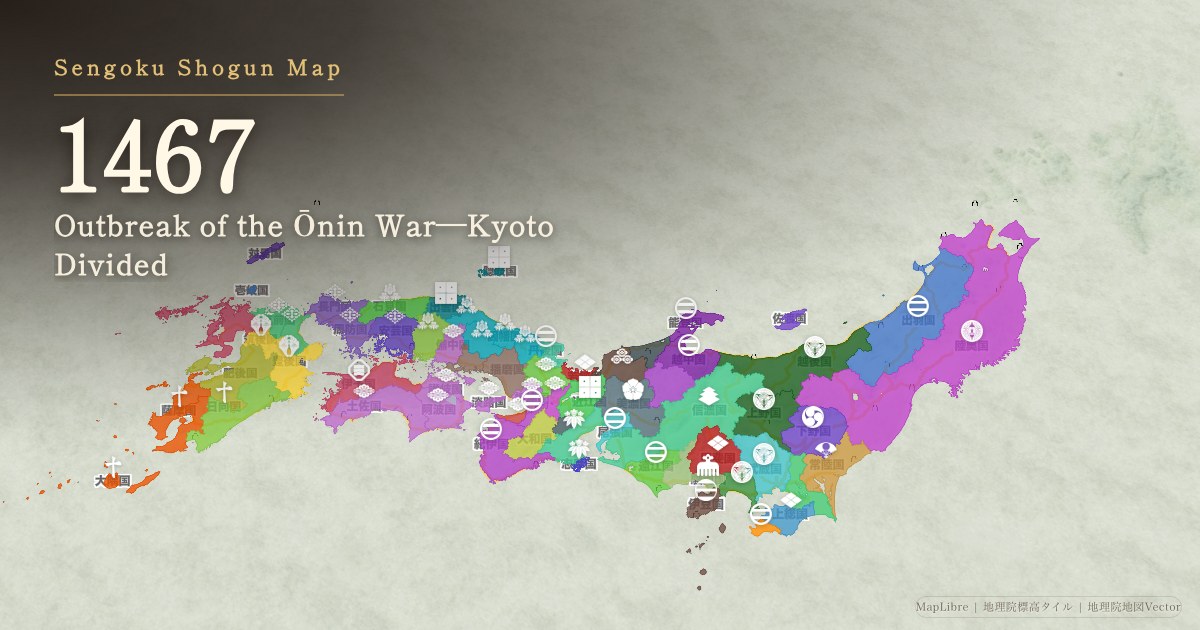
1467 was Ōnin 1 (hinoto-i).
A Hatakeyama succession dispute led to the Battle of Goryō. The Eastern Army under Hosokawa Katsumoto and Western Army under Yamana Sōzen divided Kyoto; Ōuchi Masahiro's arrival expanded the fighting across the capital.
1467 territory map: major daimyo and their provinces
Each province is counted under its main power. The map shows the finer division by district.
- 和泉国 (Hosokawa Tsuneari and others), 三河国 (Hosokawa Shigeyuki and others), 丹波国 (Hosokawa Katsumoto, Naitō clan), 備中国 (Hosokawa clan(備中守護家)), 淡路国 (淡路細川家), 阿波国 (阿波細川家, 東軍), 讃岐国 (細川京兆家, 東軍), 土佐国 (細川京兆家, 東軍)
Hosokawa clan8 provinces
- 但馬国 (Yamana Sōzen), 因幡国, 伯耆国 (山名豊之), 美作国 (Yamana Masakiyo)
Yamana clan4 provinces
- 周防国 (Ōuchi Masahiro), 長門国 (Ōuchi Masahiro), 筑前国, 豊前国 (Ōuchi clan, Sugi clan)
Ōuchi clan4 provinces
- 河内国 (Hatakeyama Yoshinari, Hatakeyama Masanaga), 越中国 (Hatakeyama Masanaga), 紀伊国 (Hatakeyama Masanaga, Hatakeyama Yoshinari)
Hatakeyama clan3 provinces
- 出雲国 (京極氏守護代, 東軍), 隠岐国
Kyōgoku clan2 provinces
- 駿河国 (Imagawa Yoshitada)
Imagawa clan1 province
- 上野国 (Uesugi Akisada)
Yamanouchi-Uesugi clan1 province
- 若狭国 (東軍)
Wakasa-Takeda clan1 province
- 対馬国 (Sō Sadakuni)
Sō clan1 province
- 越後国 (Uesugi Fusasada)
Uesugi clan1 province
- 伊賀国 (Niki Masanaga(一部地域))
Niki clan1 province
- 相模国 (Ōgigayatsu-Uesugi clan(一部地域))
Ōgigayatsu-Uesugi clan1 province
- 豊後国 (豊後守護)
Ōtomo clan1 province
- 美濃国 (Toki Shigeyori, Saitō Myōchin)
Toki clan1 province
- 薩摩国 (Shimazu clan(一部地域))
Shimazu clan1 province
- 能登国 (西軍)
Hatakeyama clan (Noto)1 province
- 加賀国 (Togashi Masachika, Togashi Kōchiyo)
Togashi clan1 province
- 甲斐国 (Takeda Nobumasa)
Takeda clan1 province
- 伊豆国 (Ashikaga Masatomo)
Horikoshi kubō1 province
Provinces divided among several powers34 provinces
山城国 (東軍 and others), 大和国 (Ochi Iehide and others), 摂津国 (東軍 and others), 伊勢国 (Kitabatake clan and others), 志摩国 (Shima lords), 尾張国 (Shiba Yoshitoshi and others), 遠江国 (斯波氏諸派, Imagawa clan), 武蔵国 (山内, Ōgigayatsu-Uesugi clan and others), 安房国 (Satomi clan and others), 上総国 (Takeda clan and others), 下総国 (Chiba clan, Yūki clan, Ashikaga Shigeuji), 常陸国 (Satake clan and others), 近江国 (Kyōgoku clan, Rokkaku clan), 飛驒国 (Anegakōji Mototsuna and others), 信濃国 (Ogasawara Masahide and others), 下野国 (Utsunomiya clan and others), 陸奥国 (Nanbu clan and others), 出羽国 (Mogami clan and others), 越前国 (Asakura clan and others), 佐渡国 (Honma clan), 丹後国 (Isshiki clan and others), 石見国 (Local lords of Iwami), 播磨国 (Akamatsu clan, Yamana clan), 備前国 (Akamatsu clan, Yamana clan), 備後国 (山名氏諸派), 安芸国 (Ōuchi Masahiro and others), 伊予国 (Kōno Norimichi, 通春), 筑後国 (Ōtomo clan, Kikuchi clan, 筑後国人衆), 肥前国 (渋川氏 and others), 肥後国 (Kikuchi clan and others), 日向国 (Itō clan and others), 大隅国 (Shimazu clan and others), 壱岐国 (志佐氏 and others), 蝦夷地 (Kakizaki clan and others)
Events this year
1/18
Hatakeyama Yoshinari attacked Hatakeyama Masanaga at Kamigoryō Shrine, opening the conflict.
See this battle in detail →Sources 京都市上京区「応仁の大乱」/京都市「都市史14 応仁・文明の乱」/京都市「KA030 応仁の乱勃発地」
5/26
Full-scale fighting began in Kyoto between Hosokawa Katsumoto’s East and Yamana Sōzen’s West.
7/20
Ōuchi Masahiro landed at Hyōgo with western troops, greatly strengthening the Western Army.
Month 9
When the Ōnin War broke out, Toki Shigeyori, shugo of Mino, sided with Yamana Sōzen of the Western Army and marched to Kyoto with a large force in the ninth month. Saitō Myōchin, the shugodai, took charge of Mino in his absence.
10/3
Both armies fought fiercely and Shōkoku-ji burned, but neither side won decisively.
See this battle in detail →Sources 京都市上京区「上京区の史蹟百選 相国寺」/京都市上京区「応仁の大乱」/京都市「都市史14 応仁・文明の乱」
As the Ōnin War turned Kyoto into a battlefield, Retired Emperor Go-Hanazono and Emperor Go-Tsuchimikado fled the fighting and moved to the Muromachi-dono, the residence of Shogun Ashikaga Yoshimasa.
Ashikaga Yoshimi, younger brother of Shogun Yoshimasa, did not want to fight as the dispute over the succession sharpened. He left Kyoto and took refuge with the Kitabatake, the provincial governors of Ise.
Asakura Takakage, a senior retainer of the Shiba clan, shugo of Echizen, followed his lord Shiba Yoshikado into the Western Army and took part in the Goryō Battle in Kyoto, the Battle of Shōkokuji and other fighting.
Sources 福井県「戦国秘話」第8回