INTERACTIVE BATTLE
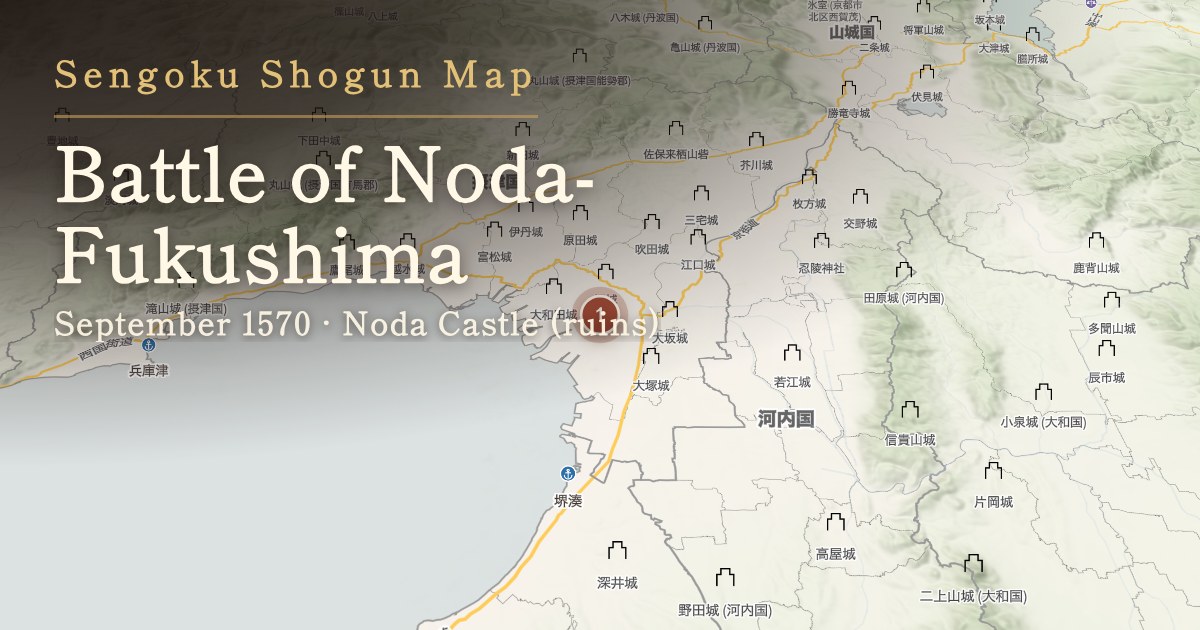
Battle of Noda-Fukushima
September 1570 · Noda Castle (ruins)
In the summer of 1570, Oda Nobunaga attacked the Miyoshi Triumvirate, who were camped at Noda and Fukushima in Settsu Province (present-day Fukushima Ward, Osaka). But with the rising of Ishiyama Honganji and the advance of the Azai and Asakura, Nobunaga lifted the siege and returned to Kyoto.
織田氏: Oda Nobunaga, Ashikaga Yoshiaki, Araki Murashige / 本願寺・一向一揆: Honganji Kennyo
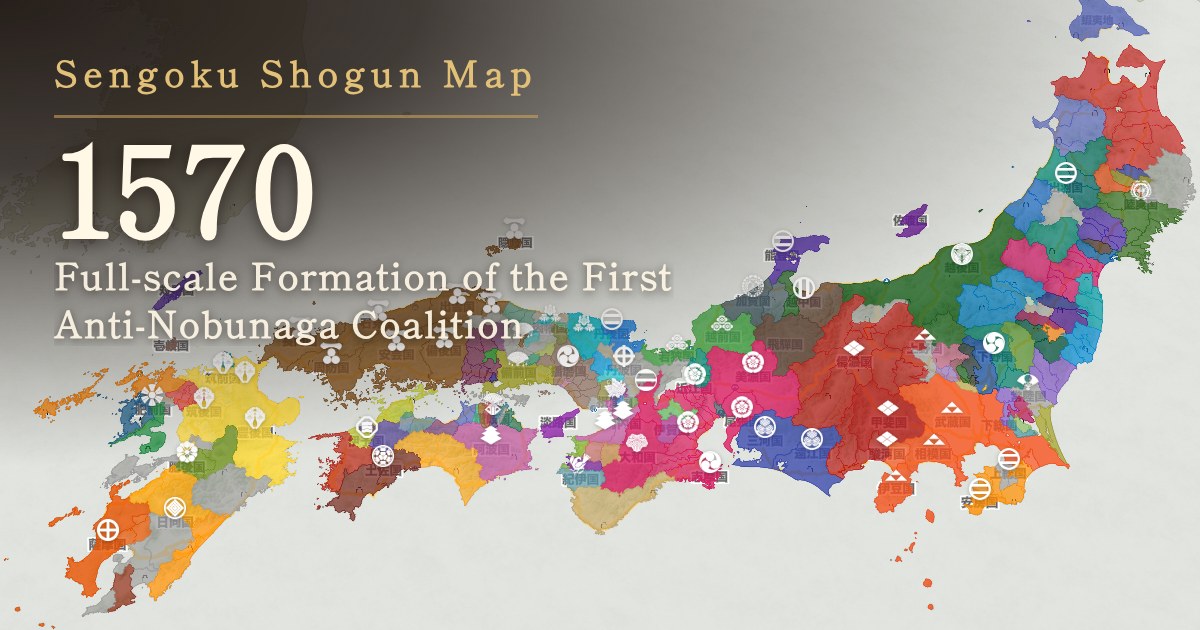
Explore the 1570 map
Change the year to watch territories shift
Background
In the 6th month of Genki 1, Nobunaga defeated the Azai-Asakura allied army at the Anegawa in Ōmi. In that interval, however, the Miyoshi Triumvirate advanced again from Awa, entered Noda and Fukushima in Settsu in the latter part of the 7th month and set up camp. The site is on high ground near the mouths where the Yodo River and the Nakatsu River flow into Osaka Bay, and is close to the Honganji. Nobunaga set out accompanied by the shōgun Ashikaga Yoshiaki.
Outcome
Nobunaga had driven the Miyoshi forces into a corner, but because of the Honganji uprising and the approach of the Azai and Asakura, he lifted the siege and returned to Kyoto on September 23. On September 12, Nobunaga advanced to Ebie, near Noda and Fukushima, and attacked it fiercely, but late that same night Ishiyama Honganji made a surprise attack on Nobunaga's army. On the 20th, the Azai and Asakura moved to Sakamoto in Ōmi.
Course of the battle
1 late 7th month of Genki 1 (lunar)
The Miyoshi Triumvirate take position at Noda and Fukushima
Advancing again from Awa, the Miyoshi Triumvirate entered Settsu and took position at Noda and Fukushima.
Sources
Sources1235·Certainty: High
2 26th day of the 8th month of Genki 1 (lunar)
Nobunaga sets his headquarters at Tennōji
Oda Nobunaga left Gifu on the 20th, entered Kyoto on the 23rd, left Kyoto on the 25th by way of Hirakata, and on the 26th set his headquarters at Tennōji.
Sets up his headquarters at Tennōji
Sources differ – details
Points of debate
The exact position of the headquarters has not been confirmed.
Sources16·Certainty: High
3 27th day of the 8th month of Genki 1 (lunar)
Nobunaga's allies in Settsu camp in the Tenma woods
Wada Koremasa, Ibaraki Shigetomo, Itami Chikaoki and other Settsu supporters of Nobunaga took position in the Tenma woods.
Sources differ – details
Points of debate
Ikeda Katsumasa is also counted among those who took position, but some accounts say Araki Murashige drove him out in the 6th month of that year, so his standing is unsettled.
Sources17·Certainty: Medium
4 12th day of the 9th month of Genki 1 (lunar)
Nobunaga and Yoshiaki advance to Ebie
Nobunaga and Ashikaga Yoshiaki moved forward to Ebie, near Noda and Fukushima, and attacked fiercely with cannon and guns. A record says Araki Murashige, in the vanguard, was ordered to dedicate a war horse and sword to the Ebie Yasaka Shrine.
Sources
Sources138·Certainty: High
5 midnight of the 12th day of the 9th month of Genki 1 (lunar)
Ishiyama Hongan-ji strikes Nobunaga's army
Kennyo called on followers everywhere to rise against Nobunaga as an "enemy of the Buddhist Law", and the Ishiyama Hongan-ji struck Nobunaga's forces by surprise with a sounding of bells. This is regarded as the start of the Ishiyama War.
Rises in arms at the Ishiyama Honganji
Sources
Sources1910·Certainty: High
6 20th to 23rd day of the 9th month of Genki 1 (lunar)
The Azai and Asakura close in, and Nobunaga turns back to Kyoto
The Azai–Asakura army advanced to Sakamoto in Ōmi on the 20th. Nobunaga lifted the siege of Noda and Fukushima and, struggling to cross the Yodo River, turned back to Kyoto on the 23rd.
Sources differ – details
Points of debate
There is an account of a bridge of boats built at Eguchi and another of crossing the shallows on horseback, so the details of the retreat are not settled.
Sources111·Certainty: Medium
Historical significance
In this battle, Honganji Kennyo, who had remained neutral until then, branded Nobunaga an enemy of the Dharma and called on his followers to rise up. From here began the Ishiyama War, which lasted more than ten years.
Advertisement
Key figures
織田氏
3

Commander-in-chief of the Oda side
He set up his headquarters at Tennōji on the 26th day of the 8th month and advanced to Ebie on the 12th day of the 9th month.
Sources
Sources1·Certainty: High

Shōgun who accompanied Nobunaga
He entered Hori Castle at Nakajima on the 3rd day of the 9th month and advanced to Ebie on the 12th.
Sources
Sources1·Certainty: High
Commander of Nobunaga's vanguard
A record is handed down that at the Yasaka Shrine in Ebie, Nobunaga had Murashige dedicate a war-horse trapping and a sword.
Sources
Sources3·Certainty: Medium
本願寺・一向一揆
1

Head of the Ishiyama Honganji
He called on his followers to rise against Nobunaga as an enemy of the Buddhist Law, and took up arms around midnight on the 12th day of the 9th month.
Sources
Sources1·Certainty: High
Other events of 1570
Sources consulted
- 摂津市教育委員会「ふるさと摂津講座 味生の歴史散策」
- 大阪市「7.野田城(のだじょう)跡」
- 大阪市福島区「名所・旧跡」
- コトバンク「三好三人衆」
- 大阪市「7.野田城(のだじょう)跡」(福島区玉川四丁目11)
- 国土地理院 住所検索(天王寺区四天王寺)
- 国土地理院 住所検索(北区天神橋)
- 国土地理院 住所検索(大阪市福島区海老江)
- 大阪市「石山(大坂)本願寺推定地」
- 大阪市「大阪市の歴史-タイムトリップ20,000年」
- 国土地理院 住所検索(摂津市一津屋)
The numbers in the text refer to the list above. Certainty indicates how far a statement is supported by the cited sources; it does not refer to the precision of the coordinates or the dating.
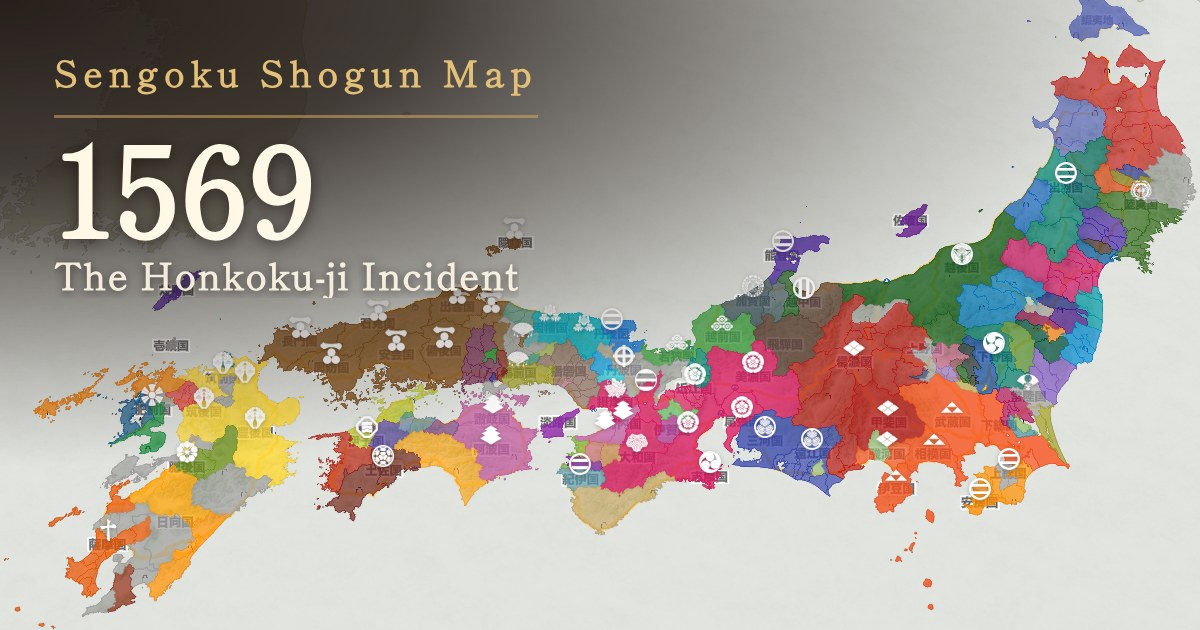
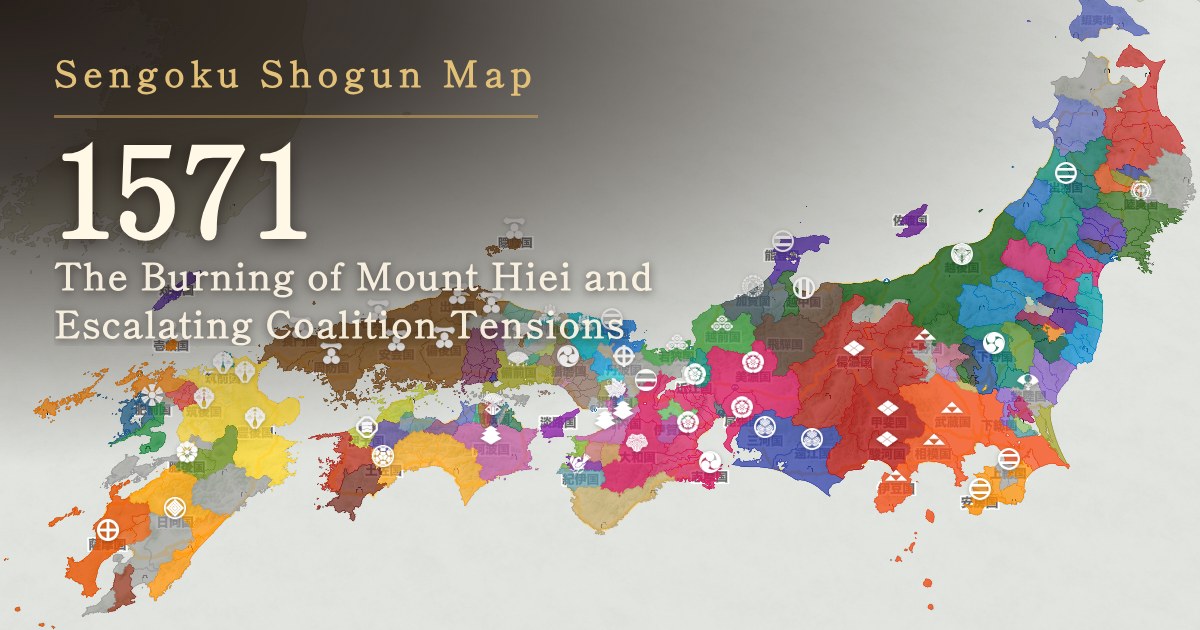
Territories before and after the battle
The year before, the year of the battle, and the year after, side by side. Tap a map to open that year.
Advertisement