INTERACTIVE BATTLE
Burning of Mount Hiei
September 1571 (9th month of Genki 2) · Mount Hiei (Hieizan) and Enryaku-ji, Ōmi Province
On the 12th day of the 9th month of 1571 (Genki 2), Oda Nobunaga attacked Mount Hiei in Ōmi (present-day Ōtsu) and burned the Konpon Chūdō of Enryaku-ji and the town of Sakamoto at its foot. It was punishment for Enryaku-ji’s support of the Azai and Asakura, and many people lost their lives.
織田氏: Oda Nobunaga, Akechi Mitsuhide
Explore the 1571 map
Change the year to watch territories shift
Background
During the Siege of Shiga in 1570, the Azai and Asakura armies came out to the Sakamoto approach and showed signs of threatening Kyoto. Enryaku-ji is said to have been tied to this camp, and Nobunaga demanded that it either remain neutral or side with him, but his demand was not heeded. Mount Hiei sat right next to Kyoto, and for Nobunaga it was a presence he could not leave alone.
Outcome
On the 12th day of the 9th month of 1571, Nobunaga surrounded Mount Hiei and climbed up to attack. After burning the town of Sakamoto at the foot of the mountain and the Hiyoshi Sannō shrine, his forces burned the Konpon Chūdō on the summit along with other halls and monks’ quarters. Monks, women, and children were killed, and those taken captive were beheaded. Nobunaga returned to Gifu on the 20th day of the 9th month. Estimates of the number of victims differ greatly between sources.
Course of the battle
1 1570 (Genki 1)
The Siege of Shiga and Enryaku-ji
The year before, in 1570, the Azai and Asakura armies came out to the Sakamoto approach and showed signs of threatening Kyoto. Enryaku-ji is said to have worked together with this anti-Nobunaga camp, and even after the peace, tensions with Nobunaga kept smoldering.
Sources differ – details
Points of debate
Whether Enryaku-ji sided with the Azai and Asakura or tried to stay neutral is viewed differently depending on the sources.
Sources125·Certainty: Medium
2 September 1571 (9th month of Genki 2)
Notice to the monks of Enryaku-ji
Nobunaga summoned the monks of Mount Hiei and promised that if they showed loyalty, the estates taken from them would be returned as before. He excluded those who went against the way of monks, and warned that if they did not comply, he would burn the Konpon Chūdō and the Sannō Nijūichi-sha, the Twenty-One Shrines of Sannō.
Sources
Sources16·Certainty: High
3 29 September 1571 (11th day of the 9th month, Genki 2)
Nobunaga camps at the foot of the mountain
On the 11th day of the 9th month, Nobunaga entered the camp of Yamaoka Gyokurin and organized his forces for the attack on the mountain the next day. The army encircled the foot of Mount Hiei, forming a ring around the mountain.
Sources
Sources16·Certainty: High
4 30 September 1571 (12th day of the 9th month, Genki 2)
Burning of Sakamoto and the Hiyoshi Sannō shrine
On the 12th day of the 9th month, Nobunaga’s army attacked Sakamoto, the town on the eastern foot of Mount Hiei, and set fire to the houses. All the Sannō Nijūichi-sha, the guardian shrines of Enryaku-ji, were also burned. Townspeople fled to places such as Hachiōji-yama, but many were killed by the pursuing soldiers.
Sources differ – details
Points of debate
The attack is generally dated to the 12th day of the 9th month, though some records give the 12th day of the 11th month.
Sources126·Certainty: Medium
5 30 September 1571 (12th day of the 9th month, Genki 2)
Halls and temples on the summit burned
The army that had burned the town climbed the mountain and burned everything, including the Konpon Chūdō, the sacred Buddhist images, the monks’ quarters, and the sutra scrolls. It is explained that more than 500 halls and monks’ quarters across the Three Pagodas (Tōtō, Saitō, and Yokokawa) and their sixteen valleys burned to the ground over three days and nights.
Sources
Sources1278·Certainty: High
6 September 1571 (9th month of Genki 2)
Captives executed
After the attack on the summit, senior monks, scholarly monks, women, and children were brought before Nobunaga. Some people asked that those who were not wicked monks be spared, but the request was not accepted, and each was reportedly beheaded one by one.
Sources differ – details
Points of debate
The number of victims differs by several orders of magnitude between sources.
Sources16·Certainty: High
7 October 1571 (9th month of Genki 2)
Shiga District given to Mitsuhide
After the battle, Nobunaga granted Shiga District to Akechi Mitsuhide as a reward for his service. Mitsuhide made Sakamoto his base and later built Sakamoto Castle on the shore of Lake Biwa. Nobunaga withdrew to Gifu on the 20th day of the 9th month. Enryaku-ji was later restored under the protection of Toyotomi Hideyoshi and Tokugawa Ieyasu.
Sources
Sources1236·Certainty: High
Historical significance
Enryaku-ji, which had stood for about 800 years, submitted to Nobunaga as a religious institution that held armed power, and the mountain was left in ruins. Nobunaga had Akechi Mitsuhide, who was granted Shiga District, build his residence on the burned ground of Sakamoto. Later, under the protection of Toyotomi Hideyoshi and Tokugawa Ieyasu, Enryaku-ji was gradually restored. The burning came to mark the end of the age when temples and shrines held military power.
Read it from the victims’ side
Our companion site "Sengoku no Senka" (Japanese only) tells this event from the side of those who were killed and plundered.
Advertisement
Key figures
織田氏
2

Supreme commander who ordered the attack
He demanded loyalty from the sōto (monk-soldiers) of Enryaku-ji, but they did not accept. In September 1571 he surrounded Mount Hiei, climbed up, and burned the town of Sakamoto along with the temple halls and pagodas on the mountaintop. After the battle he returned to Gifu on September 20.
Sources
Sources1·Certainty: High

Commander granted Shiga District after the battle
After the battle he was granted Shiga District and took charge of the burned Sakamoto land. He later built Sakamoto Castle on the shore of Lake Biwa as his residence, making it an important Oda base in Ōmi.
Sources
Sources13·Certainty: High
Other events of 1571
Sources consulted
- 太田牛一『信長公記』巻四
- 国土交通省「平和の塔と元亀の兵乱殉難者鎮魂塚」
- 大津市「坂本城跡の国史跡指定について」
- 比叡山延暦寺
- 城郭マスタ(shiro.geojson)
- 国土交通省「平和の塔と元亀の兵乱殉難者鎮魂塚」。座標は日吉大社周辺の概算
- 比叡山延暦寺(所在地:大津市坂本本町4220)
- 既存年表の座標
The numbers in the text refer to the list above. Certainty indicates how far a statement is supported by the cited sources; it does not refer to the precision of the coordinates or the dating.
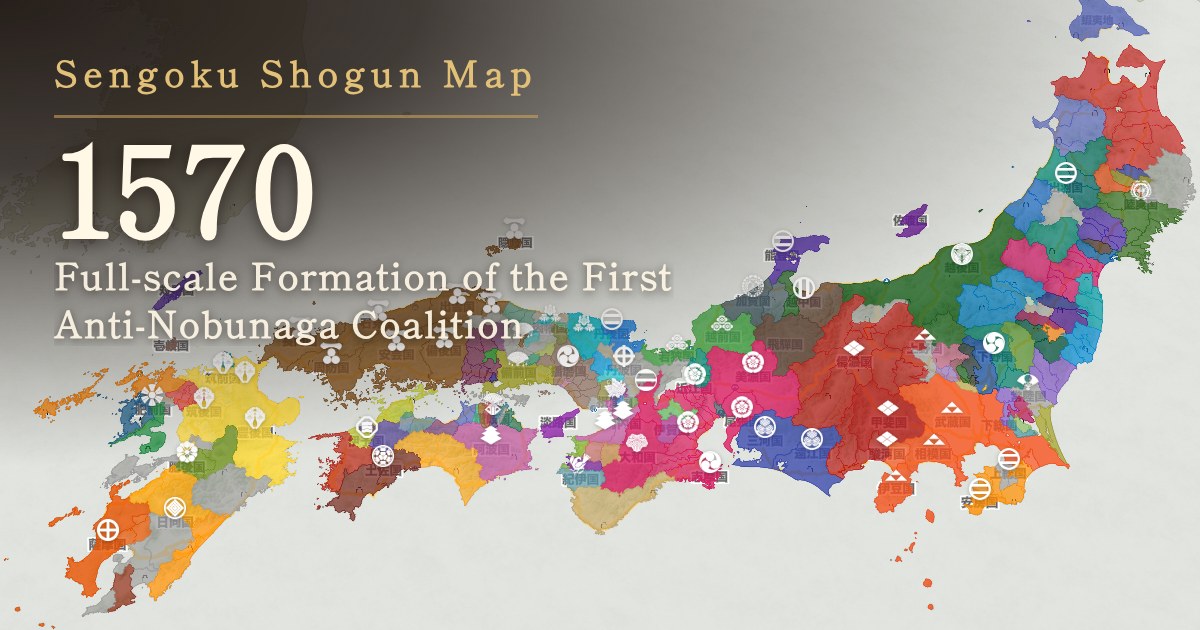
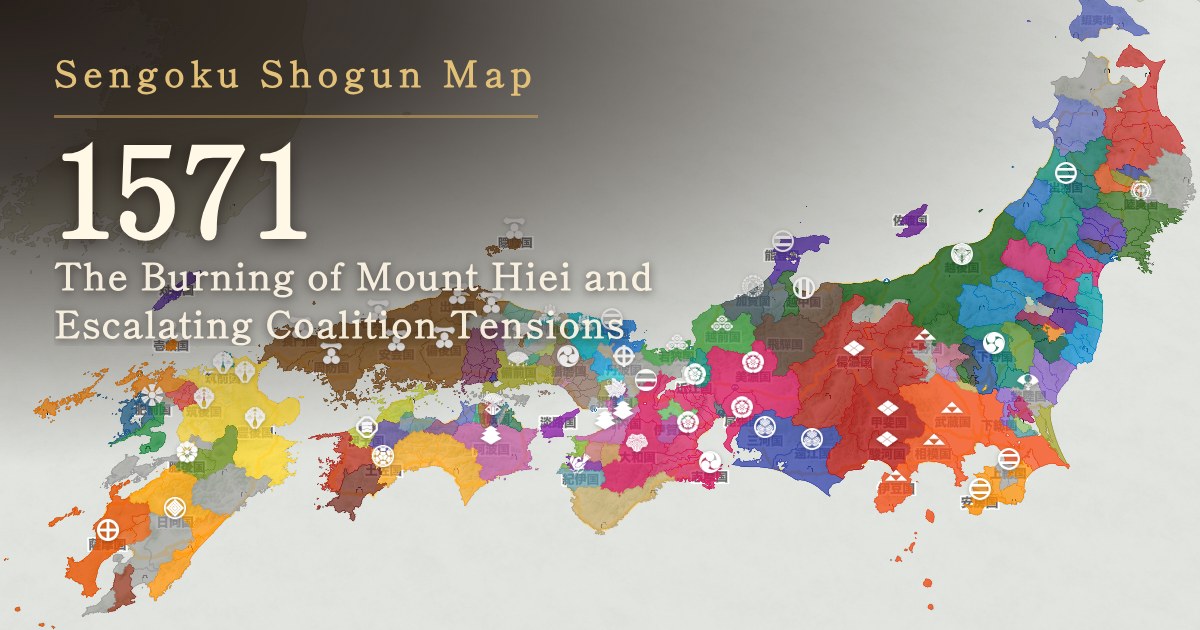
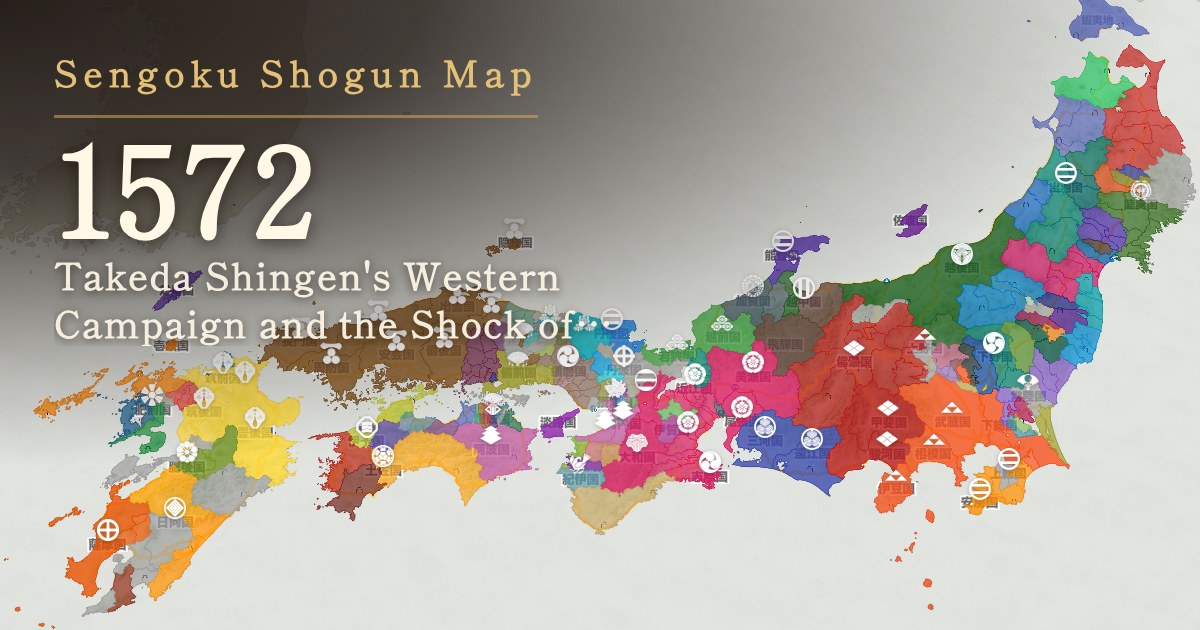
Territories before and after the battle
The year before, the year of the battle, and the year after, side by side. Tap a map to open that year.
Advertisement