INTERACTIVE BATTLE
Battle of Kitashirakawa
4 July 1558 · Shirakawa in Yamashiro Province (now Kitashirakawa, Sakyō Ward, Kyoto)
In July 1558, at Kitashirakawa in Yamashiro Province (present-day Kitashirakawa, Sakyō Ward, Kyoto), the army of Shogun Ashikaga Yoshiteru, which had advanced on Kyoto from Ōmi, was defeated by the forces of Miyoshi Nagayoshi. Through a settlement in the 11th month of the same year, Yoshiteru returned to Kyoto.
足利氏: Ashikaga Yoshiteru, Hosokawa Harumoto / 六角氏: Rokkaku Yoshikata / 三好氏: Miyoshi Nagayoshi, 三好長逸, Matsunaga Hisahide
Explore the 1558 map
Change the year to watch territories shift
Background
Yoshiteru had lost his struggle with Miyoshi Nagayoshi and retreated to Kutsuki in Ōmi. Five years had passed since he left Kyoto. With the support of Rokkaku Yoshikata of Ōmi, Yoshiteru advanced on Kyoto, using Shōgun-yama Castle in Higashiyama as his foothold.
Outcome
In the clash at Kitashirakawa the Miyoshi side won, and Yoshiteru could not retake Kyoto. However, in the 11th month of the same year, Nagayoshi and Yoshiteru made peace, and Yoshiteru entered Kyoto, where he was received at Shōkoku-ji.
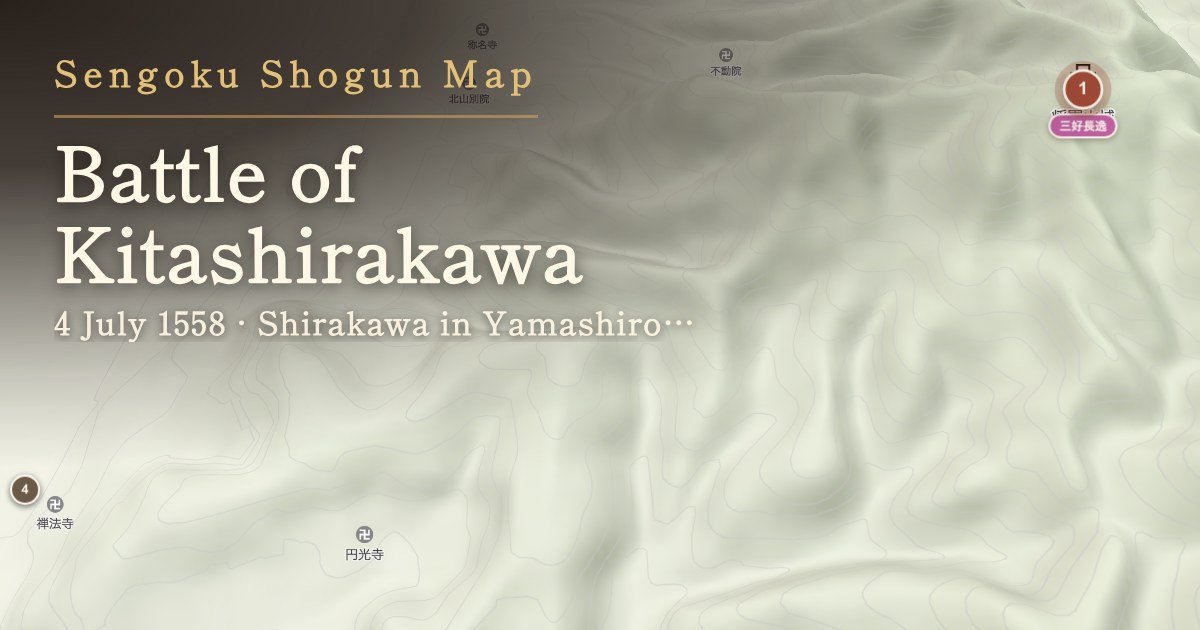
Course of the battle
1 Late June 1558
The Miyoshi seize Shōgunzan Castle
The Miyoshi occupied Shōgunzan Castle on Uryūzan in the Eastern Hills. Looking down on the capital, it had served as a strongpoint in every struggle for Kyoto.
Seizes Shōgunzan Castle
Sources
Sources12·Certainty: Medium
2 Early July 1558
The castle changes hands and the fight moves to Nyoigatake
To avoid being cut off, the Miyoshi set fire to the castle and pulled back, and it fell to the shogunal side. The next day the Miyoshi took Nyoigatake, southeast of Uryūzan, and beat the shogunal troops there.
Sources
Sources12·Certainty: Medium
3 4 July 1558
The two armies clash at Kitashirakawa
The two armies met head-on at Kitashirakawa and the Miyoshi won. Yoshiteru did not retake the capital by force.
Holds the capital
Sources
Sources13·Certainty: Medium
4 November 1558
Terms are reached and Yoshiteru returns to Kyoto
In the 11th month, a peace was concluded between Nagayoshi and Yoshiteru. Yoshiteru was received by Nagayoshi and others at Shōkoku-ji and entered Kyoto for the first time in five years.
Enters the capital after five years
Sources
Sources13·Certainty: Medium
Historical significance
Nagayoshi won on the battlefield but chose to bring the shogun back to the capital. The framework of the Kinai region that held until the Eiroku Incident of 1565 was settled in this year.
Advertisement
Key figures
足利氏
2

Shogun, at the head of the shogunal side
Ashikaga Yoshiteru was the shogun who had fled to Ōmi. He fought at Higashiyama to retake Kyoto and was defeated, but returned to Kyoto under the peace settlement of the same year.
Sources
Sources1·Certainty: Medium
General on the shogunal side
He supported Yoshiteru and took part in the attempt to retake the capital.
Sources
Sources1·Certainty: Medium
六角氏
1
Backer of the shogunal side
Rokkaku Yoshikata was a daimyo of Ōmi who backed Ashikaga Yoshiteru.
Sources
Sources1·Certainty: Medium
三好氏
3

Head of the Miyoshi
Miyoshi Nagayoshi was the powerful man who controlled Kyoto. He won the battle, and in the later peace settlement he welcomed Yoshiteru back to Kyoto.
Sources
Sources1·Certainty: Medium
Miyoshi general
He led the seizure of Shōgunzan Castle and the fighting on Nyoigatake.
Sources
Sources1·Certainty: Medium

Miyoshi general
As one of the principal Miyoshi commanders he took part in the fighting in the Eastern Hills.
Sources
Sources1·Certainty: Medium
Other events of 1558
Notes on the data
Dates are given in the Western (Julian) calendar. The sources use the lunar calendar; 4 July corresponds to the ninth day of the sixth month of Eiroku 1. The castle is also called Uryūzan, Kitashirakawa and Shōgunzan; the form used here follows the castle master data. Casualty figures differ between sources and are left out of the text.
Sources consulted
- 京都府教育委員会 文化財保護課「北白川(勝軍山)城跡」
- 城郭マスタ(shiro.geojson)
- 地理院地図 住所検索(京都府京都市左京区北白川上終町)
The numbers in the text refer to the list above. Certainty indicates how far a statement is supported by the cited sources; it does not refer to the precision of the coordinates or the dating.
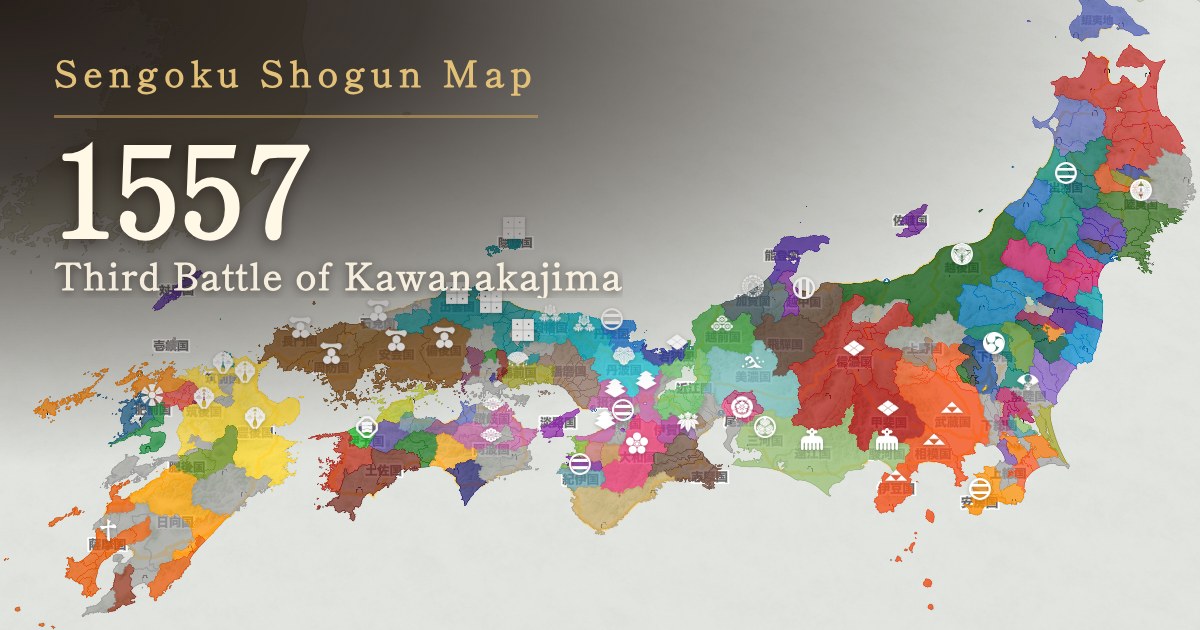
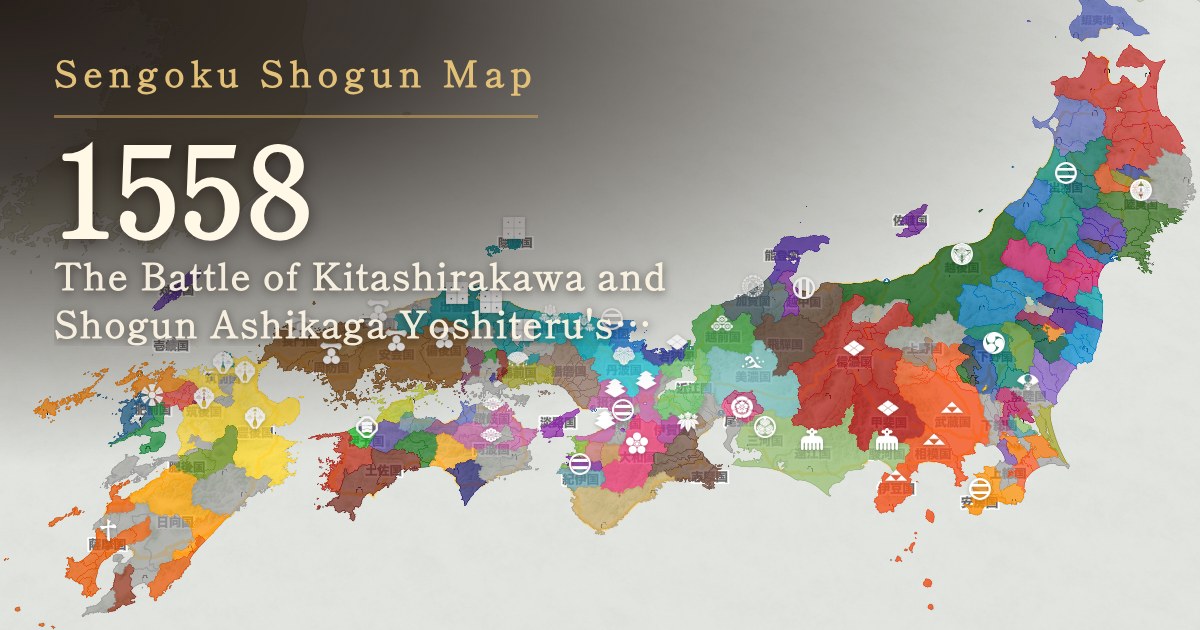
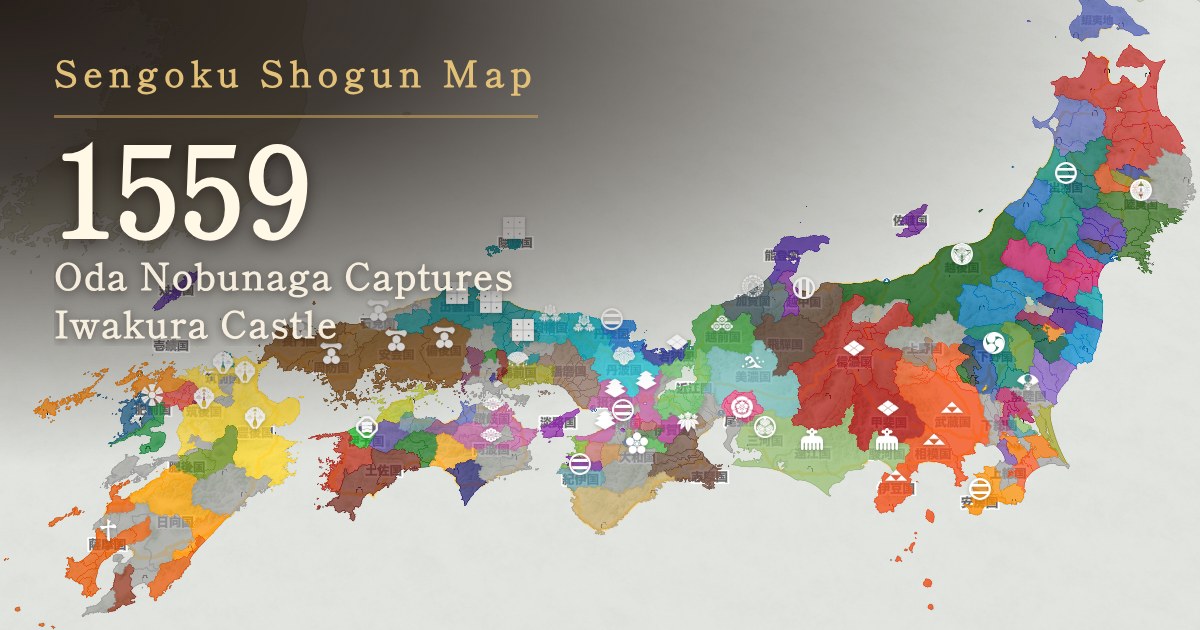
Territories before and after the battle
The year before, the year of the battle, and the year after, side by side. Tap a map to open that year.
Advertisement