1601: The Aftermath of Sekigahara—A Sweeping Reshuffle of the Daimyo
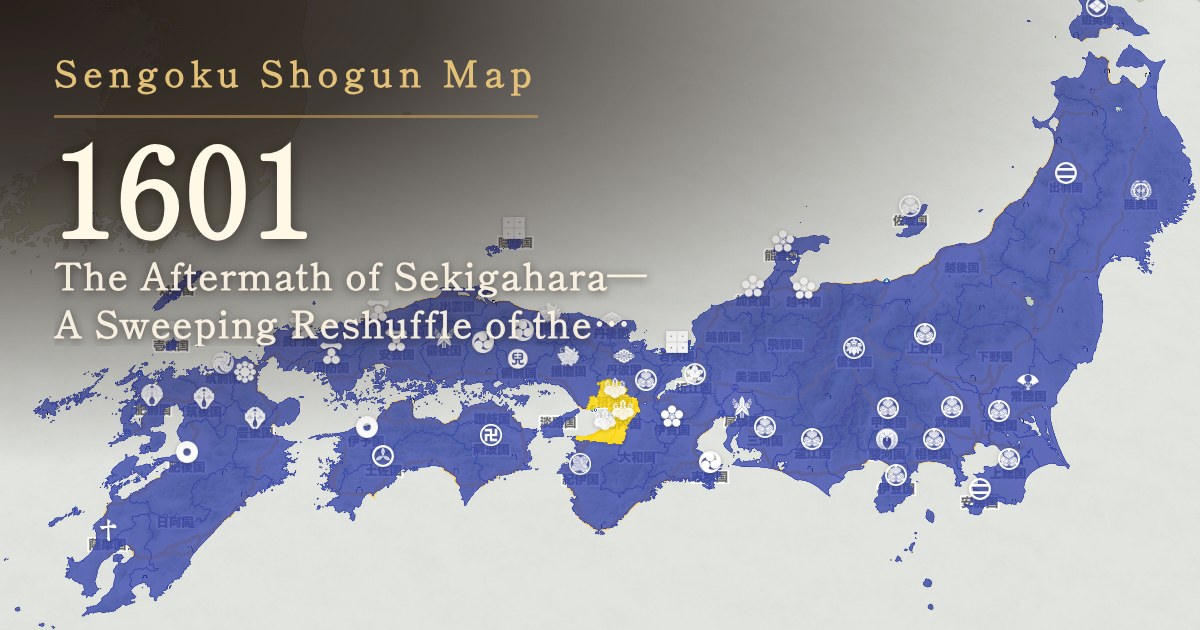
Soon after his victory at Sekigahara, Tokugawa Ieyasu carried out a reward and punishment campaign, stripping fiefs from daimyo who had sided with the Western Army while granting increased holdings to those who had backed him. Many daimyo who owed their positions to the Toyotomi were relocated to distant regions such as Chūgoku, Shikoku, and Kyūshū, while the strategic Kinai and Tōkaidō regions were filled with Tokugawa relatives and hereditary vassals, establishing the pattern of daimyo placement that would define the Edo period.
Events this year
Month 1
Ieyasu issued official documents stamped with his vermillion seal (the 'Tenpma Shuin-jō') and regulations (the 'Gotenpma-no-sadame') specifying the number of horses to be kept at relay stations along the Tōkaidō, establishing the early modern Tōkaidō relay station system.
Sources 国土交通省関東地方整備局横浜国道事務所「伝馬朱印状とはどういうものですか?」
1/8
After being granted Tosa Province following Sekigahara, Yamauchi Kazutoyo traveled overland from Kannoura and entered Urado Castle.
Month 5
To standardize the quality of silver throughout the realm, Ieyasu established the Fushimi Silver Guild. Administrative offices and residences for officials were built across four districts, creating a central mechanism for minting and managing Keichō-era gold and silver.
Sources 京都市「伏見銀座跡(フィールドミュージアム京都)」
After Sekigahara, Sanada Masayuki and Nobushige surrendered Ueda Castle to the Tokugawa side, and the castle was dismantled.
After surrendering Ueda Castle, Sanada Masayuki and Nobushige were exiled to Kudoyama below Mount Kōya in Kii Province.
After Sekigahara, Uesugi Kagekatsu was reduced from 1.2 million koku in Aizu to 300,000 koku at Yonezawa and shifted the center of his domain there.
Tokugawa Ieyasu ordered western daimyō to build Nijō Castle as a guard for the Kyoto Imperial Palace and a residence for shogunal visits.
Sources 京都市「元離宮二条城 年表」
Transferred from Ōtaki to Kuwana in Ise Province with 100,000 koku, Tadakatsu became the first daimyo of Kuwana. He oversaw development of the castle town through Keichō-era urban planning and established Kuwana's foundation.
Sources 桑名市「桑名の歴史をたずねて」
Uwajima Castle, which Takatori directed, was completed in 1601. It became his first modern-era castle as a daimyo.
Sources 宇和島市「国指定 宇和島城」
Masamune, who had decided to relocate to Sendai and laid out the plans in 1600, began the full-scale construction of Sendai Castle in 1601.
Sources 仙台市「仙台城の紹介-仙台城の歴史-」
Following the discovery of gold and silver mines at Aikawa, Sado Island was placed under direct shogunate control. Bugyō Okubo Nagayasu administered Sado, which soon became a crucial pillar of shogunate finances.
Sources 新潟県佐渡市「国指定 記念物:佐渡金銀山遺跡」