1592: The Outbreak of the Bunroku Campaign—Japan Invades Korea
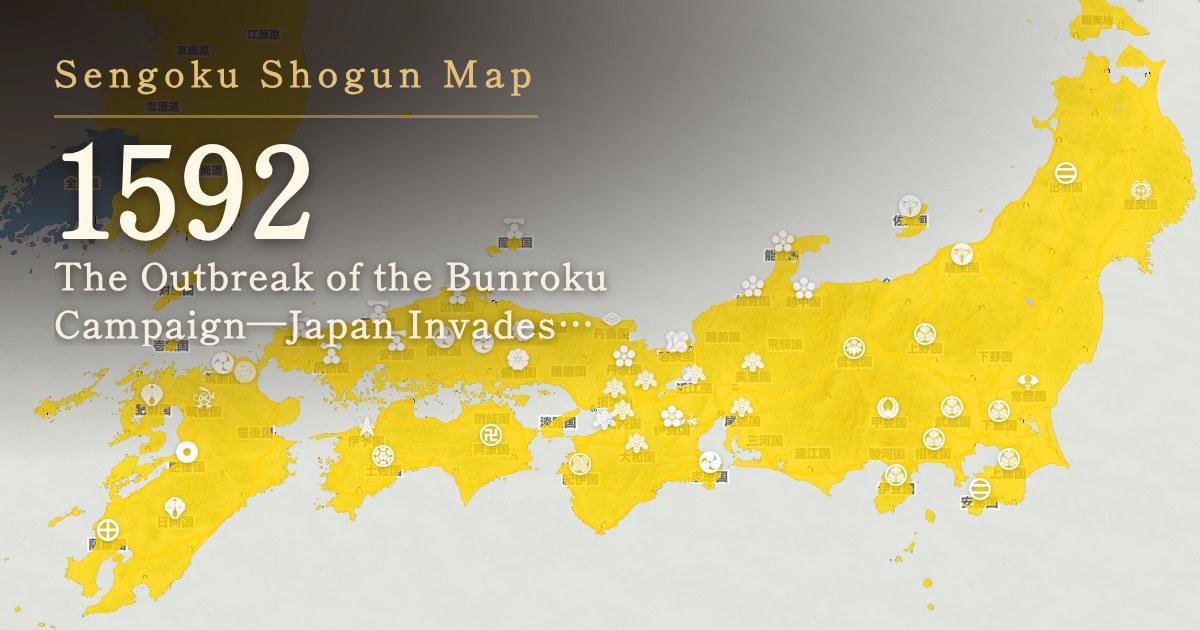
On Hideyoshi's orders, a Japanese army spearheaded by Konishi Yukinaga and Katō Kiyomasa landed at Busan, launching the invasion of Korea known as the Bunroku Campaign. Within roughly two weeks the Japanese captured Hanseong (modern Seoul), and Katō Kiyomasa pushed further north into Hamgyong Province, making the opening phase a string of overwhelming victories.
Events this year
Month 3
Nagoya Castle, the domestic base for the invasion of Korea, was completed as daimyō armies from across Japan assembled in camps around it.
Daimyō armies ordered by Toyotomi Hideyoshi began departing from Nagoya for the Korean Peninsula, opening the Bunroku campaign.
See this event in detail →Tōdō Takatora, who gained his position as guardian to Hidenari, participated in Hideyoshi's Korean campaign.
Sources 津市「藤堂高虎 略年譜」
4/25
Toyotomi Hideyoshi sent Kuroda Nagamasa, the front-line commander, orders via a vermillion seal document regarding provisions, occupation administration, and diplomacy in Korea.
Sources 国立歴史民俗博物館「豊臣秀吉朱印状」
Month 5
Japanese forces advancing north from Busan entered Hanseong, the capital of Joseon. King Seonjo had already fled north, and resistance by Joseon forces and the intervention of Ming China prolonged the international war after the occupation.
See this event in detail →Sources 九州国立博物館「メールマガジン341号」/国立公文書館「年表―歴史と物語」
Month 8
After transferring the office of kampaku to Hidetsugu, Toyotomi Hideyoshi began building a retirement residence at Shigetsu Hill in Fushimi, the origin of Fushimi Castle.