1581: Nobunaga at the Height of His Power
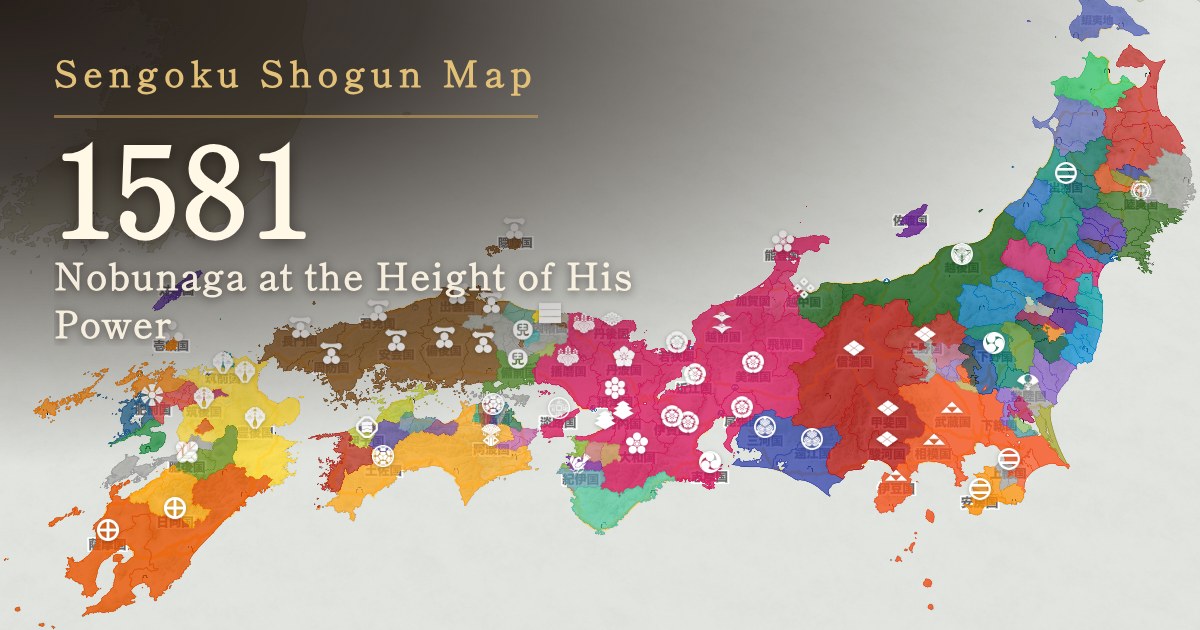
A grand military parade (Uma-zoroe) in Kyoto demonstrated his might. In Tajima, Inaba, and the Chugoku region, Hashiba Hideyoshi continued his offensives. Iga was subdued through a large-scale punitive campaign, and Nobunaga’s control reached its peak.
Events this year
Month 2
Oda Nobunaga stages a grand military parade in Kyoto, displaying power to lords and foreign envoys, boosting the prestige of his rule.
Month 3
Oda Nobukatsu launches a large-scale campaign in Iga, crushing local samurai and imposing direct Oda rule.
Month 4
Ieyasu intensifies operations on Takeda borders, swaying local lords and tightening the encirclement of Takeda Katsuyori.
Month 5
Hideyoshi marches into Inaba, establishing bases to besiege Tottori Castle and gaining advantage in San’in.
Month 6
Nobunaga initiates cadastral surveys in Kinai and Tōkai to streamline tax and military mobilization, enforcing stronger governance.
Month 7
Hashiba Hideyoshi established his headquarters at Taikōganaru and built siege fortifications around Tottori Castle. He pressured the castle through a siege by starvation.
Sources 鳥取市「国指定史跡 日本百名城 鳥取城跡」
Month 8
Hideyoshi continues advances in Tajima and Inaba, escalating conflict with Mōri in western Honshu.
Month 9
Oda Nobukatsu completes suppression of Iga, seizing castles, weapons, and executing leaders.
Month 10
Through starvation tactics, Hideyoshi captures Tottori Castle, securing all of Inaba and depriving Mōri of a San’in base.
Sources 鳥取市「国指定史跡 日本百名城 鳥取城跡」/鳥取市歴史博物館やまびこ館「天正9年鳥取城攻めと豊臣期の因幡をめぐる」
Winter
Shimazu Yoshihisa consolidates control over Satsuma and Ōsumi, pressuring Hyūga lords and solidifying southern Kyushu power.
Month 11
After unifying Tosa, Motochika expands into Awa and Sanuki, advancing Shikoku unification.
After the fall of Tottori Castle, Tsugukatsu entered the castle under Hideyoshi's orders and subsequently governed Inaba for twenty years.