INTERACTIVE BATTLE
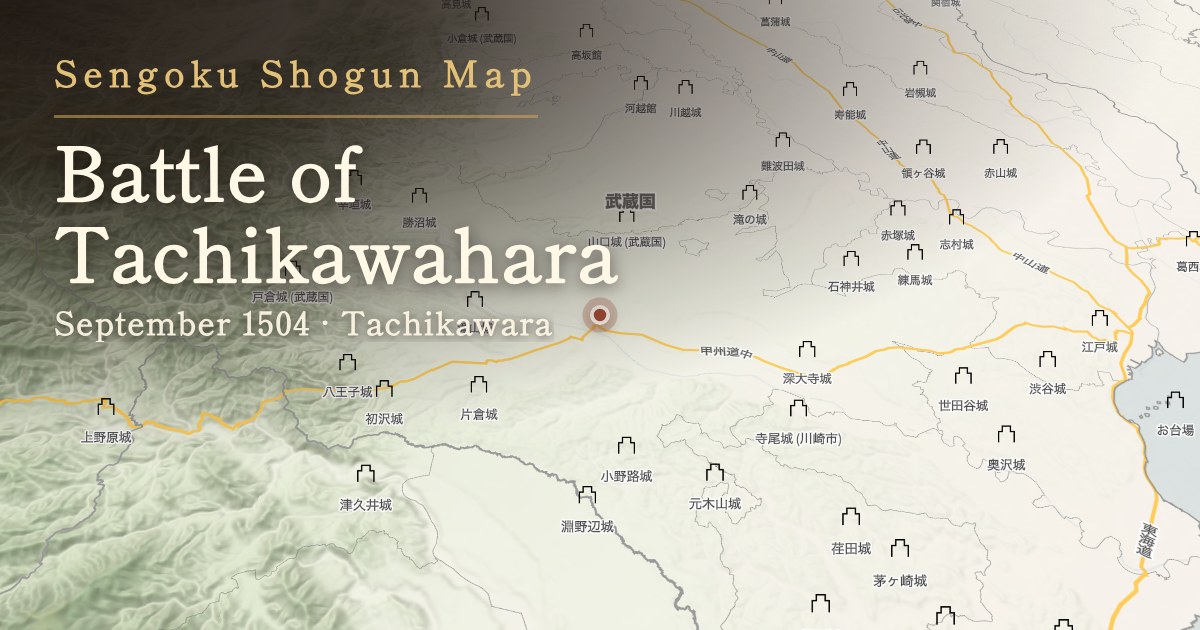
Battle of Tachikawara
1504 (Eishō 1) · Tachikawara
In 1504 (27th day of the 9th month, old calendar), Yamanouchi-Uesugi Akisada and Ōgigayatsu-Uesugi Tomoyoshi, rivals for the post of Kantō Kanrei, fought at Tachikawara in Musashi Province (near present-day Tachikawa, Tokyo). The Ōgigayatsu side, with Tomoyoshi joined by Imagawa Ujichika and Ise Sōzui (Hōjō Sōun), is said to have won.
扇谷上杉氏: Uesugi Tomoyoshi, Ise Sōzui, Imagawa Ujichika / 山内上杉氏: Uesugi Akisada
Explore the 1504 map
Change the year to watch territories shift
Background
The Yamanouchi-Uesugi, the family holding the post of Kantō Kanrei, and its branch the Ōgigayatsu-Uesugi had been fighting since 1487 in what is called the Chōkyō Disturbance. Uesugi Tomoyoshi, head of the Ōgigayatsu, allied with Ise Sōzui (Hōjō Sōun) and Imagawa Ujichika to oppose Akisada of the Yamanouchi after the sudden death of his adoptive father Sadamasa in 1494. In 1504 Ujichika also sent troops to the Kantō to help Sōzui, and the conflict between the two Uesugi houses came to a head-on clash along the Tama River in Musashi.
Outcome
The allied Ōgigayatsu army is said to have defeated Akisada, and the Yamanouchi side is said to have lost. Akisada later counterattacked with reinforcements from the Uesugi forces of Echigo, so the Chōkyō War did not end with this single battle. A shōko (a small metal instrument struck during memorial offerings), made to mourn the dead, survives in Tachikawa and conveys how fierce the fighting was.
Course of the battle
1 Meiō 3 (1494)
Tomoyoshi allies with Sōzui and Ujichika
After the sudden death of his adoptive father Sadamasa, Uesugi Tomoyoshi, head of the Ōgigayatsu Uesugi, allied with Ise Sōzui (Hōjō Sōun) and Imagawa Ujichika to stand against Yamanouchi Uesugi Akisada.
Sources
Sources456·Certainty: Medium
2 Eishō 1 (1504)
Imagawa Ujichika sends troops to the Kantō
Imagawa Ujichika sent troops to the Kantō to help Ise Sōzui (Shinkurō).
Sources
Sources37·Certainty: High
3 Eishō 1 (1504)
The two armies fight at Tachikawara
At Tachikawara (along the Tama River from Tachikawa to Fuchū), the army of Yamanouchi Uesugi Akisada fought an allied force of Ōgigayatsu Uesugi Tomoyoshi joined by Ise Sōzui and Imagawa Ujichika. The Ōgigayatsu side is said to have won.
Sources differ – details
Points of debate
Some accounts can be read as recording Tomoyoshi's defeat, so the way the outcome is described varies. The exact battlefield is also not known.
Sources128·Certainty: Disputed
4 after Eishō 1 (1504)
Memorial for the dead
Moro Tosa Nyūdō Gense had a shōko (a gong used in nenbutsu chanting) made to mourn the war dead, according to the inscription on a bronze shōko surviving in Tachikawa.
Sources
Sources128·Certainty: High
5 Eishō 2 (1505)
Tomoyoshi withdraws to Edo Castle
The following year, 1505, Tomoyoshi is said to have been besieged in Kawagoe Castle and withdrawn to Edo Castle.
Is besieged in Kawagoe Castle and withdraws to Edo Castle
Sources
Sources47·Certainty: Medium
Historical significance
This was a battle in which Imagawa Ujichika, who was extending his power into Mikawa and Tōtōmi, and Ise Sōzui, who was aiming at Odawara, joined the quarrel among the Uesugi of the Kantō. It is seen as the point at which new powers from Suruga, Izu and Sagami began to appear on the Musashi battlefield.
Advertisement
Key figures
扇谷上杉氏
3
Head of the Ōgigayatsu-Uesugi
He allied with the Imagawa and Ise and stood against Yamanouchi-Uesugi Akisada. His base was Kawagoe Castle. His position on the battlefield is not known.
Sources
Sources14·Certainty: High

Commander who joined the Ōgigayatsu-side allied army
With the help of Imagawa Ujichika, he joined the allied army of the Ōgigayatsu side. His position on the battlefield is not recorded.
Sources
Sources13·Certainty: High
Commander who joined the Ōgigayatsu-side allied army
He went to the Kantō with troops to help Ise Sōzui. His position on the battlefield is not known.
Sources
Sources13·Certainty: High
山内上杉氏
1
Head of the Yamanouchi-Uesugi and Kantō Kanrei
Fighting on the Yamanouchi-Uesugi side together with Koga kubō Ashikaga Masauji, he is said to have been defeated. His position on the battlefield is not known.
Sources
Sources1·Certainty: High
Other events of 1504
Sources consulted
- 立川市「【都指定有形文化財】銅鉦鼓(立川原合戦戦死者供養鉦鼓)」
- 立川市「立川市の歴史(1700年代まで)」
- 静岡県立中央図書館「今川氏親」に関する資料
- コトバンク「上杉朝良」(日本人名大辞典)
- 川越市「川越市の歴史 中世」
- 川越市「県指定記念物 川越城跡」
- 城郭マスタ(shiro.geojson)
- 立川市「指定文化財等一覧(立河原合戦戦死者供養鉦鼓)」
The numbers in the text refer to the list above. Certainty indicates how far a statement is supported by the cited sources; it does not refer to the precision of the coordinates or the dating.
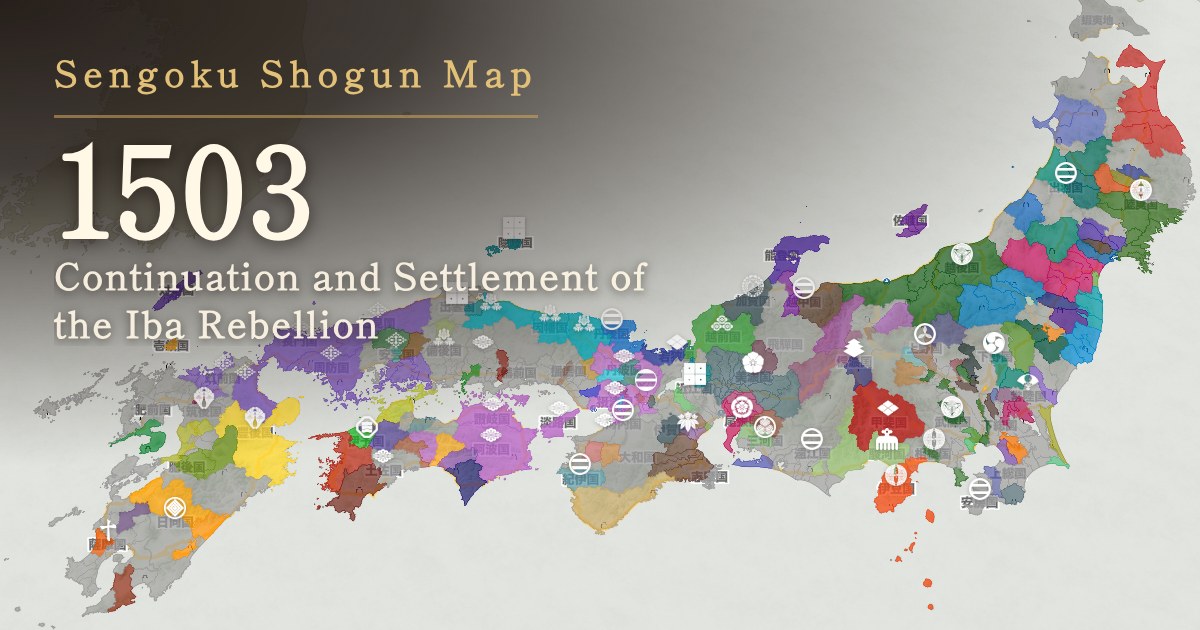
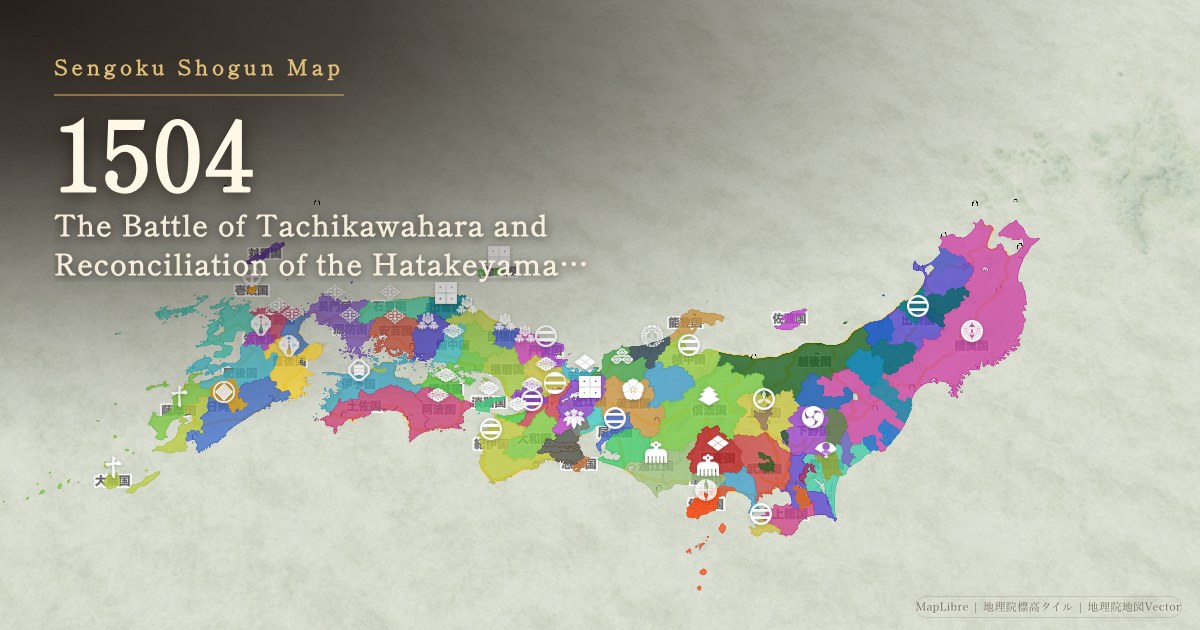
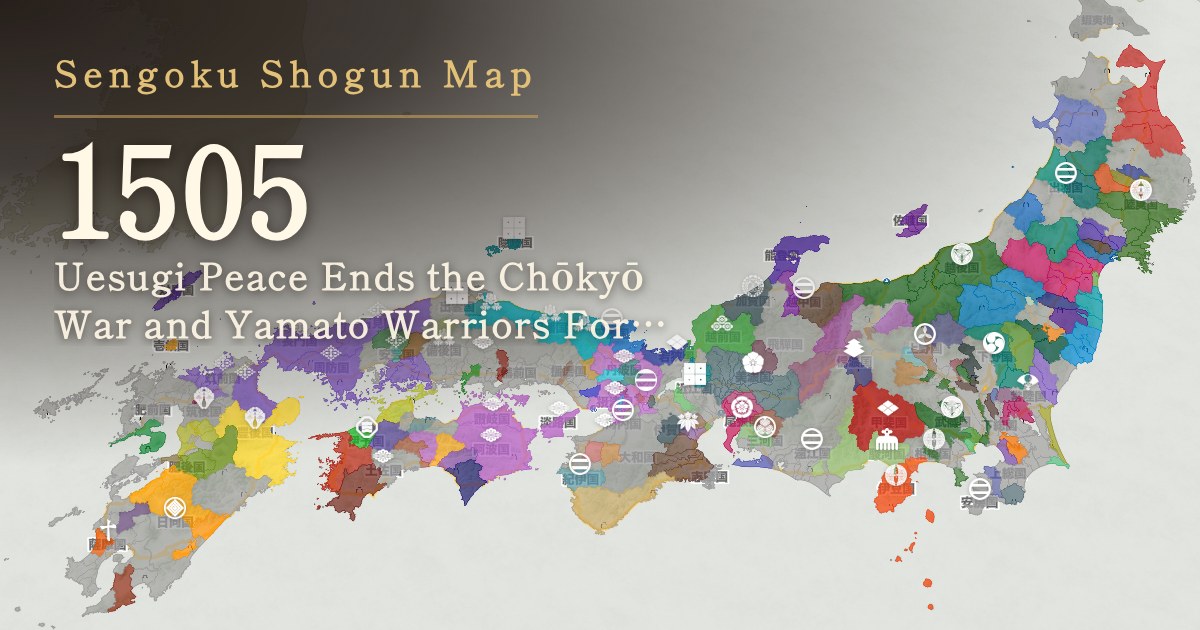
Territories before and after the battle
The year before, the year of the battle, and the year after, side by side. Tap a map to open that year.
Advertisement