INTERACTIVE BATTLE
Nagao Kagetora's Siege of Odawara Castle
April 1561 · Odawara Castle, Sagami Province (now Odawara, Kanagawa)
In April 1561, Nagao Kagetora gathered the lords of the Kantō and besieged Odawara Castle in Sagami Province (present-day Odawara, Kanagawa Prefecture), but he was blocked by the defenders under Hōjō Ujiyasu and others. Unable to take the castle, he withdrew. At Kamakura, Kagetora changed his name to Uesugi Masatora.
上杉氏: Uesugi Kenshin, Uesugi Norimasa, Ōta Sukemasa, Satomi Yoshitaka / 後北条氏: Hōjō Ujiyasu, Hōjō Ujimasa
Explore the 1561 map
Change the year to watch territories shift
Background
Uesugi Norimasa, the Kantō kanrei driven out by the Later Hōjō, had turned to Nagao Kagetora of Echigo. Bearing Norimasa's cause, Kagetora crossed the mountains in the eighth month of the previous year, secured Numata, Iwashita and Maebashi in Kōzuke, and pushed south into Musashi.
Outcome
The castle did not fall, and the Uesugi army lifted the siege. At the shrine of Tsurugaoka Hachiman-gū in Kamakura, Kagetora received the Uesugi surname and the post of Kantō kanrei from Uesugi Norimasa, and changed his name to Uesugi Masatora.
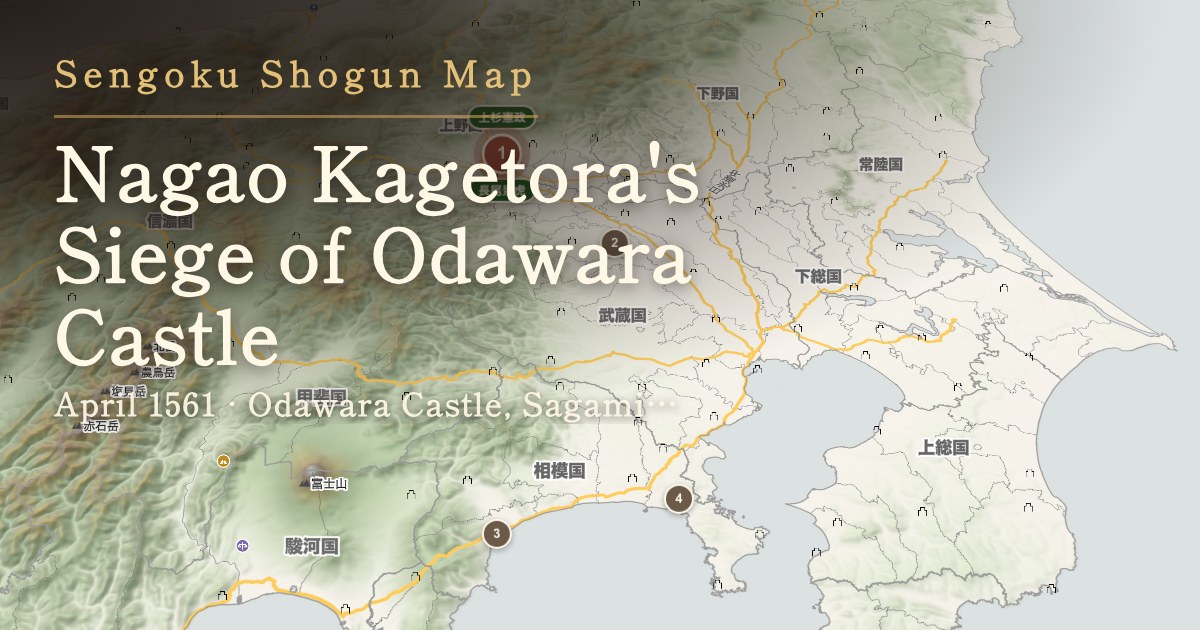
Course of the battle
1 Autumn – winter 1560
Kagetora crosses the mountains and secures Kōzuke
2 Early spring 1561
The army moves south through Musashi as the Kantō lords gather
The Uesugi army moved south by way of Matsuyama Castle. Lords centered on Kōzuke and Musashi joined it, though their responses were not uniform — some, such as the Chiba of Shimōsa, remained on the Hōjō side.
Sources
Sources123·Certainty: Medium
3 April 1561
The siege of Odawara Castle
The Uesugi army surrounded Odawara Castle. Kagetora is said to have attacked the castle's lotus pond and set fire to the castle town. The castle did not fall.
Sources differ – details
Points of debate
The length of the siege and the number of troops engaged differ widely between sources; the Uesugi war tales give large figures.
Sources123·Certainty: High
4 Late April – May 1561
He succeeds to the office of Kantō kanrei at Tsurugaoka Hachimangū
Having lifted the siege, Kagetora moved to Kamakura. Before the shrine of Tsurugaoka Hachimangū he received the Uesugi name and the office of Kantō kanrei from Uesugi Norimasa and took the name Uesugi Masatora.
Sources
Sources14·Certainty: High
Historical significance
Kagetora obtained the post of Kantō kanrei, but he could not take Odawara Castle and failed to overturn Hōjō control of the Kantō. When the Uesugi army returned to Echigo, some of the Kantō lords who had joined the campaign defected or came back under the Hōjō. Kagetora himself went back to Echigo, and in the autumn he marched into northern Shinano.
Advertisement
Key figures
上杉氏
4

Commander of the Uesugi army
Bearing the cause of Uesugi Norimasa he crossed the mountains and besieged Odawara Castle. During the campaign he took the name Uesugi Masatora; he is later known as Uesugi Kenshin.
Sources
Sources1·Certainty: High
The former Kantō kanrei
Driven out by the Later Hōjō, he had fled to Echigo; at Tsurugaoka Hachimangū he handed over his name and office.
Sources
Sources1·Certainty: High
Local lord of Musashi
One of the Kantō lords who joined the Uesugi army out of their own interest against the Hōjō.
Sources
Sources12·Certainty: Medium

Lord of Awa
A Bōsō lord who was at odds with the Later Hōjō; during this campaign he is said to have pressed the Hōjō from the Bōsō side in support of the Uesugi.
Sources
Sources12·Certainty: Medium
後北条氏
2

Head of the Later Hōjō
He held Odawara Castle and outlasted the campaign by using his network of branch castles and the length of the enemy's supply lines.
Sources
Sources1·Certainty: High
Fourth head of the Later Hōjō
Hōjō Ujimasa defended Odawara Castle together with his father, Ujiyasu.
Sources
Sources1·Certainty: High
Other events of 1561
Notes on the data
Dates are given in the Western (Julian) calendar. The sources use the lunar calendar; the siege in the third month of Eiroku 4 falls in April 1561. The length and scale of the siege and the conduct of the troops in the castle town differ widely between sources, so no figures are given.
Sources consulted
- 小田原市「四代氏政の時代」
- 小田原城「歴史年表」
- 城郭マスタ(shiro.geojson)
- 地理院地図 住所検索(神奈川県鎌倉市雪ノ下2-1-31)
The numbers in the text refer to the list above. Certainty indicates how far a statement is supported by the cited sources; it does not refer to the precision of the coordinates or the dating.
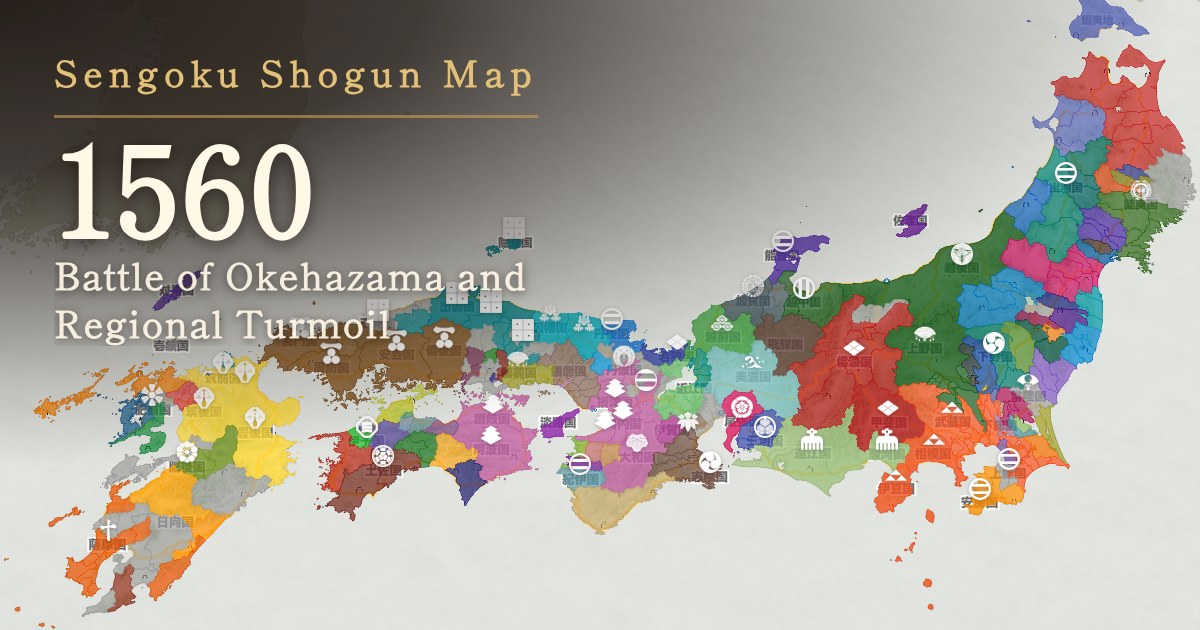
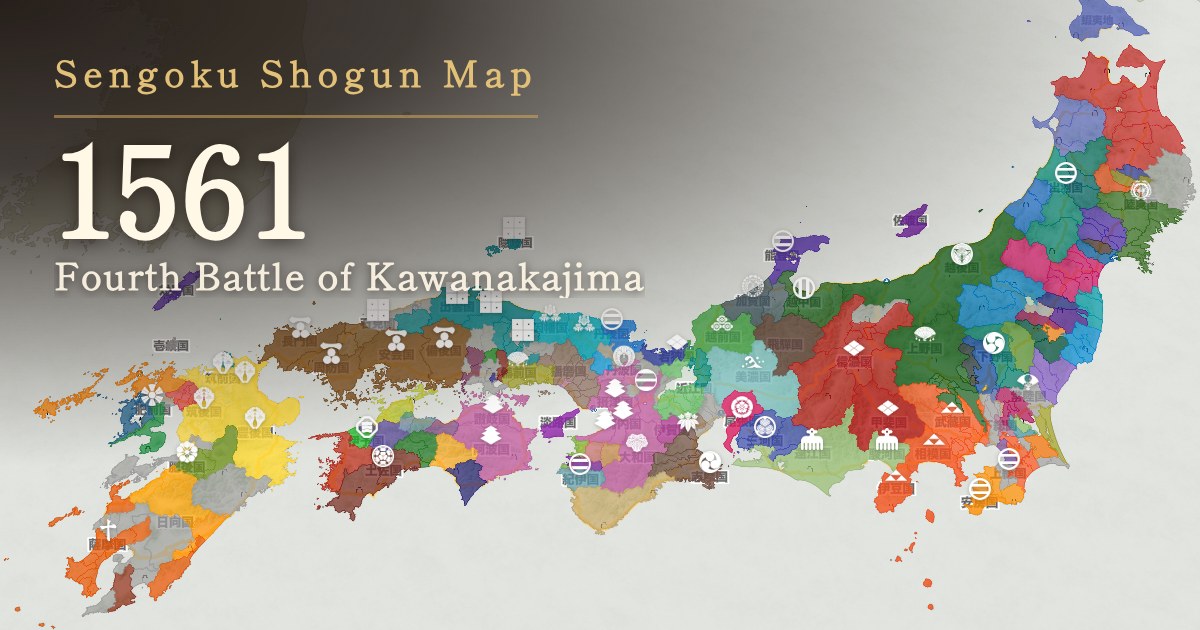
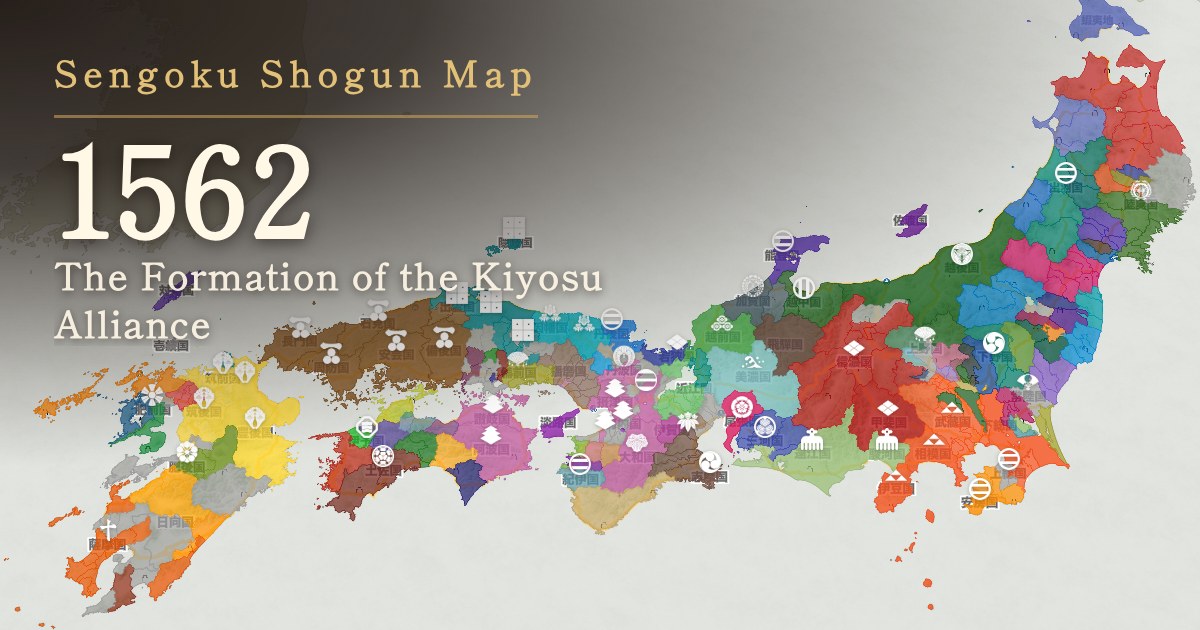
Territories before and after the battle
The year before, the year of the battle, and the year after, side by side. Tap a map to open that year.
Advertisement