INTERACTIVE BATTLE
Fourth Battle of Kawanakajima
18 October 1561 · Kawanakajima battlefield (Hachimanbara)
The Fourth Battle of Kawanakajima was fought on 18 October 1561 (10th day of the 9th month by the old calendar) at Kawanakajima in Shinano Province (Hachimanbara, in present-day Nagano), where the armies of Takeda Shingen and Uesugi Masatora (later Kenshin) clashed head-on. Both sides suffered heavy losses, and no victor was decided.
上杉氏: Uesugi Kenshin, Murakami Yoshikiyo / 武田氏: Takeda Shingen, 武田信繁, Yamamoto Kansuke
Explore the 1561 map
Change the year to watch territories shift
Background
Uesugi Masatora (later Kenshin) returned from his campaign in the Kantō and again sent troops at the request of the local lords of northern Shinano. Takeda Shingen had made Kaizu Castle (present-day Matsushiro Castle) his forward base in northern Shinano, and Kawanakajima had become the point where the forces of the two sides collided.
Outcome
The fierce fighting at Hachimanbara ended without a decisive result. The Takeda side lost Takeda Nobushige, Shingen's younger brother and deputy commander. The Uesugi side also suffered heavy losses, and both armies left the battlefield.
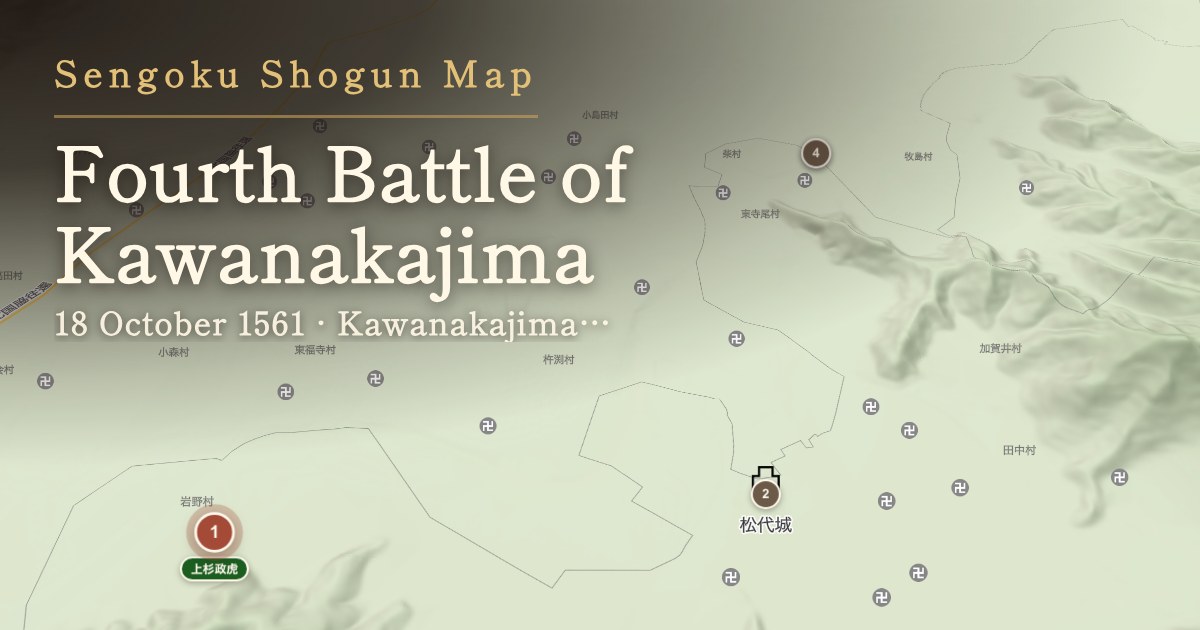
Course of the battle
1 Autumn 1561
The Uesugi army takes position on Saijoyama
Masatora, back from the Kantō, marched into northern Shinano and is said to have taken position on Saijoyama, which overlooks the Kawanakajima plain.
Takes position on Saijoyama
Sources
Sources123·Certainty: Medium
2 Autumn 1561
The Takeda army moves out from Kaizu Castle
The Takeda came out from Kaizu Castle, their forward base in northern Shinano, and advanced onto the Kawanakajima plain. Kaizu is the castle known today as Matsushiro.
Marches out from Kaizu Castle
Sources
Sources124·Certainty: Medium
3 18 October 1561
The two armies clash at Hachimanbara
At Hachimanbara, the two armies clashed head on. It is known as a fierce battle that left many legends, including the single combat of Shingen and Kenshin.
Sources differ – details
Points of debate
The woodpecker stratagem and the single combat of Shingen and Kenshin come from later military writings such as the Kōyō gunkan. Some now read the battle as a chance encounter, and neither the dispositions nor the course of the fighting is settled.
Sources12·Certainty: Disputed
4 18 October 1561
Both sides are cut up and nothing is decided
Both sides suffered heavy losses, and the battle ended. Takeda Nobushige is also said to have lost his life. A head mound (kubizuka) remains at Hachimanbara.
Said to have fallen
Said to have fallen
Sources
Sources12·Certainty: Medium
Historical significance
The Fourth Battle is said to have been the most intense of the five confrontations at Kawanakajima, and it gave rise to many legends, including the single combat of Shingen and Kenshin. The Takeda's Kaizu Castle and their control of northern Shinano remained after the battle, and the Uesugi could not hold northern Shinano permanently.
Advertisement
Key figures
上杉氏
2

Commander of the Uesugi army
He marched out immediately after returning from the Kantō and is said to have pressed close to the Takeda headquarters. Later known as Uesugi Kenshin.
Sources
Sources1·Certainty: Medium

Local lord of northern Shinano
Driven from his own lands by the Takeda, he pressed the Uesugi to march into northern Shinano.
Sources
Sources12·Certainty: Medium
武田氏
3

Commander of the Takeda army
He kept his hold on northern Shinano with Kaizu Castle as its pivot and met the Uesugi at Hachimanbara.
Sources
Sources1·Certainty: Medium
Second-in-command of the Takeda army
Shingen's younger brother. He is said to have fallen in this battle.
Sources
Sources12·Certainty: Medium

Takeda officer
He is said to have fallen in this battle, though much of what is told of him is later embroidery.
Sources
Sources12·Certainty: Disputed
Other events of 1561
Notes on the data
Dates are given in the Western (Julian) calendar. The sources use the lunar calendar; 18 October corresponds to the tenth day of the ninth month of Eiroku 4. The woodpecker stratagem, the revolving-wheel formation and the single combat of Shingen and Kenshin come from later military writings such as the Kōyō gunkan and are not treated here as phases of the battle. Casualty figures differ so widely between sources that none is given.
Sources consulted
- 長野市「川中島古戦場史跡公園」
- ながの観光net「川中島の戦い 史跡ガイド」
- 地理院地図 住所検索(長野県長野市松代町岩野)
- 城郭マスタ(shiro.geojson)
The numbers in the text refer to the list above. Certainty indicates how far a statement is supported by the cited sources; it does not refer to the precision of the coordinates or the dating.
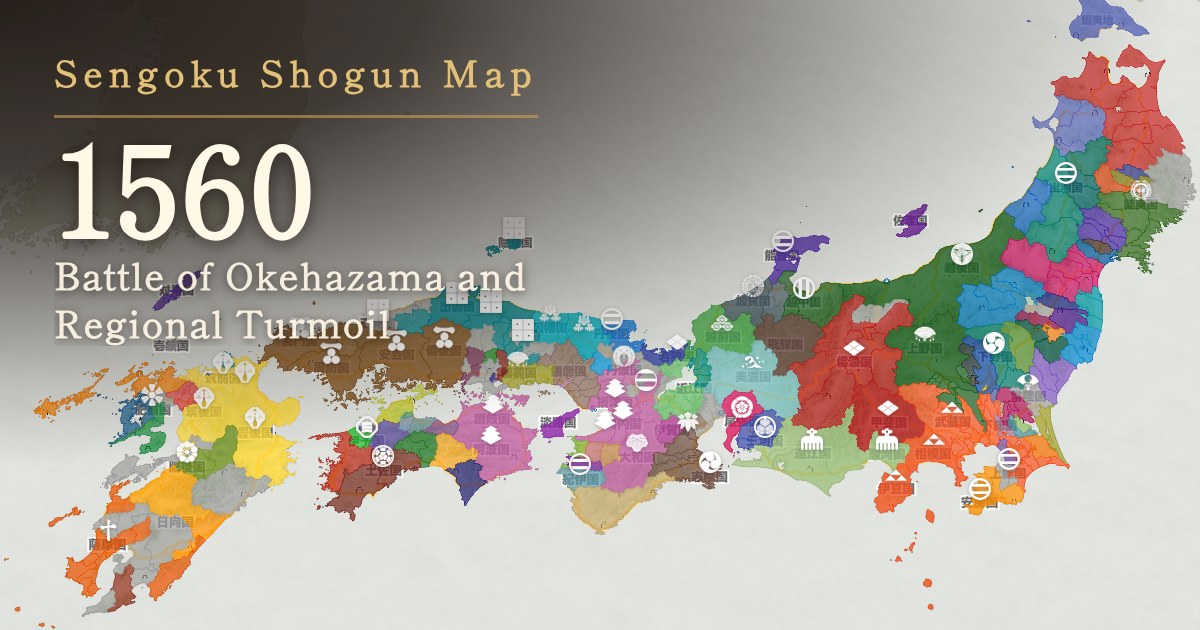
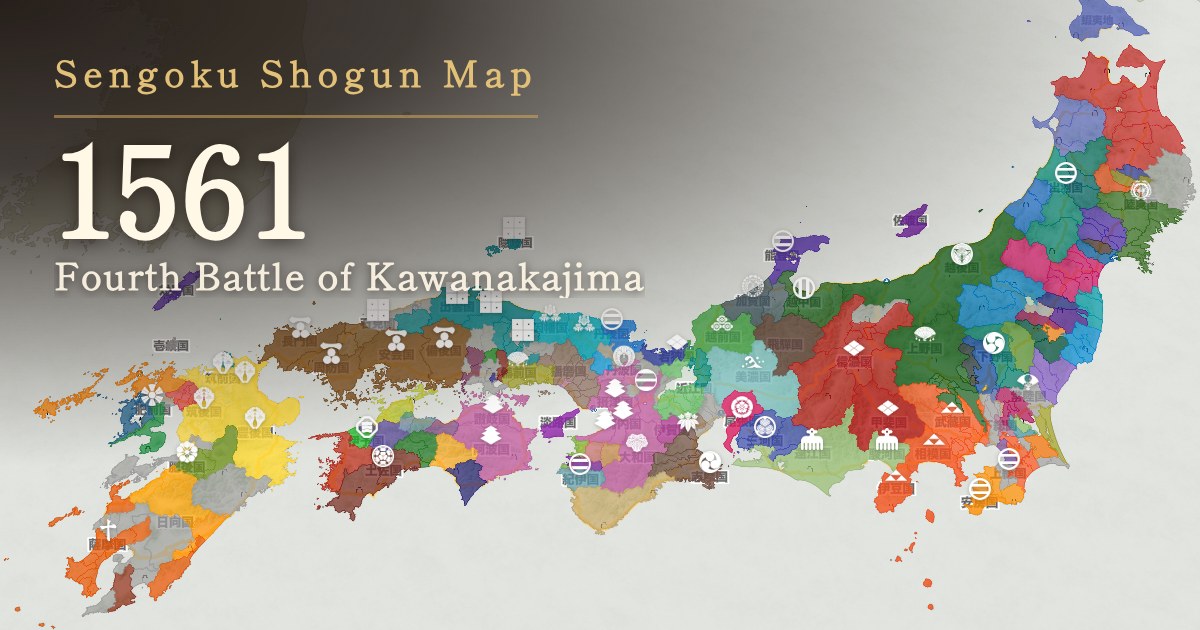
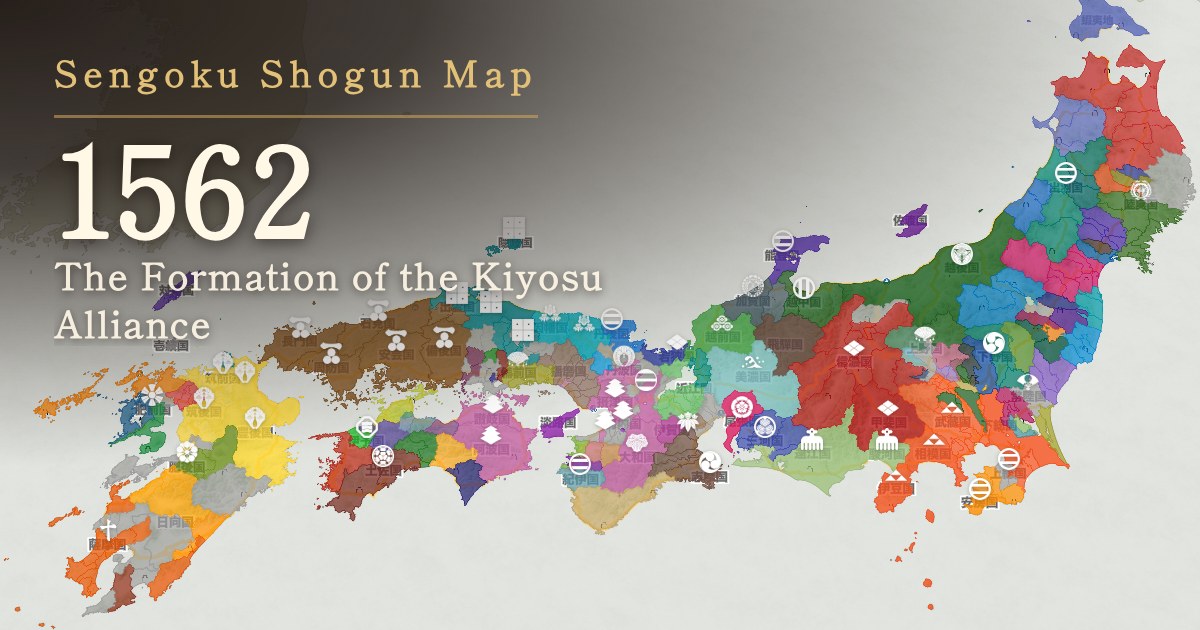
Territories before and after the battle
The year before, the year of the battle, and the year after, side by side. Tap a map to open that year.
Advertisement