INTERACTIVE BATTLE
The Suō–Nagato Campaign and the Fall of the Ōuchi
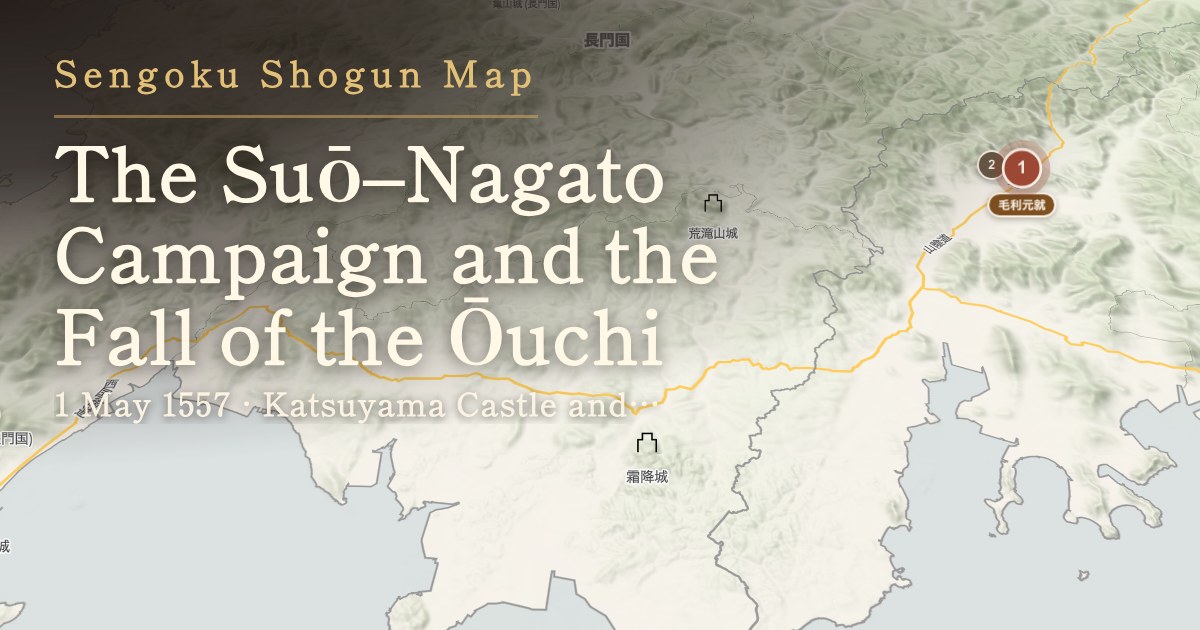
1 May 1557 · Katsuyama Castle and Chōfuku-ji in Nagato Province (now Chōfu, Shimonoseki)
In May 1557, Ōuchi Yoshinaga, pursued by Mōri Motonari, took his own life at Chōfuku-ji in Nagato Province (present-day Chōfu, Shimonoseki), and the Ōuchi house was destroyed. This was the final stage of the campaign in which the Mōri invaded Suō and Nagato after the Battle of Itsukushima in 1555.
毛利氏: Mōri Motonari, 毛利隆元, 福原貞俊 / 大内氏: Ōuchi Yoshinaga, 内藤隆世
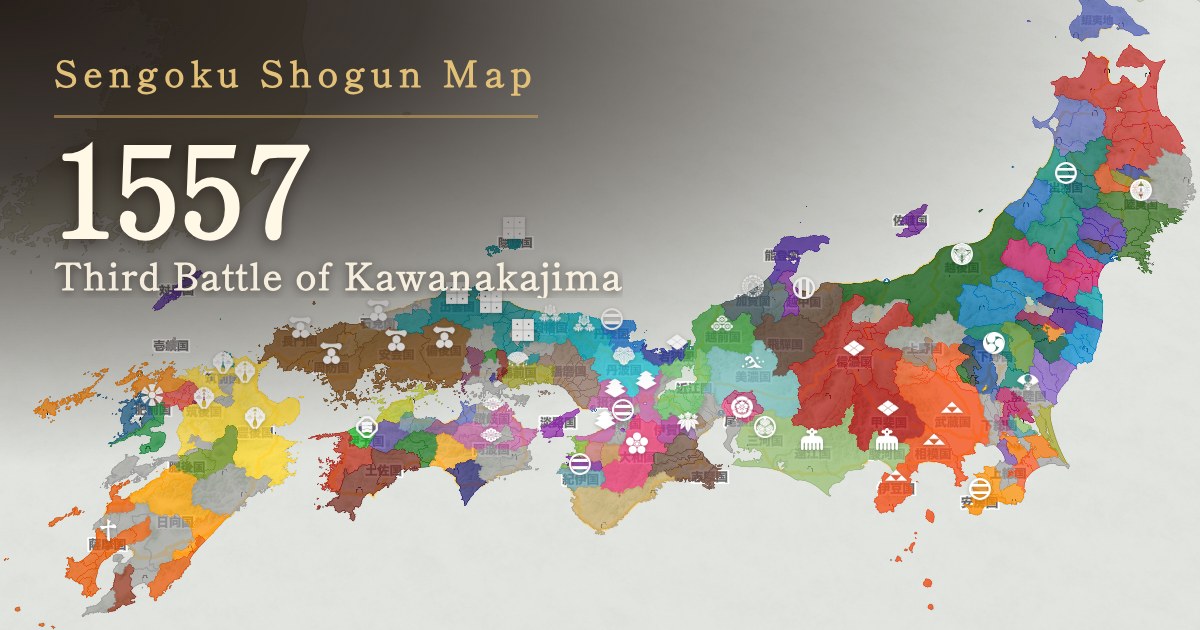
Explore the 1557 map
Change the year to watch territories shift
Background
After the Battle of Itsukushima in 1555, in which the Ōuchi lost their senior retainer Sue Harukata, the Ōuchi no longer had the strength to defend Suō and Nagato. Yoshinaga himself was a figure installed by Harukata. Motonari crossed into Suō immediately after the victory, took bases including Susuma-numa Castle, and pressed on toward Yamaguchi.
Outcome
Ōuchi Yoshinaga took his own life at Chōfuku-ji, and the Ōuchi house was destroyed. Suō and Nagato fell into Mōri hands, and Mōri territory spread far to the west from Aki and Bingo.
Course of the battle
1 October 1555 – February 1557
The Mōri reduce the strongholds of Suō
From soon after the victory at Itsukushima the Mōri crossed into Suō and attacked the Ōuchi castles. Strongholds such as Susuma-numa fell, opening the road to Yamaguchi.
Invades Suō
Sources
Sources12·Certainty: Medium
2 March 1557
Yoshinaga leaves Yamaguchi for Nagato
As the Mōri closed on Yamaguchi, Ōuchi Yoshinaga left the city and its castle of Takamine and moved with his senior retainer Naitō Takayo to Katsuyama Castle in Nagato.
Leaves Yamaguchi
Accompanies Yoshinaga
Sources
Sources12·Certainty: Medium
3 March – April 1557
Katsuyama Castle is besieged
Yoshinaga and Naitō Takayo shut themselves in Katsuyama Castle. It was a mountain castle strong in defense, and the Mōri side was hard-pressed. The Mōri also blocked the sea and drove the castle into a corner.
Holds Katsuyama Castle
Presses the pursuit in Nagato
Sources differ – details
Points of debate
One tradition has Naitō Takayo surrendering the castle on condition that Yoshinaga's life be spared; accounts of how Yoshinaga then came to be pressed to kill himself differ.
Sources12·Certainty: Medium
4 1 May 1557
Ōuchi Yoshinaga takes his own life at Chōfuku-ji
Just before the castle fell, Yoshinaga moved to Chōfuku-ji (present-day Kōzan-ji) and took his own life there.
Takes his own life at Chōfuku-ji
Sources
Sources13·Certainty: High
Historical significance
The Ōuchi, the greatest house in western Japan, disappeared, and their lands and its window on overseas trade passed to the Mōri. Across the Kanmon Strait, Mōri and Ōtomo now faced each other over Buzen and Chikuzen.
Advertisement
Key figures
毛利氏
3

Commander of the Mōri army
He took the main body against Yamaguchi and left the pursuit in Nagato to his retainers.
Sources
Sources1·Certainty: Medium
Head of the main Mōri house
He took part with his father in the reduction of Suō and Nagato.
Sources
Sources1·Certainty: Medium
Commanded the advance into Nagato
He led the pursuit of Ōuchi Yoshinaga in Nagato and is said to have surrounded Chōfuku-ji.
Sources
Sources1·Certainty: Medium
大内氏
2
Last head of the Ōuchi house
Raised to the headship by Sue Harukata. He left Yamaguchi, held Katsuyama Castle and took his own life at Chōfuku-ji.
Sources
Sources1·Certainty: High
Senior retainer of the Ōuchi
He followed Yoshinaga into Katsuyama Castle and fought the Mōri there.
Sources
Sources1·Certainty: Medium
Other events of 1557
Notes on the data
Dates are given in the Western (Julian) calendar. The sources use the lunar calendar; 1 May corresponds to the third day of the fourth month of Kōji 3. Katsuyama Castle in Nagato is also written Katsuyama with different characters; the form used here follows the castle master data. Chōfuku-ji is the temple known today as Kōzan-ji in Chōfu, Shimonoseki.
Sources consulted
- 山口県「さらば!! 西国一の大名・大内氏「最後の当主」大内義長」
- 城郭マスタ(shiro.geojson)
- 地理院地図 住所検索(山口県下関市長府川端1-2-3)
The numbers in the text refer to the list above. Certainty indicates how far a statement is supported by the cited sources; it does not refer to the precision of the coordinates or the dating.
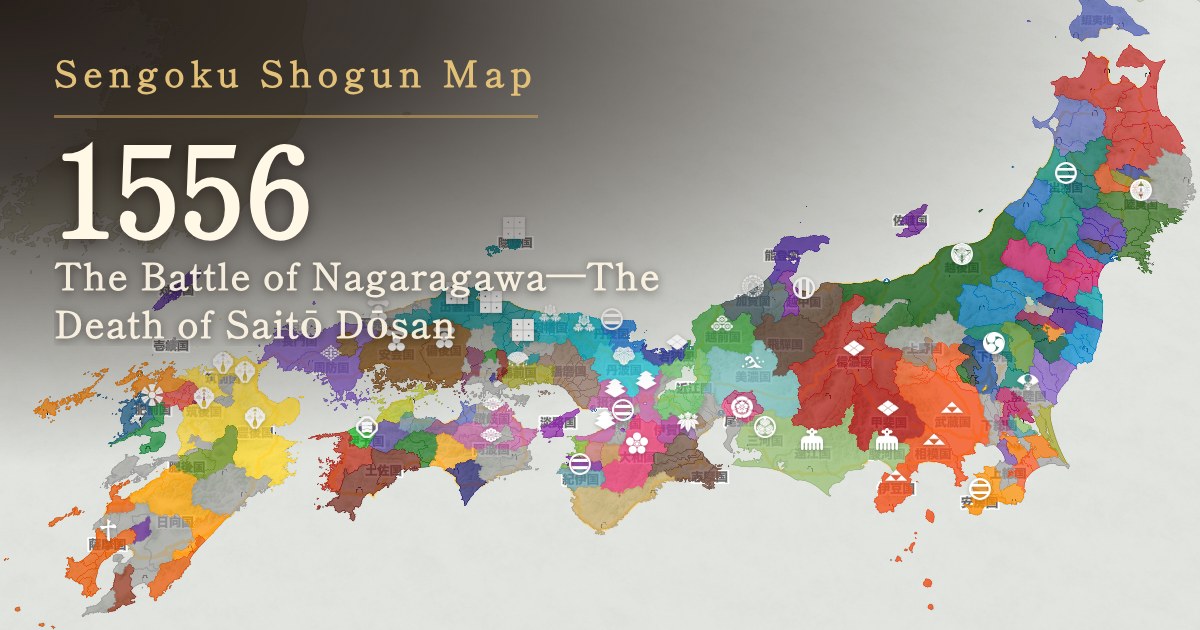
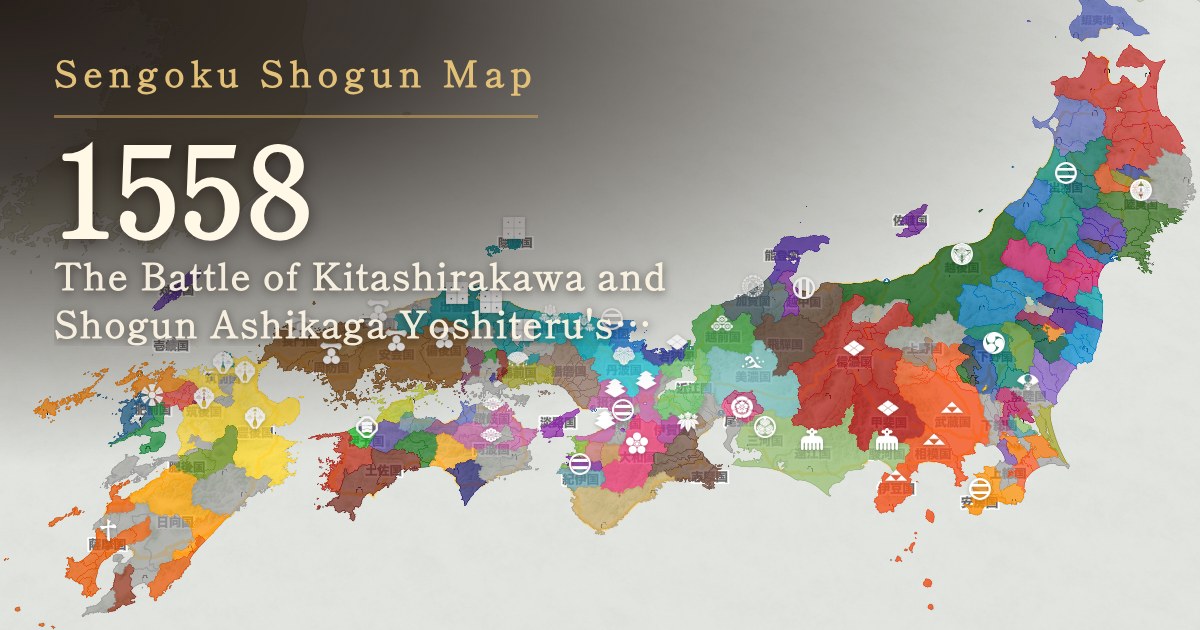
Territories before and after the battle
The year before, the year of the battle, and the year after, side by side. Tap a map to open that year.
Advertisement