INTERACTIVE BATTLE
Battle of Funaokayama
August 1511 · Funaokayama
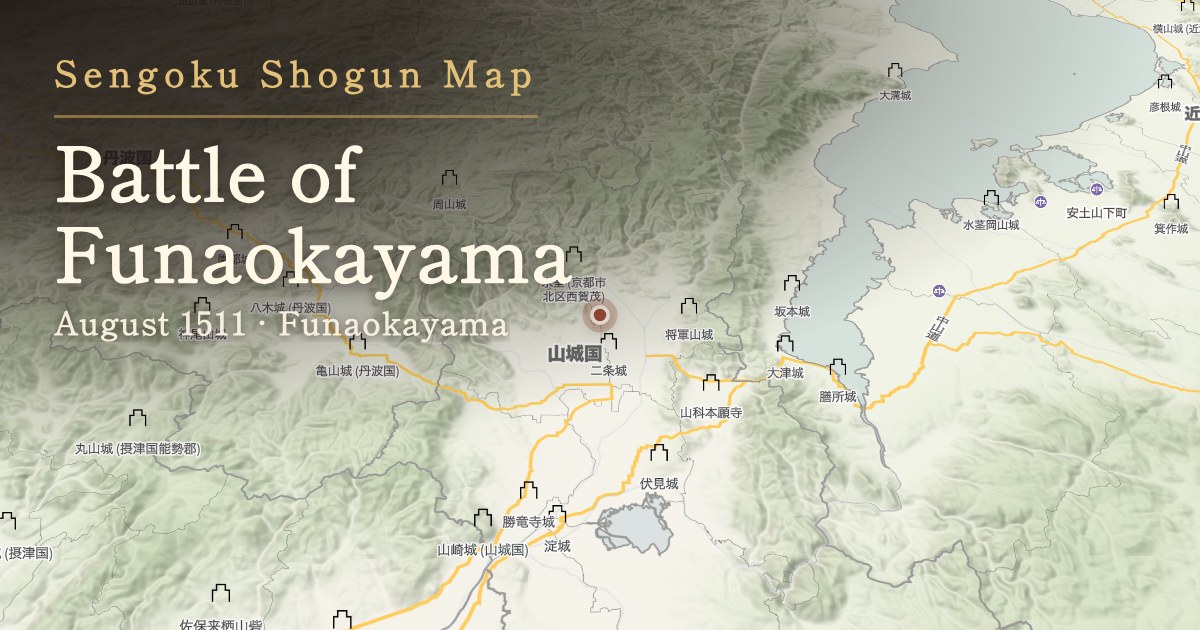
In 1511 (Eishō 8), at Funaokayama in Kyoto (present-day Kita Ward, Kyoto City), the combined army of Ashikaga Yoshitada, Hosokawa Takakuni and Ōuchi Yoshioki took a castle held by the forces of Hosokawa Sumimoto. Sumimoto was defeated and fled to Settsu.
足利氏: Ashikaga Yoshitane / 細川氏: Hosokawa Takakuni / 大内氏: Ōuchi Yoshioki / 細川澄元方: Hosokawa Sumimoto
Explore the 1511 map
Change the year to watch territories shift
Background
After Hosokawa Masamoto was assassinated in 1507 (Eishō 4), the succession to the Keichō house, the main line of the Hosokawa, was contested between Sumimoto and Takakuni. In 1508 (Eishō 5), when Ōuchi Yoshioki and Takakuni went up to Kyoto with the shogun Ashikaga Yoshitada, Sumimoto's side repeatedly tried to retake the capital. Funaokayama is a strategic point where the road from Tamba enters central Kyoto. Sumimoto built a castle there to defend against the forces of Yoshitada and others trying to enter the capital.
Outcome
The combined army of Ashikaga Yoshitada, Hosokawa Takakuni and Ōuchi Yoshioki attacked Funaokayama and took the castle held by Sumimoto's forces. Sumimoto fled to Settsu, and Yoshitada kept his position in Kyoto.
Course of the battle
1 Eishō 8 (1511)
Hosokawa Sumimoto builds a castle at Funaokayama
Hosokawa Sumimoto built a castle at Funaokayama and took a defensive stance against the forces of Ashikaga Yoshitada, Hosokawa Takakuni, and Ōuchi Yoshioki, who were attempting to enter Kyoto from Tanba.
Sources
Sources12·Certainty: Medium
2 Eishō 8 (1511)
Ashikaga Yoshitada's allied forces assault and capture Funaokayama Castle
The allied forces of Ashikaga Yoshitada, Hosokawa Takakuni, and Ōuchi Yoshioki attacked Funaokayama Castle and captured it.
Sources
Sources12·Certainty: Medium
3 Eishō 8 (1511)
Hosokawa Sumimoto flees to Settsu
Defeated, Hosokawa Sumimoto fled to Settsu Province, while Shōgun Ashikaga Yoshitada maintained his position in Kyoto.
Sources differ – details
Points of debate
The date of the battle is not known, and some accounts give August 23.
Sources12·Certainty: Medium
Historical significance
In the contest over the headship of the Keichō house that had continued since the Eishō Disturbance, this battle showed that the Yoshitada, Takakuni and Yoshioki alliance preserved its control over the leadership in Kyoto.
Advertisement
Key figures
足利氏
1
Shogun
With the forces of Hosokawa Takakuni and Ōuchi Yoshioki, he attacked from Tanba, defeating the faction of Hosokawa Sumimoto who had fortified Funaokayama to block their entry into the capital.
Sources
Sources3·Certainty: High
細川氏
1
Kanrei
Together with Ashikaga Yoshitane and Ōuchi Yoshioki, he defeated the faction of Hosokawa Sumimoto at Funaokayama.
Sources
Sources34·Certainty: High
大内氏
1
Deputy Kanrei
Together with Ashikaga Yoshitane and Hosokawa Takakuni, he defeated the faction of Hosokawa Sumimoto at Funaokayama.
Sources
Sources3·Certainty: High
細川澄元方
1
Head of the faction at Funaokayama
He fortified Funaokayama and attempted to counter the forces of Ashikaga Yoshitane, Hosokawa Takakuni, and Ōuchi Yoshioki, but lost the fortress and fled to Settsu in defeat.
Sources
Sources34·Certainty: High
Other events of 1511
Sources consulted
- 京都市「応仁永正戦跡舟岡山(フィールド・ミュージアム京都)」
- 京都市「船岡山公園」
- 京都市「京都市の石標 KI004 応仁永正戦跡舟岡山」
- 神戸大学文学部地域連携センター「常設展示室A 細川氏」
The numbers in the text refer to the list above. Certainty indicates how far a statement is supported by the cited sources; it does not refer to the precision of the coordinates or the dating.
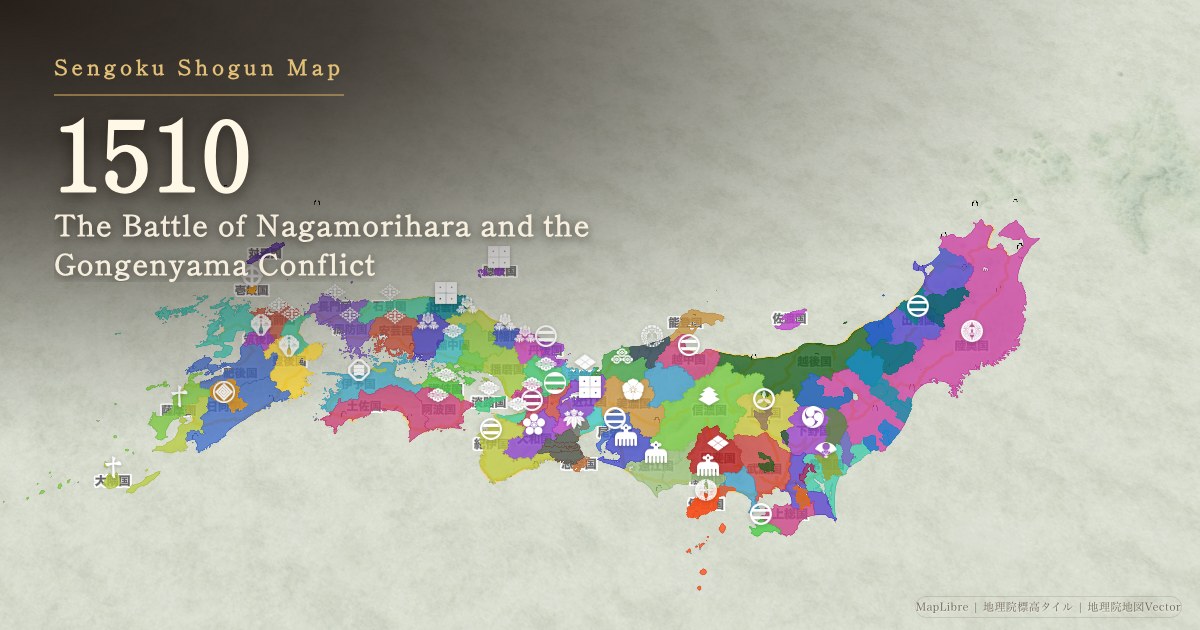
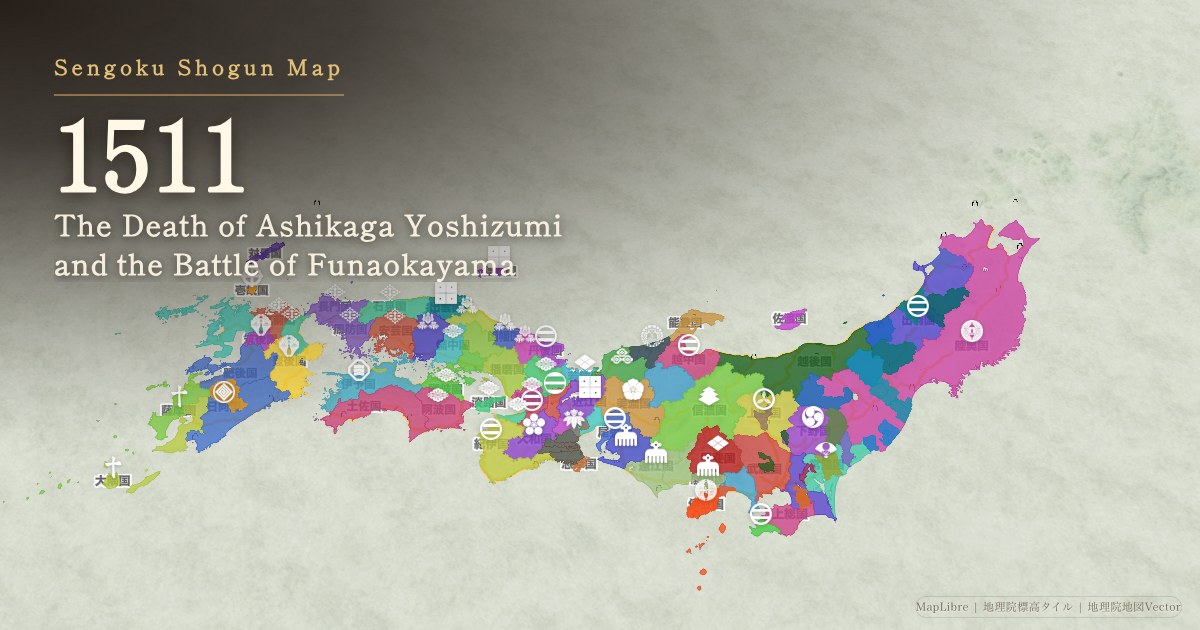
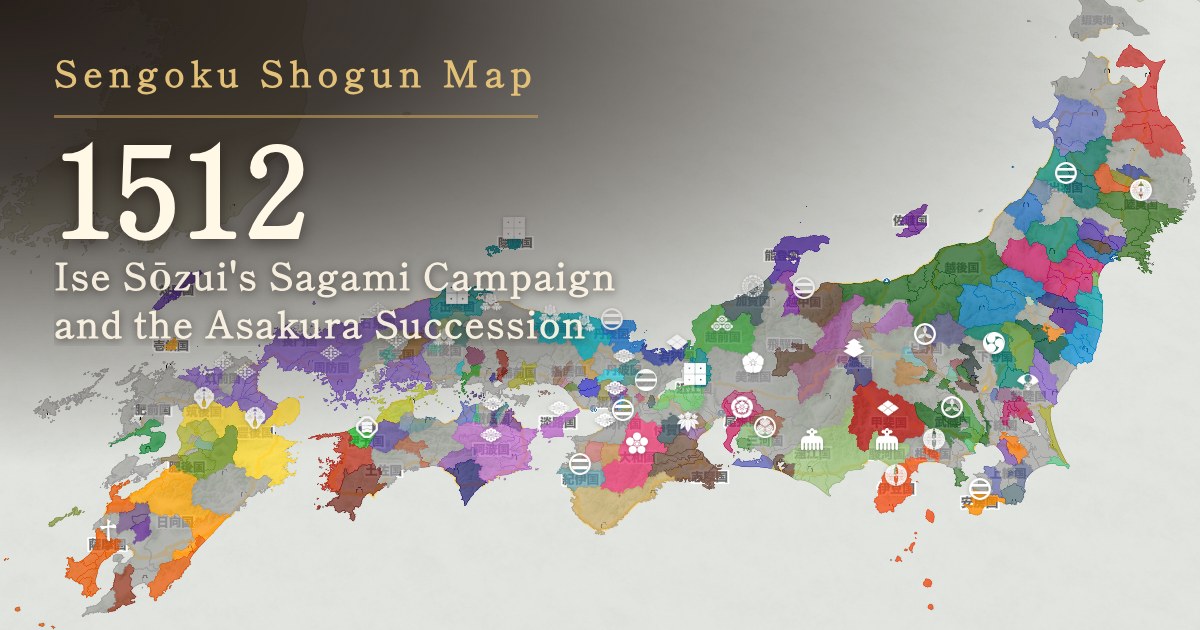
Territories before and after the battle
The year before, the year of the battle, and the year after, side by side. Tap a map to open that year.
Advertisement