INTERACTIVE BATTLE
Siege of Tottori Castle
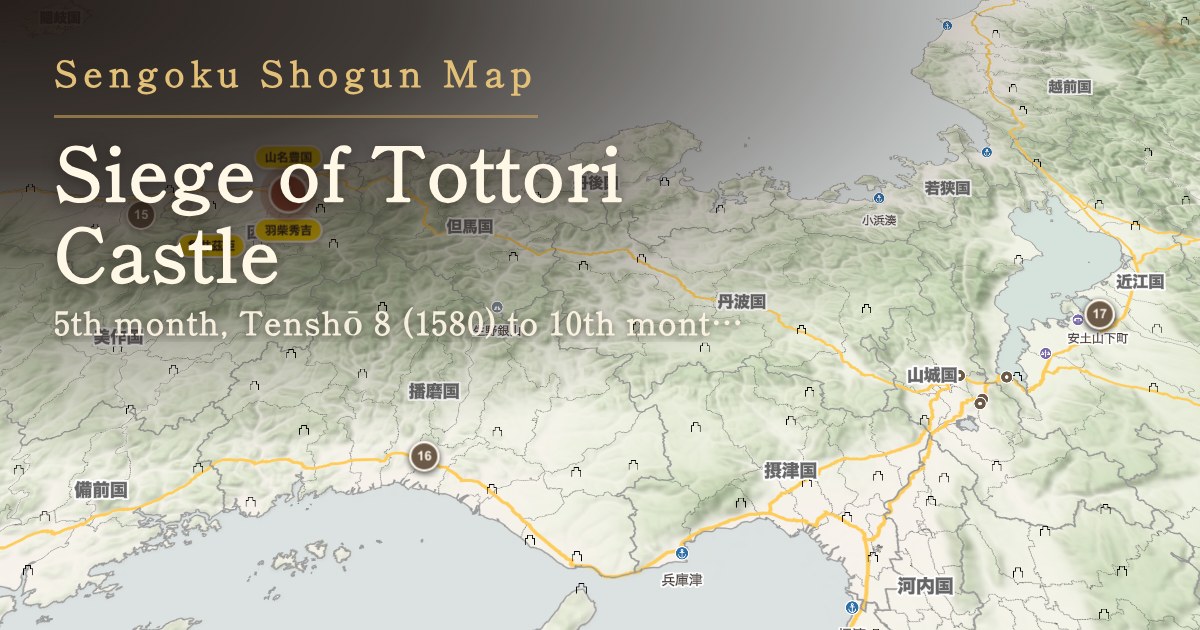
5th month, Tenshō 8 (1580) to 10th month, Tenshō 9 (1581) (the castle surrendered on the 25th day of the 10th month) · Tottori Castle (Mount Hisamatsu) in Inaba Province, Honjinyama (Taikōganaru) to the east, and the surrounding siege camp-forts
In 1581, Hashiba Hideyoshi surrounded Tottori Castle in Inaba Province (present-day Tottori City) with siege camp-forts and cut off its supplies. On 25 October, the Mōri-side castle commander Kikkawa Tsuneie committed seppuku and the castle surrendered. The Mōri main force never came.
羽柴氏: Toyotomi Hideyoshi, Kamei Korenori, Hachisuka Masakatsu, Yamana Toyokuni, Nanjo Mototsugu, 小鴨元清 et al. / 毛利氏: Kikkawa Tsuneie, 森下道誉, 日本介, 吉岡定勝, 吉川元春, Mōri Terumoto et al.
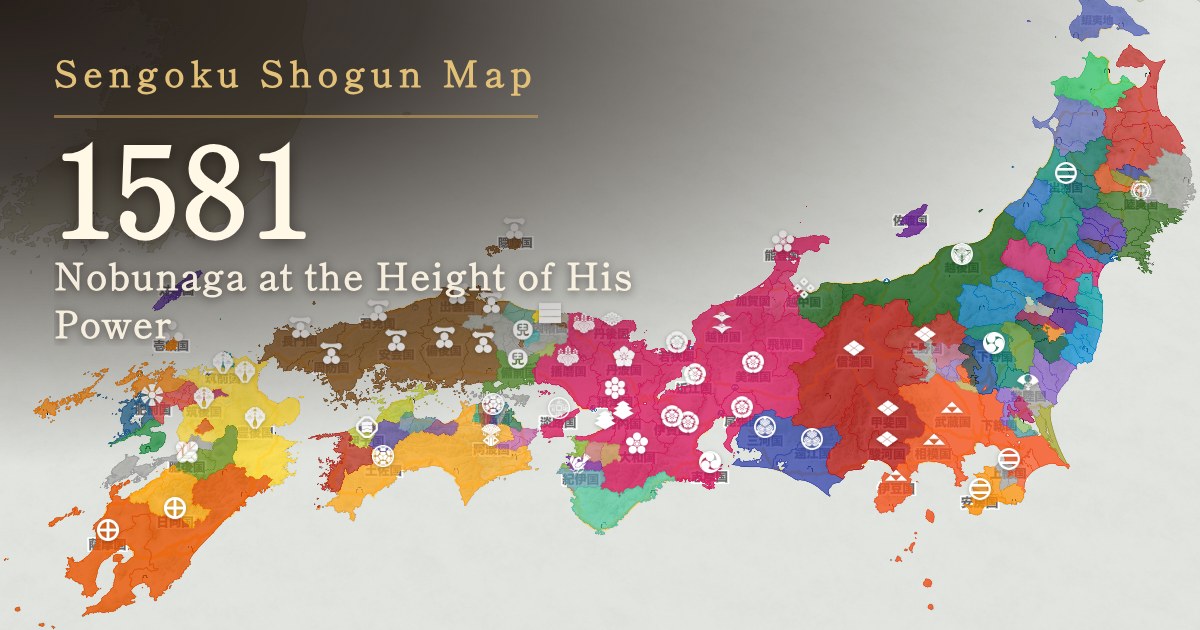
Explore the 1581 map
Change the year to watch territories shift
Background
In the 5th month of Tenshō 8, Hideyoshi, having pacified Harima and Tajima, entered Inaba, brought Yamana Toyokuni to submission, took Tottori Castle and others, and placed Kamei Korenori in Shikano Castle. The Mōri side, however, counterattacked at once: in the 8th month Kikkawa Motoharu advanced into eastern Hōki and pressed Nanjo Mototsugu's Hawaishi Castle hard, and an anti-Oda uprising also broke out in Inaba. Inside Tottori Castle, the Mōri-aligned senior retainers expelled Toyokuni, the lord who had surrendered. That winter, a plan for Nobunaga to march out to the San'in came up, and Hideyoshi's second advance into Inaba served as preparation for it.
Outcome
Hideyoshi won. On 25 October Tenshō 9 (1581), Kikkawa Tsuneie committed seppuku and Tottori Castle surrendered. The Mōri side had sent Tsuneie in as castle commander in the 3rd month. Hideyoshi reached Honjinyama, east of Tottori Castle, on 12 July and built siege camp-forts that cut off supplies. Inside the castle people began to starve to death, and the lives of the defenders were spared in exchange for the seppuku of Tsuneie and the others. Those who were rescued are said to have died suddenly, more than half of them, because of the food they were given.
Course of the battle
1 5th month, Tenshō 8 (1580)
The first Inaba campaign
Hashiba Hideyoshi, having pacified Harima and Tajima, entered Inaba in the 5th month of Tenshō 8. He set up camp near Tottori Castle, brought its lord Yamana Toyokuni to surrender, and took Inaba's main castles, including Wakasa Onigajō Castle and Shikano Castle. Hostages from the provincial lords (kokushū) of Inaba were held at Shikano Castle, and Kamei Korenori, a surviving retainer of the Amago, became its garrison commander.
Takes up position near Tottori Castle
Surrenders
Becomes garrison commander of Shikano Castle
Sources differ – details
Points of debate
Whether Hideyoshi took Tottori Castle or Toyokuni surrendered is described differently in different sources.
Sources156·Certainty: High
2 8th month, Tenshō 8 (1580)
The Mōri counterattack and the expulsion of Toyokuni
The Mōri side pushed back at once. Kikkawa Motoharu advanced into eastern Hōki and brought Nanjo Mototsugu's Hawaishi Castle to the brink of falling. An anti-Oda uprising also broke out in Inaba, and inside Tottori Castle the Mōri-aligned senior retainers expelled Toyokuni, the lord who had surrendered. Hideyoshi informed Kamei Korenori at Shikano Castle of the dispatch of over 10,000 men and of the shipment of provisions rice by sea, but it did not come about.
Attacks eastern Hōki and presses Hawaishi Castle hard
Is expelled by the senior retainers in the castle
Sources differ – details
Points of debate
The month and day on which Toyokuni was expelled, and the names of the senior retainers who expelled him, are unclear.
Sources16·Certainty: High
3 Winter, Tenshō 8 (1580)
Nobunaga's plan to march to the San'in
That winter, a plan for Nobunaga to march in person to the San'in came up. Hideyoshi did not spend the new year at Azuchi but returned to Himeji. The aim was to march out in the 2nd or 3rd month of Tenshō 9, but it was delayed, in part out of consideration for the rice-seeding season.
Returns to Himeji
Sources
Sources16·Certainty: High
4 18th day of the 3rd month, Tenshō 9 (1581)
Kikkawa Tsuneie enters Tottori Castle
The Mōri side replaced the castle commander and sent in Kikkawa Tsuneie, lord of Fukumitsu Castle in Iwami. On the 18th day of the 3rd month, Tsuneie was met by the Geishū (Aki) relief garrison troops (kaban-shū, reinforcements who guarded the castle in rotation), landed at the port of Karo, and entered Tottori Castle. The castle held only about 3 months' worth of provisions.
Enters Tottori Castle
Sources
Sources236·Certainty: High
5 5th month, Tenshō 9 (1581)
Toyokuni's advice and Nobunaga's reply
Yamana Toyokuni, the former lord of Tottori Castle who had joined the Oda side, advised Nobunaga that “if we attack now, we will surely win.” Nobunaga replied that he would not march out until the rainy season had ended.
Advises Nobunaga
Sources
Sources16·Certainty: Medium
6 Late in the 6th month, Tenshō 9 (1581)
Hideyoshi marches out
In late June, Hideyoshi left Himeji. Leading more than 20,000 mounted troops, he is said to have entered Inaba from the direction of Bizen, Mimasaka and Tajima.
Leaves Himeji
Sources differ – details
Points of debate
The departure is given as June 25 or June 27, and cannot be decided. It may be read as the gap between the day the order was issued and the day he himself set out.
Sources246·Certainty: Medium
7 12th day of the 7th month, Tenshō 9 (1581)
Taking position at Honjinyama (Taikōganaru)
On the 12th day of the 7th month, Hideyoshi took position on a mountain east of Tottori Castle. This was Honjinyama (Taikōganaru), and as soon as he arrived, Hideyoshi began building siege camp-forts. He ordered Kamei Korenori to collect hoes from the villages around Shikano Castle and deliver them.
Sources differ – details
Points of debate
Taikōganaru is highly likely to have been built as a headquarters to welcome Nobunaga. Nobunaga never came to Inaba.
Sources127·Certainty: High
8 From the 7th month to the 8th month, Tenshō 9 (1581)
Building the siege camp-forts and the encirclement
Hideyoshi built more than thirty field castles on the west side of Tottori Castle, around the Fukurogawa River, and joined them tightly with moats, palisades and fences. Deer fences, moats, earthen walls and multi-tiered watchtowers were built, and guard boats to watch the sea are also said to have been placed. He is also said to have cut off the space between the two outposts that the Mōri side had placed to link the castle. Tottori Castle was cut off from supplies by both land and sea.
Is listed among the commanders who looked down on Tottori Castle from Taikōganaru
Is listed among the commanders who looked down on Tottori Castle from Taikōganaru
Is listed among the commanders who looked down on Tottori Castle from Taikōganaru
Is listed among the commanders who looked down on Tottori Castle from Taikōganaru
Sources differ – details
Points of debate
The positions assigned to each siege camp-fort are unknown.
Sources146·Certainty: Medium
9 19th and 27th days of the 7th month and 7th day of the 9th month, Tenshō 9 (1581)
The Yoshioka clan repulses Hideyoshi's forces three times
Hideyoshi attacked the Yoshioka clan, which held the key point linking Tottori and Shikano, three times, but was defeated and withdrew each time. On July 27, a Hideyoshi camp near Yoshioka was broken. Because of this resistance, Hideyoshi could not carry out his plan to move his camp to Shikano Castle and advance into eastern Hōki, and is said to have had to remain at Taikōganaru and rely on a siege by starvation.
Defends Tsuzurao Castle
Sources differ – details
Points of debate
The Yoshioka clan and Yoshioka Sadakatsu, who defended Tsuzurao Castle, appear to be the same force, but which of the three attacks was the one on Tsuzurao Castle is unknown.
Sources126·Certainty: High
10 13th to 14th day of the 8th month, Tenshō 9 (1581)
Rumors of a Mōri relief force and Nobunaga's preparations
A rumor spread that Mōri, Kikkawa and Kobayakawa were coming as a relief force. Nobunaga ordered the Settsu men, including Nagaoka Fujitaka (Tango), Akechi Mitsuhide (Tanba) and Ikeda Tsuneoki, to prepare to march out, and had Fujitaka and Mitsuhide bring large ships loaded with provisions to the Tottori River in Inaba. On the 14th, Takayama Ukon inspected the Tottori front as Nobunaga's envoy.
Is ordered to prepare to march out
Is ordered to prepare to march out
Is ordered to prepare to march out
Inspects the Tottori front as Nobunaga's envoy
Sources
Sources46·Certainty: Medium
11 8th to 9th month, Tenshō 9 (1581)
Nobunaga's conditions for marching out
Nobunaga told Hideyoshi and Hachisuka Masakatsu that if a Mōri relief force appeared, he would send the forces of Tanba, Tango and Settsu to Inaba and march out himself. But the main Mōri army did not advance into Inaba, and Nobunaga's march never came about.
Is told Nobunaga's conditions for marching out
Sources
Sources16·Certainty: High
12 End of the 9th month, Tenshō 9 (1581)
Kikkawa Motoharu to the Inaba-Hōki border
At the end of the 9th month, Kikkawa Motoharu's army advanced as far as eastern Hōki and shifted its camp to the border with Inaba. Mōri Terumoto stated that, since Motoharu had moved his camp to the border, the Izumo and Hōki regions would be safe even if Tottori fell. Motoharu did not enter Tottori Castle.
Shifts camp to the Inaba-Hōki border
States that the Izumo-Hōki region is safe
Sources
Sources16·Certainty: High
13 10th month, Tenshō 9 (1581)
Hunger inside the castle
Men and women from one district of Inaba had fled into the castle, and since there was no readiness for a long siege, people began to die of starvation inside. At the sound of a bell, the common soldiers went out to the edge of the palisade and gathered the leaves of plants, it is said.
Sources
Sources46·Certainty: Medium
14 25th day of the 10th month, Tenshō 9 (1581)
The surrender of the castle and the seppuku of Kikkawa Tsuneie
An offer came from inside the castle to hand over the heads of the three commanders in exchange for sparing the rest, and with Nobunaga's consent Hideyoshi agreed. Yoshikawa Tsuneie and others performed seppuku, and those who had been holding the castle were brought out, but the majority are said to have died suddenly from the food they were given. Tsuneie was 35.
Commits seppuku
One of the three commanders who hand over their heads
One of the three commanders who hand over their heads
Sources differ – details
Points of debate
The three commanders are said to be Tsuneie, Morishita Dōyū and Nihon-no-suke, but some records name a different person as the third. Interpretations differ on the deaths of those who were rescued.
Sources2346·Certainty: High
15 26th to 28th day of the 10th month, Tenshō 9 (1581)
The march into Hōki
The day after Tottori's surrender, word came that the Kikkawa forces were heading for Nanjo Mototsugu's Hawaishi Castle and Ogamo Motokiyo's Iwakura Castle. Hideyoshi said that he would march out because the Yoshioka clan had set fire to their castle and withdrawn, marched out on the 27th day of the 10th month, and camped on the Inaba-Hōki border. The original plan had been to advance into eastern Hōki from Shikano Castle, but, blocked by the Yoshioka clan, it came after the surrender.
Hawaishi Castle is targeted by the Kikkawa forces
Iwakura Castle is targeted by the Kikkawa forces
Holds a castle on the Inaba-Hōki border
His name appears in connection with support for Hawaishi and Iwakura
Sources differ – details
Points of debate
The departure is given as October 27, or as the vanguard leaving on the 26th and the main force on the 28th, so the dates differ.
Sources146·Certainty: High
16 8th day of the 11th month, Tenshō 9 (1581)
Hideyoshi returns to Himeji and Kikkawa Motoharu withdraws
Hideyoshi put provisions and gunpowder and ammunition (ammunition for firearms) into Hawaishi and Iwakura castles, gave orders for the next spring's operations, and returned to Himeji on the 8th day of the 11th month. Kikkawa Motoharu also withdrew his troops.
Returns to Himeji
Sources
Sources46·Certainty: Medium
17 22nd day of the 12th month, Tenshō 9 (1581)
Nobunaga's reward
In a letter of commendation, Nobunaga praised Hideyoshi's pacification of Inaba as “an honor of martial valor unheard of before,” and gave him 12 kinds of tea ceremony utensils.
Sources
Sources46·Certainty: Medium
Historical significance
Hideyoshi was praised by Nobunaga for pacifying Inaba as “an honor of martial valor unheard of before,” and was given tea ceremony utensils. Kamei Korenori became lord of Shikano Castle for his service in the attack on Tottori Castle. In the end, Nobunaga never marched out to the San'in himself.
Read it from the victims’ side
Our companion site "Sengoku no Senka" (Japanese only) tells this event from the side of those who were killed and plundered.
Advertisement
Key figures
羽柴氏
15

Commander-in-chief of the Hashiba forces
Took position at Honjinyama (Taikōganaru) on the 12th day of the 7th month and surrounded Tottori Castle for about 100 days. Marched into Hōki on the 27th day of the 10th month.
Sources
Sources124·Certainty: High
Garrison commander of Shikano Castle
In the 7th month, was ordered to collect hoes from the villages around Shikano Castle and deliver them. After the fall of the castle he became lord of Shikano Castle and received 13,800 koku in Keta District.
Sources
Sources12·Certainty: High
A commander on Hideyoshi's side
One of the addressees of the letter in which Nobunaga conveyed his conditions for marching out. His name also appears in connection with support for Hawaishi and Iwakura.
Sources
Sources14·Certainty: Medium

Former lord of Tottori Castle
Surrendered in Tenshō 8 and was later driven out of Tottori Castle. He joined the Oda side and in the 5th month of Tenshō 9 advised Nobunaga to attack.
Sources
Sources1·Certainty: High
Lord of Hawaishi Castle
Switched to the Oda side and was attacked by Kikkawa Motoharu.
Sources
Sources1·Certainty: High
Commander of Iwakura Castle
A commander on the Oda side, alongside the Nanjo clan.
Sources
Sources4·Certainty: Medium

Nobunaga's envoy
On the 14th day of the 8th month, inspected the Tottori front as Nobunaga's envoy, and is said to have reported to Nobunaga, with a map, on how strongly fortified it was.
Sources
Sources45·Certainty: Medium
Commander of Tottori Castle after its fall
After the castle fell, Miyabe Keijun entered Tottori Castle anew and is said to have governed Inaba for the following twenty years.
Sources
Sources25·Certainty: High

A commander at the siege
Kuroda Yoshitaka is said to have been one of the commanders who viewed Tottori Castle from Taikōganaru. His post is not known.
Sources
Sources5·Certainty: Medium

A commander at the siege
Katō Kiyomasa is said to have been one of the commanders who viewed Tottori Castle from Taikōganaru. His post is not known.
Sources
Sources5·Certainty: Medium

A commander at the siege
Tōdō Takatora is said to have been one of the commanders who viewed Tottori Castle from Taikōganaru. His post is not known.
Sources
Sources5·Certainty: Medium

Commander on the Mimasaka front
Faced the Mōri side in the Mimasaka area. Naoie had become gravely ill. His individual movements are unknown.
Sources
Sources1·Certainty: Medium

Preparing as relief force
Appearing as Nagaoka Fujitaka, he was ordered on the 13th day of the 8th month, Tenshō 9 (1581), to prepare to march out. He did not actually march.
Sources
Sources4·Certainty: Medium

Preparing as relief force
On the 13th day of the 8th month, Tenshō 9 (1581), he was ordered to prepare to march out. He did not actually march.
Sources
Sources4·Certainty: Medium

Preparing as relief force
As one of the Settsu men, he was ordered on the 13th day of the 8th month, Tenshō 9 (1581), to prepare to march out. He did not actually march.
Sources
Sources4·Certainty: Medium
毛利氏
7
Commander of Tottori Castle
Entered the castle on the 18th day of the 3rd month, Tenshō 9, and on the 25th day of the 10th month committed seppuku on condition that the soldiers in the castle be spared. He was 35.
Sources
Sources23·Certainty: High
One of the three commanders
Morishita Dōyo was one of the three commanders who presented their heads together with Kikkawa Tsuneie. The Shinchō-kōki records him under the name Morishita Dōyū.
Sources
Sources4·Certainty: Medium
One of the three commanders
Nihon-no-suke was one of the three commanders who presented their heads together with Kikkawa Tsuneie.
Sources
Sources4·Certainty: Medium
Defending commander of Tsuzurao Castle
Defended Tsuzurao Castle and repulsed the attacks of the Hashiba forces. The Yoshioka clan held a key point linking Tottori and Shikano and repulsed Hideyoshi three times.
Sources
Sources12·Certainty: High
Commander on the Mōri side
Advanced into eastern Hōki in the 8th month of Tenshō 8, and to the Inaba-Hōki border at the end of the 9th month of Tenshō 9. Did not enter Tottori Castle.
Sources
Sources14·Certainty: High

Head of the Mōri side
There were rumors of a relief force, but the main Mōri army did not advance into Inaba. Terumoto stated that, since Kikkawa Motoharu had moved his camp to the border, the Izumo and Hōki regions would be safe even if Tottori fell.
Sources
Sources1·Certainty: High

Commander on the Mōri side
His name came up in the rumors of a relief force, but his actual movements are unknown.
Sources
Sources4·Certainty: Medium
Other events of 1581
Notes on the data
The Shinchō Kōki was read in the electronic text (OCR) of the National Diet Library Digital Collections. The OCR has errors, and personal names have not been checked against the printed or original editions. For Hideyoshi's departure date, the Shinchō Kōki reading gives the 25th day of the 6th month and Yamabiko-kan gives the 27th, so it is given as “late in the 6th month.” For the departure date after the surrender, the Tottori Prefectural Archives gives the 27th day of the 10th month, while the Shinchō Kōki reading has the vanguard on the 26th and the main departure on the 28th, so it is given as “late in the 10th month.” The coordinates of Taikōganaru are approximate, matched to the Tottori City description of “about 1.5 km east of Tottori Castle,” and differ by about 1.3 km from the coordinates of the existing row in the chronology. The relationship between the Yoshioka clan and Tsuzurao Castle, and the present locations of Yoshioka and Karo, could not be confirmed, so the point for the Yoshioka scene is placed at Tottori Castle. The third of the three commanders (there is an explanation naming Nakamura Harutsugu) is unconfirmed and is therefore not included among the people. The number of people who held the castle, and the anecdote that Hideyoshi bought up Inaba's rice, could not be confirmed in the sources and are not written. For the deaths of the people after the surrender, only the Shinchō Kōki's account and the fact that interpretations differ are written.
Sources consulted
- 鳥取県公文書館「第137回県史だより 織田信長の山陰出陣計画と秀吉」
- 鳥取市歴史博物館やまびこ館「天正9年鳥取城攻めと豊臣期の因幡をめぐる」
- 岩国市「吉川経家弔魂碑」説明板
- 太田牛一『信長公記』巻十四(国立国会図書館所蔵)
- 鳥取市「国指定史跡 日本百名城 鳥取城跡」
- 城郭マスタ(shiro.geojson)
- 鳥取市「国指定史跡 日本百名城 鳥取城跡」(鳥取城から東へ約1.5km)
The numbers in the text refer to the list above. Certainty indicates how far a statement is supported by the cited sources; it does not refer to the precision of the coordinates or the dating.
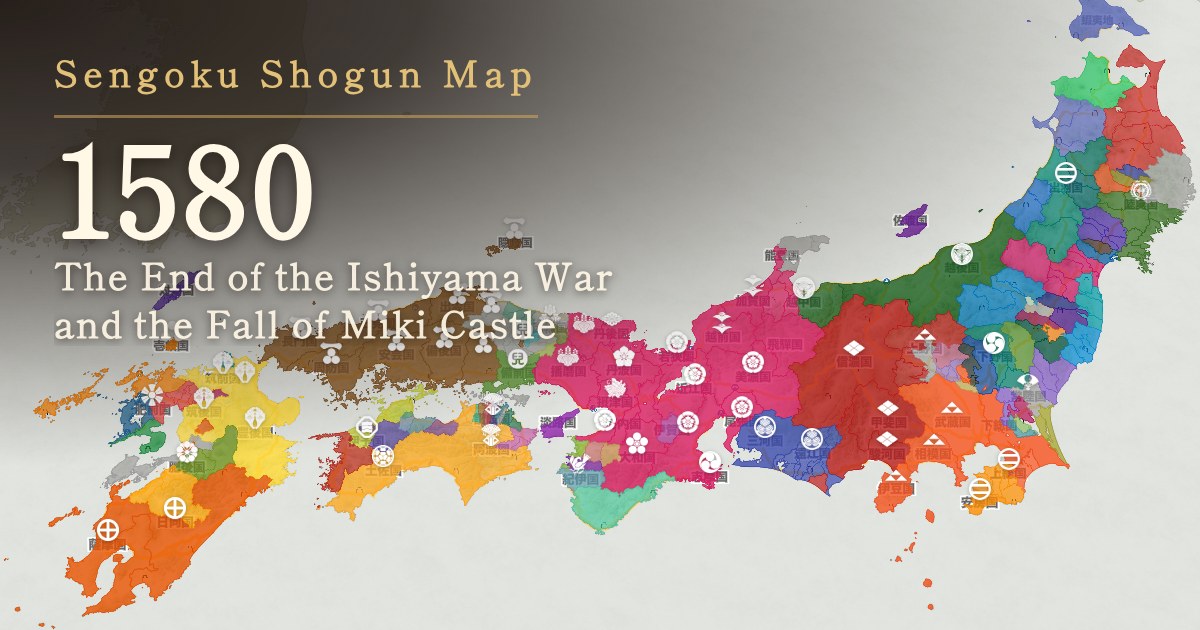
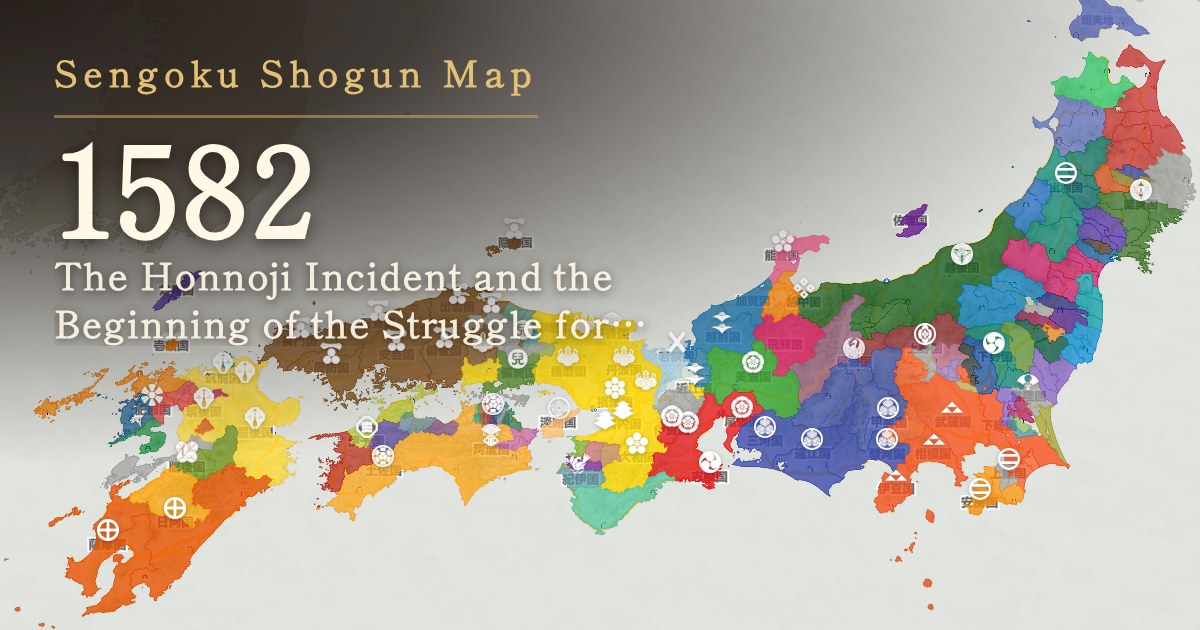
Territories before and after the battle
The year before, the year of the battle, and the year after, side by side. Tap a map to open that year.
Advertisement