INTERACTIVE BATTLE
Second Battle of Kawanakajima
August – November 1555 · Kawanakajima and the Zenkōji plain, Shinano Province (now Nagano)
In 1555, at Kawanakajima in Shinano Province (present-day Nagano City), Takeda Harunobu (later Shingen) and Nagao Kagetora (later Uesugi Kenshin) faced each other across the Sai River for more than 200 days. No decisive battle took place, and they made peace through the mediation of Imagawa Yoshimoto.
上杉氏: Uesugi Kenshin / 武田氏: Takeda Shingen, 栗田寛久 / 今川氏: Imagawa Yoshimoto
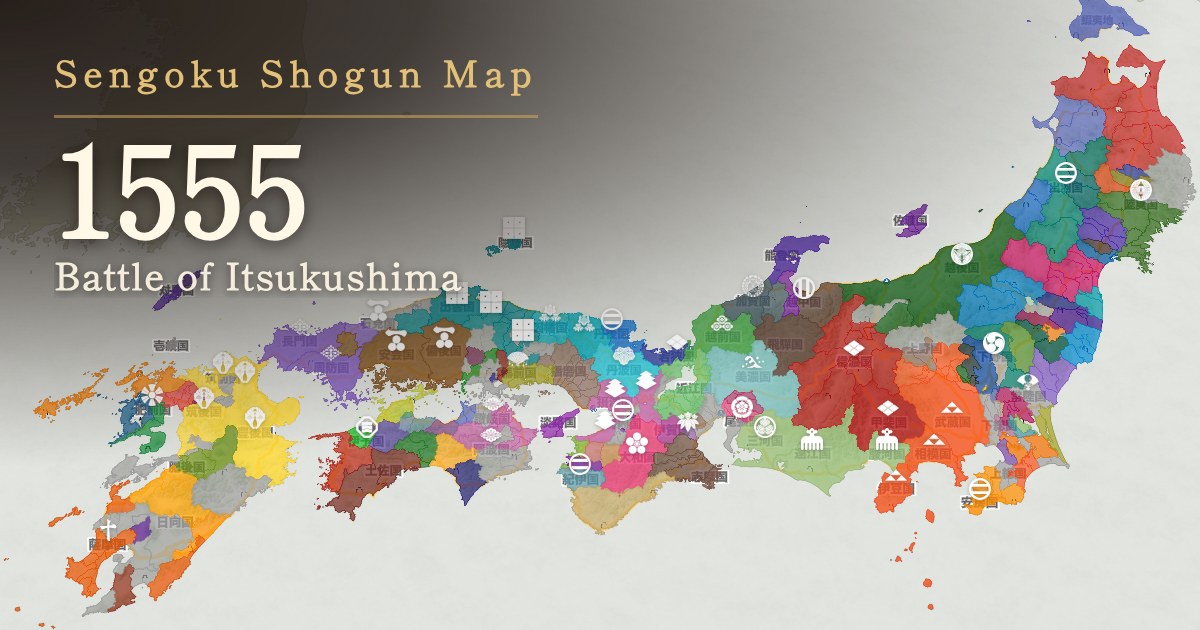
Explore the 1555 map
Change the year to watch territories shift
Background
The Kurita family, bettō (chief administrators) of Zenkō-ji, had gone over to the Takeda side and held Asahiyama Castle, west of Zenkō-ji. Kagetora set out to retake Zenkō-ji.
Outcome
Neither army came out for a decisive battle, and they made peace through Imagawa Yoshimoto's mediation. The terms of the peace included the demolition of Asahiyama Castle, which was torn down.
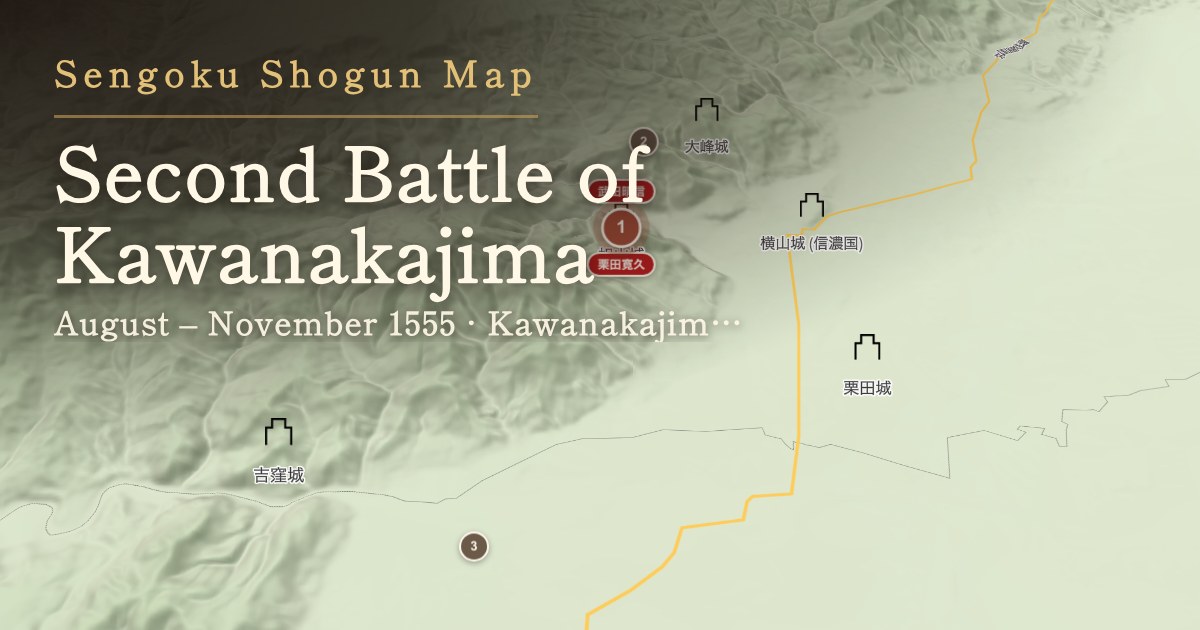
Course of the battle
1 Summer 1555
The Kurita hold Asahiyama Castle
The Kurita, abbots of Zenkōji, went over to the Takeda and held Asahiyama Castle, which rises west of the temple. The Takeda sent men, bows and firearms to hold it.
Holds Asahiyama Castle
Sends troops to Asahiyama Castle
Sources
Sources123·Certainty: Medium
2 August 1555
Kagetora builds Katsurayama Castle and faces him
Kagetora camped at Yokoyama Castle east of Zenkōji and built Katsurayama Castle across the Susobana River, facing Asahiyama.
Builds Katsurayama Castle
Sources
Sources123·Certainty: Medium
3 August – November 1555
The two armies face each other across the Sai River for over 200 days
4 November 1555
Terms are reached through Imagawa Yoshimoto
Terms were reached through the mediation of Imagawa Yoshimoto and both armies withdrew. The settlement included the destruction of Asahiyama Castle, which was pulled down.
Mediates between the two
Sources
Sources123·Certainty: Medium
Historical significance
Of the five confrontations at Kawanakajima, this was the longest. The two armies never fought a decisive battle, and the standoff over Asahiyama Castle continued.
Advertisement
Key figures
上杉氏
1

Commander of the Nagao army
He set out to win back the Zenkōji plain, but could not take Asahiyama Castle or force a battle. Later known as Uesugi Kenshin.
Sources
Sources12·Certainty: Medium
武田氏
2

Commander of the Takeda army
By holding Asahiyama Castle he stopped Kagetora's advance and drew the confrontation out. Later known as Takeda Shingen.
Sources
Sources12·Certainty: Medium
Commander of Asahiyama Castle
Abbot of Zenkōji. He went over to the Takeda, held Asahiyama Castle and blocked the Nagao advance.
Sources
Sources12·Certainty: Medium
今川氏
1

Mediator of the settlement
As one corner of the Kai–Sagami–Suruga alliance he stepped in and brought the two sides to terms.
Sources
Sources12·Certainty: Medium
Other events of 1555
Notes on the data
Dates are given in the Western (Julian) calendar. The sources use the lunar calendar; the march out in the seventh month and the settlement on the fifteenth of the intercalary tenth fall between August and the end of November 1555. Sources place the start of the confrontation in either the third or the seventh month, so a range is shown. Figures for troops and supplies come from war tales and are left out of the text.
Sources consulted
- 長野市「川中島古戦場史跡公園」
- ながの観光net「川中島の戦い 史跡ガイド」
- 城郭マスタ(shiro.geojson)
The numbers in the text refer to the list above. Certainty indicates how far a statement is supported by the cited sources; it does not refer to the precision of the coordinates or the dating.
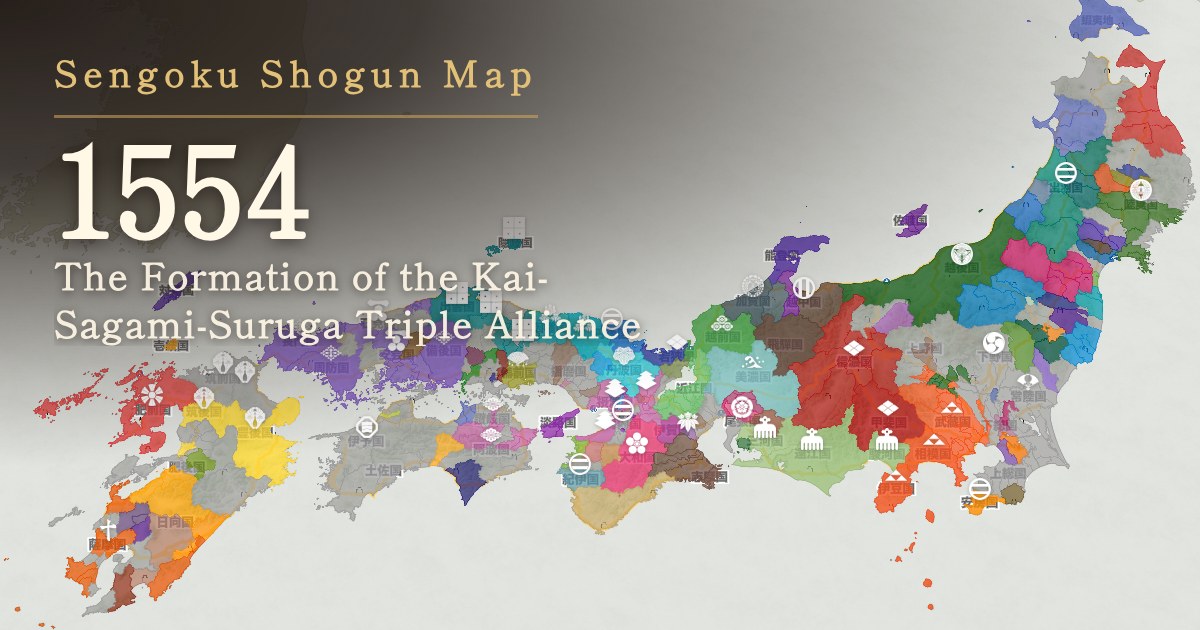
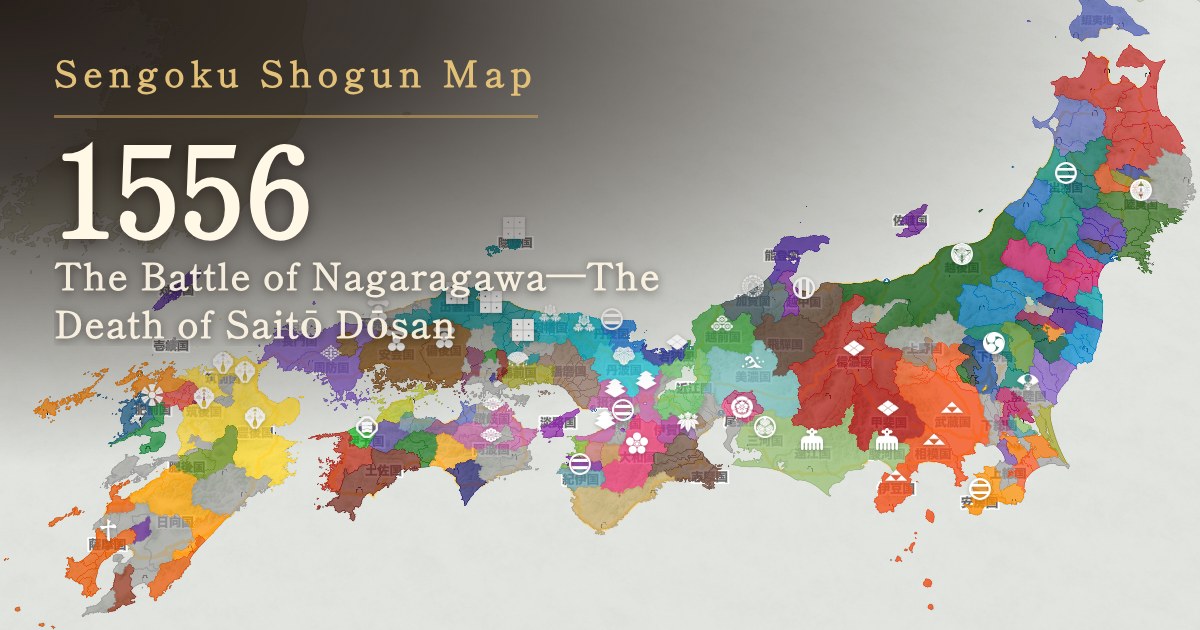
Territories before and after the battle
The year before, the year of the battle, and the year after, side by side. Tap a map to open that year.
Advertisement