1586: Hideyoshi Becomes Daijō-daijin and Receives the Toyotomi Surname
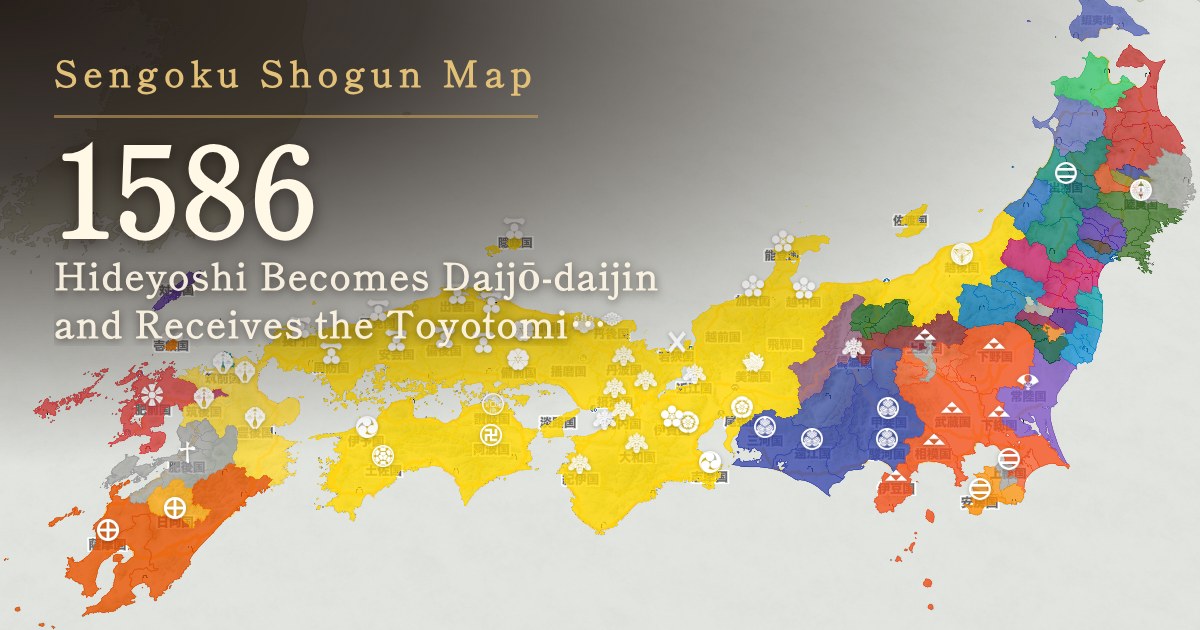
Hideyoshi was appointed Daijō-daijin, the highest court office, and received the Toyotomi surname from the imperial court, cementing his status as ruler of the realm in both name and substance. That April, Ōtomo Sōrin of Bungo, hard-pressed by the Shimazu, traveled to Ōsaka Castle to plead with Hideyoshi for aid, setting in motion preparations for the following year's campaign to pacify Kyūshū.
Events this year
1/18
Late at night on the 29th day of the 11th month of Tenshō 13 (18 January 1586) a great earthquake struck from Hokuriku through central Japan to the Kinai. A landslide in Shirakawa-gō in Hida buried Kaerikumo Castle together with its castle town, and Kibune Castle in Etchū, Ōgaki Castle in Mino, Nagashima Castle in Ise and Nagahama Castle in Ōmi were all wrecked.
Sources 岐阜県「天正地震(天正13年11月29日)」
Month 2
Toyotomi Hideyoshi began building Jurakudai in Kyoto as a government center and residence.
Month 5
Toyotomi Hideyoshi married his sister Asahi no Kata to Tokugawa Ieyasu, creating a marriage alliance between the Toyotomi and Tokugawa. He later sent their mother Ōmandokoro to Okazaki, reinforcing the negotiations that led to Ieyasu's submission with kinship and political guarantees.
Sources 国立公文書館「秀吉への臣従」/東京大学史料編纂所『大日本史料 第十一編之二十九』
7/27
Shimazu forces with a large army besieged Iwaya Castle held by the Ōtomo. Its commander, Takahashi Jorun, refused surrender demands and continued the siege. After fourteen days of fighting, he killed himself as the castle fell.
Sources 太宰府市公式「岩屋城跡」
10/27
Tokugawa Ieyasu entered Osaka Castle and met Toyotomi Hideyoshi, entering the daimyō order under the Toyotomi government.
Toyotomi Hideyoshi was appointed daijō-daijin, the highest office of the imperial court.