1564: The Second Battle of Kōnodai
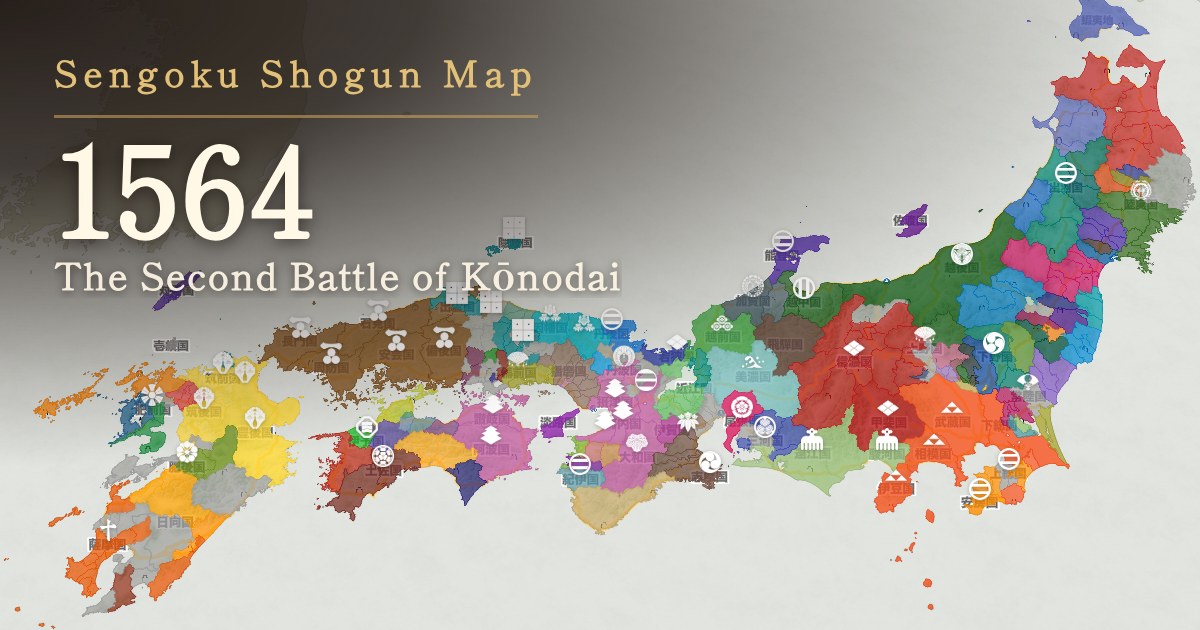
When Satomi Yoshihiro advanced into Shimōsa and occupied Kōnodai Castle, Hōjō Ujiyasu and his son Ujimasa crossed the Futoi River and launched a night attack, catching the Satomi forces asleep and throwing them into panic before routing them. Having weathered the defection of Edo Castle's deputy Ōta Yasusuke, the Hōjō used this victory to restore their dominant position in the Kantō region.
Events this year
Month 1
The main Ikkō ikki forces, including followers from Toro and Harisaki, engaged Ieyasu's forces. The uprising's defeat marked its decline and opened the way to a settlement.
Sources 岡崎市「市指定:史跡 小豆坂古戦場跡」
7/4
Miyoshi Nagayoshi died at Ii Castle. The date is derived from an inscription on a stone pagoda at Shinkoku-ji: "7th month, 4th day of Eiroku 7, in the year of Kōshi."
Sources 四條畷市「国史跡 飯盛城跡について」/大阪府「三好長慶ゆかりの地」
Takenaka Shigeharu, Andō Morinari, and their allies temporarily seized Saitō Tatsuoki's Inabayama Castle, exposing instability in Saitō rule.
Hōjō Ujimasa and Satomi Yoshihiro fought at Kōnodai. The Hōjō victory expanded their influence over the Bosō Peninsula.
Tokugawa Ieyasu captured Yoshida Castle from the Imagawa side and entrusted Sakai Tadatsugu with the castle and the governance of eastern Mikawa. Imagawa control receded as Ieyasu advanced the unification of Mikawa.
Sources 文化庁「徳川家康御判物 永禄7年(酒井忠次宛)」/豊橋市図書館「吉田城」
Tokugawa Ieyasu concluded peace with the Ikkō ikki and disbanded it. He subsequently compelled Ikkō Shōnin temples to convert, demolished their halls, and exiled their abbots.
Sources 安城市図書情報館「新編安城市史5 細目次」
After his defeat at the Battle of Kōnodai, Ōta Sukemasa fled to Iwatsuki Castle but was soon exiled by his own son Ujisuke and came under Hōjō rule.
Sources さいたま市「岩槻城跡を探る(中編・下)」